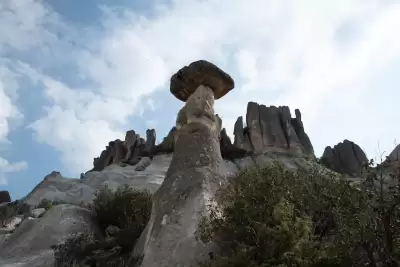
The Phrygian Valley Fairy Chimneys are natural column formations made of volcanic tuff, located around Seydiler village in the hsaniye district of Afyonkarahisar, and can be visited free of charge.
Known as Turkey's second Cappadocia, the Phrygian Valley spans a wide geographical area between the provinces of Ktahya, Eskişehir, and Afyonkarahisar. One of the most striking natural elements of this valley, the fairy chimneys, are concentrated in the valleys around Seydiler village, part of Afyonkarahisar's hsaniye district. These formations, which emerged from volcanic tuff layers shaped by millions of years of erosion and climatic conditions, resemble an open-air sculpture garden with their varying sizes and distinct morphotypes.
The area where the fairy chimneys are located is not only a natural beauty but also a cultural treasure bearing the traces of the Phrygian civilization dating back 3,000 years. When considered alongside the castle ruins, monumental tombs, monasteries, and rock-cut houses carved into the surrounding rocks, the region offers visitors a deeply layered experience from both a geological and historical perspective. Thanks to the Phrygian Way, opened to international standards in 2013, these fairy chimneys have become easily discoverable via hiking and cycling routes.
Guide's Note
The Phrygian Valley Fairy Chimneys is a region that attracts history and nature enthusiasts with its rock-cut structures spread over a wide geographical area and its thousands of years of historical texture. Most visitors appreciate the atmosphere and historical depth of the area; however, they also emphasize that expectations should be realistic. The region primarily consists of open-air rock structures; activities such as camel and horse riding are also available.
Due to the region's extensive area, visitors recommend allocating sufficient time and planning a route in advance. Instead of settling for day trips, dedicating at least a few days can allow for a better exploration of the area. Considering the terrain, it is recommended to wear sturdy, closed-toe shoes; the region has dense thorny vegetation.
- Insufficient signage and directions: Multiple visitors state that road signs and directions are inadequate; if you are visiting the region for the first time, obtain map and route information beforehand.
- Infrastructure deficiencies: It is reported that development work is not yet complete, and reaching some points with a sedan car can be difficult.
- Cleanliness issue: Complaints about odor and dirtiness inside the rock structures are voiced.
- Vandalism: The impression that historical structures have been damaged over time has left a negative impact on some visitors.
How Were the Fairy Chimneys Formed?
The Phrygian Valley Fairy Chimneys were shaped by the erosion of volcanic tuff rocks over millions of years, under the influence of rain, wind, and freeze-thaw cycles. While harder mineral-containing upper layers resisted erosion, the lower parts were carved out; this process created the characteristic column forms, either capped or pointed. In the valleys around Seydiler village, dozens of fairy chimneys of various sizes and distinct morphotypes are found together in an area of approximately 1-2 square kilometers. These formations, products of the same geological processes as those in Cappadocia, create a completely different atmosphere when combined with the region's unique valley topography.
Best Time to Visit
Spring and autumn are the most ideal periods to visit the Phrygian Valley Fairy Chimneys. In April-May, the surrounding plateau vegetation comes alive, the valleys turn green, and the fairy chimneys look much more impressive within this fresh color palette. In September-October, golden yellow and crimson tones create a perfect backdrop for photography. The region can be quite hot in summer; if you must come during this season, prefer early morning hours. In winter, after snowfall, the fairy chimneys take on a completely different appearance; however, caution is needed as roads can be slippery.
How to Get There?
The most practical way to reach the Phrygian Valley Fairy Chimneys is by private car. From Afyonkarahisar city center, you can reach hsaniye district and then Seydiler village in approximately 30-40 minutes. Following the Ayazini route offers the opportunity to see other Phrygian remains along the way. Minibus services run from Afyonkarahisar Village Garage (near the fairground) to hsaniye and surrounding villages; however, you may need to walk or take an additional vehicle for the last few kilometers to the fairy chimneys. For those coming from Ktahya, the distance is approximately 27 km, and from Eskişehir, it is around 64 km. Organized tour options from Afyonkarahisar are also available.
Suggested Route: Full-Day Phrygian Valley Tour
Experiencing the fairy chimneys not just on their own, but within the entire Phrygian Valley, provides a much more rewarding visit. Start early in the morning from Afyonkarahisar and first visit Ayazini village and its rock monastery. Then, explore the fairy chimneys around Seydiler and take a lunch break. In the afternoon, heading to Emre Lake is a great option for both a relaxing break and seeing a different side of the valley. If you have time, you can also add Phrygian monuments like Aslantaş and Yılantaş to your itinerary. The Phrygian Way, opened in 2013, makes this route even easier with internationally marked hiking and cycling trails.
Photography Spots and Tips
The Phrygian Valley Fairy Chimneys offer beautiful shots under different lighting conditions. During the golden hour in the morning (the first hour after sunrise), the tuff rocks take on warm yellow-orange tones, and shadows add depth. Angles shot upwards from within the valley frame the fairy chimneys against the sky. It is possible to capture multiple formations in the same frame using a wide-angle lens. Adding a human figure is very effective in conveying the scale of these massive formations. In autumn, the yellowing grass and reddish soil color create a beautiful contrast with the gray-beige tones of the fairy chimneys. Since hot air balloon tours are also available in the region, this option can be considered for aerial photography.
Things to Know Before Visiting
Since the fairy chimneys are located in a natural area, a smooth surface is not guaranteed; comfortable walking shoes or boots are highly recommended. Shaded areas in the region are extremely limited, so in summer, you should carry plenty of water, a hat, and sunscreen. GSM network coverage can sometimes be weak; downloading an offline map beforehand is useful. The terrain is not suitable for wheelchairs and strollers. Climbing the rock formations is both dangerous and harmful to nature, so it should be avoided. The number of markets or restaurants in the surrounding villages is quite small; we recommend bringing your own food and drinks.
What to Eat Nearby?
There are almost no dining options immediately around the fairy chimneys. The nearest comprehensive food and drink facilities are in the hsaniye district center. Sucuk and pastırma, symbols of Afyonkarahisar cuisine, are among the flavors you must try in the region. Afyon clotted cream (kaymak) and Turkish delight (lokum) can also be easily found in shops in the city center. If you are planning a long trip, small artisan restaurants in Der town can also be an option. The area is quite suitable for picnics; the shore of Emre Lake, in particular, offers a beautiful spot for a break.
This content originates from neresigezilir.com.tr and may not be copied without permission.
Phrygian Valley Fairy Chimneys Videos
Phrygian Valley Fairy Chimneys videos load when you open this section to keep the page fast.
Show videos
FAQ

Updated: