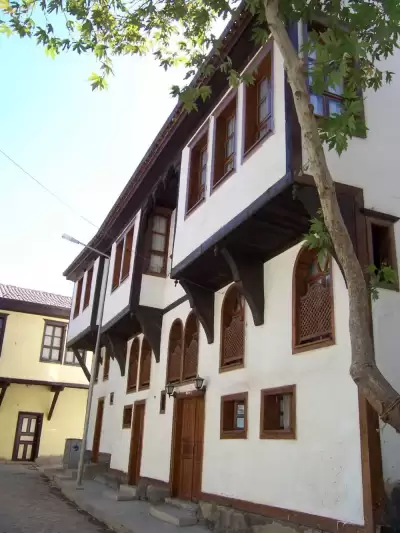
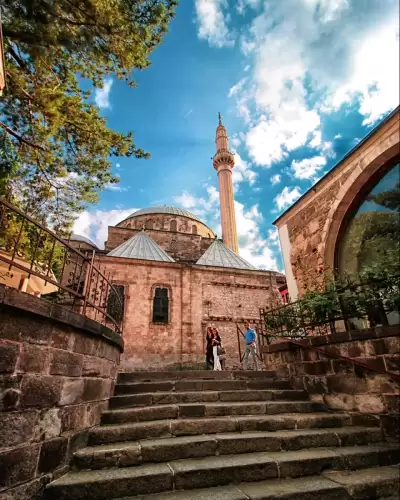
Gedik Ahmet Pasha Mosque is the central structure of an Ottoman complex built in Afyonkarahisar in 1472 by Grand Vizier Gedik Ahmet Pasha. It is the main work of the complex consisting of a mosque, madrasah, primary school, and Turkish bath, and can be visited free of charge.
One of the most valuable Ottoman legacies woven into the historical fabric of Afyonkarahisar, the Gedik Ahmet Pasha Mosque was built between 1472 and 1475 by Grand Vizier Gedik Ahmet Pasha, one of the powerful statesmen of the Fatih Sultan Mehmet era. This structure, designed by Architect Ayaz Ağa, is one of the most mature examples of Ottoman architecture in Afyonkarahisar.
The mosque stands out with its original plan, divided into two by an arch in the middle and covered by two large domes arranged consecutively. The interior, adorned with decorations by Abdüssamedoğlu Hasan, offers a rich visual feast reflecting the ornamentation style of the period. The madrasah, primary school, and Turkish bath within the complex reveal the social function of the building complex.
The reason it is known as the Imaret Mosque among the public is that when the complex was first built, it housed an imaret (soup kitchen) that served the poor. Although this imaret no longer exists today, the name has lived on for centuries. Many architectural elements of the structure, especially its monumental gate, are a refined reflection of early Ottoman art.
Guide's Note

Located on Kurtuluş Street in Afyonkarahisar city center, Gedik Ahmet Pasha Mosque was built in 1472 by the Ottoman Grand Vizier Gedik Ahmet Pasha and designed by architect Ayaz Ağa. Also known as "Imaret Mosque" among the public, the structure is part of a complex that includes a mosque, madrasah, Turkish bath, and soup kitchen. Visitors find the mosque's Bursa-type architecture, its two large domes, and especially its fluted, twisted minaret adorned with dark blue tiles to be striking.
Its spacious and shaded garden offers a peaceful area for those wishing to escape the city's hustle and bustle. The octagonal ablution fountain in the garden has an acoustic feature that allows two people standing opposite each other to hear each other clearly, which is another point of interest for visitors. The interior of the mosque is found to be as meticulously maintained as the exterior; it is noted to be cool in summer and heated in winter. The Imaret Hamam, part of the complex, continues to serve today.
The vast majority of visitors leave the venue satisfied; however, some comments are quite short and general, making it difficult to draw a detailed picture of the experiences. No specific and recurring complaints stand out for this period.
Historical and Architectural Significance
Gedik Ahmet Pasha Mosque was built by Gedik Ahmet Pasha, who rose to the position of Grand Vizier during the reigns of Fatih Sultan Mehmet and Bayezid II. Before his death in 1482, Pasha left a religious and social legacy to Afyonkarahisar with this complex. The structure was designed as a comprehensive complex encompassing a mosque, madrasah, primary school, and Turkish bath.
Although the exact construction date of the mosque cannot be precisely determined, it is believed to coincide with Gedik Ahmet Pasha's period as Anatolian Beylerbeyi, around 1470. Some sources state that construction was completed between 1472 and 1475. The structure, designed by Architect Ayaz Ağa, concretely reflects the mastery of Ottoman architecture of its period.
Architectural Features and Photo Spots
The most striking architectural feature of the mosque is that the interior is divided into two by an arch in the middle and covered by two large domes arranged consecutively. This plan scheme constitutes one of the finest examples of an approach frequently used in early Ottoman mosque architecture in Afyonkarahisar.
The most eye-catching element of the structure from the outside is its monumental gate. Adorned with rich stone craftsmanship, the monumental gate is a refined reflection of early Ottoman decorative art and offers an indispensable shot for photography enthusiasts. In the interior, the decorations by Abdüssamedoğlu Hasan greet visitors with an original ornamentation program covering the walls and dome. The natural light falling into the domes in the morning creates the most favorable time for photographing the interior.
Best Time to Visit
Considering Afyonkarahisar's continental climate, April-May and September-October are the most comfortable periods for visiting the mosque. The city can be quite hot in summer; choosing the early morning hours during this season will make your trip more enjoyable and allow you to capture the light of the interior in the most beautiful way.
Before and after Friday prayers, activity around the mosque increases. If you want a quieter and more peaceful visit, you can choose weekday mornings. It is recommended to plan your visit considering that entry to the interior may be restricted during prayer times.
How to Get There
Gedik Ahmet Pasha Mosque is located in Afyonkarahisar city center on Kurtuluş Street, in Fakıpaşa Neighborhood. Due to its location, it is within walking distance of many hotels and central points.
From Afyonkarahisar Bus Terminal, city minibuses run regularly to the center. You can also easily reach it by taxi. If you are coming with your own car, you can look for parking around Kurtuluş Street; however, finding parking can be difficult during busy hours. From Afyonkarahisar train station, it is possible to reach the mosque with approximately a 10-15 minute walk.
Afyonkarahisar Historical Center Route Suggestion
Gedik Ahmet Pasha Mosque, along with other important structures in Afyonkarahisar's historical center, forms a route that can be easily explored in a single day. You can start from the mosque in the early morning and walk to Afyonkarahisar Castle, then explore the historical texture of the city.
Do not neglect to examine the madrasah and Turkish bath structures, which are part of the complex; these structures help you understand the holistic architecture of the complex. In the afternoon, you can explore the city's gastronomic heritage by visiting Afyonkarahisar's famous sucuk (spicy sausage) and clotted cream shops. Such a route allows you to experience both the historical and cultural richness of the city together.
What to Eat Nearby
Afyonkarahisar is one of Turkey's oldest gastronomic cities, and the area around the mosque is an ideal starting point to discover these flavors. Afyon clotted cream, which has become a symbol of the city, is a must-try for breakfast; it is served with freshly baked bread or simit.
Afyon sucuk is another local product recognized throughout Turkey. You can find both fresh and vacuum-packed sucuk in shops on Kurtuluş Street and its surroundings. In addition, traditional desserts prepared with poppy seed paste and local dishes in the restaurants in the city's bazaar area will also appeal to your taste buds.
Things to Know Before Visiting
Gedik Ahmet Pasha Mosque is an active place of worship. You are expected to maintain a quiet and respectful demeanor during your visit. You need to take off your shoes when entering the interior; therefore, choosing shoes that are easy to put on and take off will make your visit easier.
We would like to remind female visitors that they should cover their heads; although coverings are usually available at the entrance of the mosque, it will be more practical to bring your own. When taking photos, be careful not to disturb the congregation praying. Since some parts of the structure have historical stone flooring, we recommend stepping carefully, especially in rainy weather.
This content originates from neresigezilir.com.tr and may not be copied without permission.
Gedik Ahmet Pasha Mosque (Imaret Mosque) Videos
Gedik Ahmet Pasha Mosque (Imaret Mosque) videos load when you open this section to keep the page fast.
Show videos
FAQ

Updated: