Located in Afyonkarahisar's Mevlana District, the Mevlevi Türbe Mosque is a cut stone structure that has maintained the Mevlevi tradition since the 14th century, rebuilt by Sultan Abdülmecit in 1844; it houses 12 Mevlevi sarcophagi.
This structure, imbued with the historical fabric of Afyonkarahisar, is known among the public as both the Türbe Mosque and the Mevlevi Mosque. Located in the Mevlana District, surrounded by streets from the north, west, and south, this building can be considered the spiritual center of the city; it is an original complex consisting of a mosque, a semahane (ritual hall), and a tomb. It is believed that the first Mevlevihane (Dervish Lodge) was built with wooden materials in the first quarter of the 14th century during the period of Arif Çelebi. The structure standing today was rebuilt as a mosque and dervish lodge by Sultan Abdülmecit in 1844 and underwent extensive renovation in 1905 during the reign of Abdülhamit II.
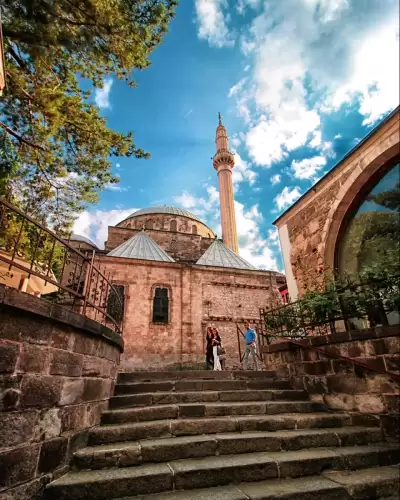
One of the most striking features of the building is the relief Mevlevi conical hat placed above its door instead of an inscription. In the single-domed structure, which bears traces of classical Ottoman architecture, large arches supporting the central dome, meticulous wooden craftsmanship, and stone decorations stand out. In the tomb section, which covers the left part of the mosque, there are 12 Mevlevi sarcophagi, including that of Mehmet Semâî, the sixth-generation grandson of Mevlâna Celâleddin Rûmî. In this respect, the structure is one of the most important pilgrimage sites for faith tourism in Afyonkarahisar.
Guide's Note
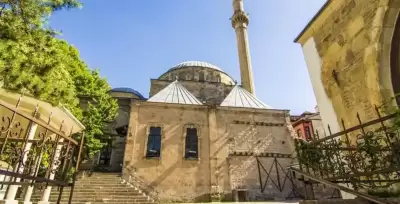
The Mevlevi Türbe Mosque, which holds an important place in the historical fabric of Afyonkarahisar, is the surviving part of the Afyon Mevlevihane, whose origins date back to the 14th century and is considered one of the most important centers of the Mevlevi tradition after Konya. The structure, which functioned as a Mevlevihane until the closure of dervish lodges and convents in 1925, houses a semahane, a tomb section, a small mosque, and a last prayer area together. Visitors appreciate the striking architecture with its cut stone structure, large dome, and entrance door adorned with Mevlevi conical hat carvings.
Inside, there are sarcophagi belonging to the descendants of Hz. Mevlana and important Mevlevi sheikhs, handwritten Qurans, and figures made of mummy. Visitors find these elements both informative and spiritually valuable. It is also mentioned that tea is served in the mosque and the staff are friendly. The courtyard of the building and the restored old mansions around it offer a peaceful atmosphere.
There is also a small museum reflecting Mevlevi culture in the garden; however, multiple visitors have shared that they could not access this museum. When planning your visit, it is recommended to pay attention to the following points:
- The museum in the garden may close early: Multiple visitors have stated that the museum closes around 5:00 PM and they could not enter.
- The museum may be closed on holidays: It is reported that the museum is not open to visitors on public holidays.
- Check visiting hours in advance: Especially during summer months and weekends, it would be appropriate to confirm opening and closing hours in advance.
Best Time to Visit
Considering that Afyonkarahisar has hot summers and cold, snowy winters, the months of April-June and September-October are the most suitable periods for visiting the Mevlevi Türbe Mosque. During these seasons, the weather conditions are favorable for walking, and you can comfortably visit the surrounding historical structures.
Arriving at the mosque in the early morning offers a tranquil visit experience away from the crowds. Especially before and after Friday prayers, the structure may be more bustling; weekday mornings are ideal for those who wish to quietly examine the architectural details and the tomb.
How to Get There?
The Mevlevi / Türbe Mosque is located in the Mevlana District, within walking distance of Afyonkarahisar city center. It is possible to reach it on foot from the city's main square and the Grand Mosque.
In terms of transportation to Afyonkarahisar, the city is connected by regular bus services from Istanbul, Ankara, and Izmir. For those arriving by train, Afyonkarahisar Station is close to the city center. Taxi and dolmuş (shared taxi) options are available within the city; since the district where the mosque is located is central, it can be easily reached by any vehicle.
History and Architectural Features of the Structure
It is known that the first Mevlevihane in Afyonkarahisar was built with wooden materials in the first quarter of the 14th century during the period of Arif Çelebi. This structure, where the Mevlevi tradition was kept alive for many centuries, was rebuilt as a mosque and dervish lodge using cut stone by Sultan Abdülmecit in 1844. It gained its current appearance after an extensive renovation in 1905 during the reign of Abdülhamit II.
The structure consists of three main sections: the haram (prayer hall), semahane (ritual hall), and tomb. The large arches supporting the central dome, classical mihrab and minbar arrangements, and wooden craftsmanship are the prominent architectural elements of the structure. The relief Mevlevi conical hat placed above the mosque door instead of an inscription is the most unique detail symbolizing the identity of the building.
Photo Spots
The Mevlevi / Türbe Mosque is a very fruitful place for architectural photography. The relief Mevlevi conical hat above the door offers a rare motif for detailed photography. The cut stone facade takes on warm tones in the morning light, allowing you to capture impressive shots.
Inside, the wooden sarcophagi and stone decorations in the tomb section, combined with natural light, create atmospheric photographs. The arches of the semahane section extending to the dome also form a strong frame for architectural compositions. Remember to show respect to other visitors and worshippers when taking photos.
What to Eat Nearby?
Afyonkarahisar holds a special place on Turkey's gastronomy map. In the immediate vicinity of the mosque and in the city center, Afyon clotted cream (kaymak) and Afyon sausage (sucuk) are among the must-try delicacies. For breakfast, fresh clotted cream and honey offer one of the city's most iconic experiences.
You can also find Afyon pişmaniye (floss halva) and lokum (Turkish delight) in the patisseries and cafes in the center. For lunch and dinner, traditional home-cooked meals can be tasted in the restaurants in the city center. The bazaar area, within walking distance of the mosque, offers both shopping and dining opportunities.
City Route Suggestion
The Mevlevi / Türbe Mosque is a natural part of the walking route in Afyonkarahisar's historical center. According to routes shared on platforms like Wikiloc, a route starting with the Grand Mosque, then ascending to Afyonkarahisar Castle, and continuing to the Mevlevi Türbe Mosque brings together the city's prominent historical structures in a single walk.
Since you need to allocate approximately 30-45 minutes for climbing the castle, it would be appropriate to plan a half-day timeframe to comfortably complete this entire route. Along the route, you can also discover lesser-known structures such as the Otpazarı Mosque. If started early in the morning, this tour, which can be completed by noon, offers an experience that fully conveys the historical texture of Afyonkarahisar.
Things to Know Before Visiting
The Mevlevi / Türbe Mosque is an active place of worship. During your visit, appropriate clothing should be worn, female visitors should cover their heads, and shoes should be removed at the entrance. Maintaining silence in the tomb section is a requirement of respect for both other visitors and the spiritual atmosphere of the place.
Considering that entry to the interior may be restricted during prayer times, it is recommended to time your visit between prayer times. Photography is allowed; however, care should be taken to avoid framing people who are praying. Since the streets around the building are narrow, coming on foot instead of by car will be both easier and more suitable for the environment.
This content originates from neresigezilir.com.tr and may not be copied without permission.
Mevlevi / Türbe Mosque Videos
Mevlevi / Türbe Mosque videos load when you open this section to keep the page fast.
Show videos
FAQ
Updated: