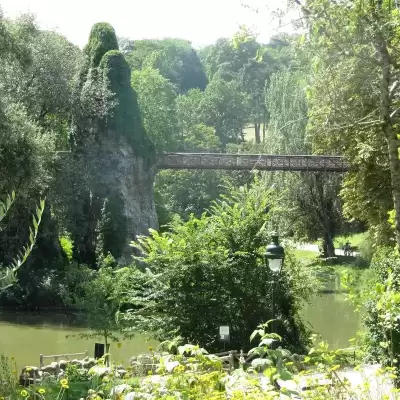
Parc Monceau, located on Boulevard de Courcelles in the 8th Arrondissement of Paris, is an 8.2-hectare free park reflecting the English garden style with Roman columns, pyramids, and winding paths; the giant plane tree planted in 1853 is the park's most prominent natural feature.
Stretching northeast of the Arc de Triomphe, at the intersection of Boulevard de Courcelles and Rue de Prony, Parc Monceau is like a breathing green island in the heart of one of Paris's most exclusive neighborhoods. Designed in the 18th century for Philippe d'Orléans, Duke of Orléans, the park was built in an Anglo-Chinese garden style, in line with the fashion of the period, adorned with pavilions, artificial ruins, and exotic elements. Traces of this heritage can still be seen today in the Roman colonnade, the small pyramid, and the Egyptian-style monuments.
One of the park's most striking natural features is the giant plane tree, planted in 1853 and considered the oldest and tallest in Paris; it stands thirty meters high, exhibiting a majestic presence. On weekdays at lunchtime, surrounding office workers fill the park, while on weekends, families and parents with strollers abound. For visitors overwhelmed by the crowds of the Champs-Élysées, it offers a completely different, tranquil Parisian experience just a few minutes' walk away.
Guide's Note
Parc Monceau is largely regarded by visitors as a calm and well-maintained green space. The park's spacious layout provides a suitable environment for those who want to picnic, read a book, or spend time with friends. Multiple visitors state that they particularly choose this place to relax and escape the city noise.
Its location is also frequently praised: its proximity to Saint-Lazare station makes the park a practical option in terms of transportation. It is also emphasized as a convenient area for those who want to take a walk or enjoy the spring.
- Crowds: Some visitors note that the park can be quite crowded at times; if you want a quiet experience, it might be beneficial to avoid peak hours.
Best Time to Visit
The best time to visit Parc Monceau is during April-May. The park's flowers bloom, trees turn green, and visitor density is much more reasonable compared to July-August. Autumn, from mid-October to early November, also holds a special charm for photographers with its yellow-orange leaf colors.
Weekday mornings make the park feel almost entirely yours, while on weekends, it becomes quite lively in the afternoon with local families and children. If you're coming to Paris in mid-summer, choosing early morning hours to escape the Champs-Élysées crowds will provide a more enjoyable experience.
How to Get There?
The most practical way to reach the park is by taking Metro Line 2 and getting off at Monceau station; the park entrance is less than a minute's walk from the exit. Alternatively, it can be reached by a 5-7 minute walk from Villiers station on Metro Line 3.
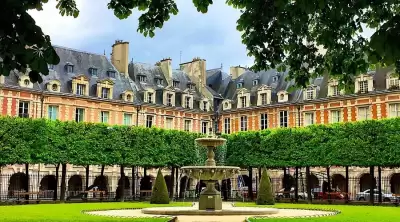
For those wishing to come by bus, lines 84 and 94 stop on Boulevard de Courcelles. If you prefer to walk from the Champs-Élysées, allow approximately 15-20 minutes; moreover, along this route, you will get a close look at the magnificent Haussmann buildings of the 8th arrondissement.
Photo Spots
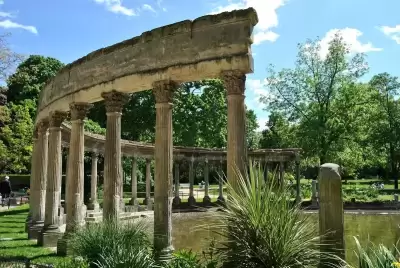
The park's most iconic photo spot is the small pond surrounded by the Roman colonnade. In the morning light, the reflection of the columns in the pond produces an impressive shot in almost every frame. It is said that the columns were originally brought from the Basilica of Saint-Denis in the 18th century; this adds a real historical weight beyond mere decorativeness.
The small Egyptian-style pyramid in the northern corner of the park is also an interesting subject for photography. Wide-angle shots taken looking up from the base of the thirty-meter giant plane tree are the best way to grasp the tree's true size. During autumn, when the leaves fall, the entire park transforms into a natural studio.
What to Eat Nearby?
Immediately around Parc Monceau, the elegant restaurants and cafes of the 8th arrondissement are lined up. The small cafe within the park offers light snacks and drinks; however, it can be crowded with office workers from the surrounding area during lunchtime.
For a more substantial lunch, you can head to the brasseries on Rue de Prony or Boulevard de Courcelles. As the area is one of Paris's affluent neighborhoods, prices may be slightly above the city average; if you're looking for a budget-friendly option, bringing a ready-made sandwich and having a picnic in the park is both an economical and enjoyable alternative.
How Much Time to Allocate?
Parc Monceau is ideal for a 1-2 hour break even in a busy Paris itinerary. One hour is sufficient to explore the park from end to end, examine its historical elements, and take a few photos. If you want to lie on the grass, read a book, or simply observe on a beautiful day, you can spend half a day here.
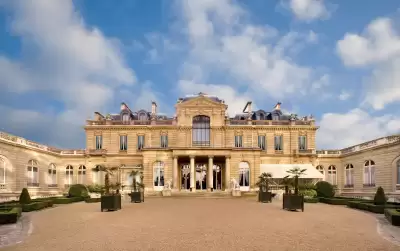
If you combine it with the nearby Musée Jacquemart-André, you can easily dedicate half a day to this area; the museum is right next to the park and its collection is quite rich.
Suggested Itinerary
After visiting the Arc de Triomphe in the morning, you can walk north from the Champs-Élysées to reach Parc Monceau. After exploring the park, visit the Musée Jacquemart-André right next to it; this 19th-century private mansion exhibits works by masters such as Botticelli, Rembrandt, and Mantegna.
In the afternoon, take Metro Line 2 to Anvers station and head up to Montmartre. This way, you will see both the aristocratic and bohemian sides of Paris in a single day.
Things to Note
While the park is free, some of its gates may close at certain hours; this usually doesn't cause a problem if you're not planning a night visit. On weekends, the children's play areas become more crowded; if you want a quiet experience, prefer weekdays.
The general safety level of the neighborhood around the park is high; however, as in any crowded area, it is wise to keep an eye on your belongings. For those coming by bicycle, cycling within the park is restricted; it is recommended to lock your bicycle near a park entrance.
This content originates from neresigezilir.com.tr and may not be copied without permission.
FAQ
Updated: