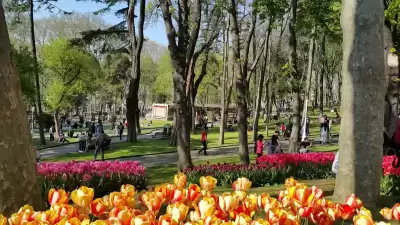
Sultanahmet Square is an open-air square located in the Fatih district of Istanbul, used as a Hippodrome during the Byzantine period. Surrounded by historical structures such as the Obelisk of Theodosius, the Serpentine Column, and the German Fountain, the square can be visited free of charge.
Sultanahmet Square is located on the site of the Hippodrome, which was expanded by Roman Emperor Constantine I. That area, where horse races and public uprisings took place, is today a wide green strip between Hagia Sophia and the Blue Mosque. Three monuments are lined up in the middle of the square: the Obelisk, brought from Egypt with hieroglyphic inscriptions; the Serpentine Column, made of bronze; and the Walled Obelisk (Column of Constantine) with its braided pattern. To these is added the German Fountain at the northern end of the square. It is a small domed structure in neo-Byzantine style, gifted by Wilhelm II after his visit to Istanbul in 1898.
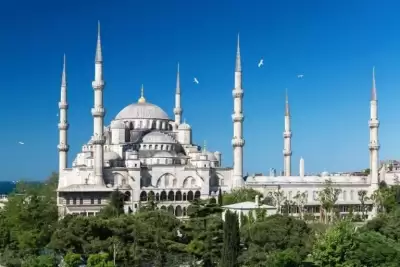
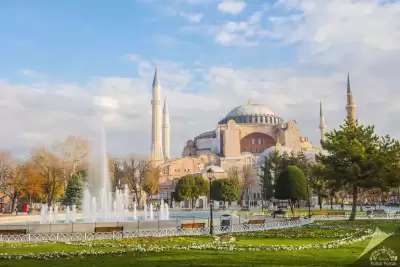
The square is actually more of a transit point than a sightseeing stop. The tram line runs right next to it, and the Basilica Cistern and Grand Bazaar are within walking distance. It's possible to capture the silhouettes of Hagia Sophia and the Blue Mosque in the same frame while having morning coffee. The illumination of both at evening prayer time is also one of the most frequently recounted moments of the square. During the day, the square is the meeting point for guided tours, and in the late afternoon, it gains a different vibrancy with the passing of the nostalgic tram.
The square is open 365 days a year and free, with no entry control. It's possible to sit at the surrounding cafes and restaurants and watch the square, feed the pigeons, or just take a tour around the Obelisk. This is the first stop for most travelers coming to the area, as both Hagia Sophia, the Blue Mosque, and Topkapi Palace are a short walk away.
Guide's Note

Best Time to Visit
Since the square is open all day, there's no specific time limit, but if you want to avoid crowds, going before 9 AM helps. In summer, the midday heat can be tiring both in the square and in the queues around it. Spring and autumn are therefore more comfortable. Those who come close to evening prayer time can see Hagia Sophia and the Blue Mosque illuminated simultaneously. This is one of the most frequently mentioned moments by visitors.
How to Get There
The Sultanahmet stop of the T1 Bağcılar-Kabataş tram line is right next to the square. You can also reach it by walking 10-15 minutes from Sirkeci train station or Eminönü. For those coming by bus, the Çatladıkapı stop is also an alternative. Coming by private car is not recommended; there is a parking problem in the area, and traffic in the historical peninsula will cause delays.
Other Places Nearby
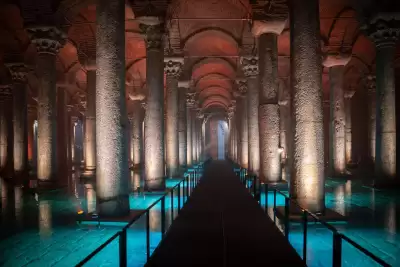
Hagia Sophia is to the north of the square, and the Blue Mosque is to the south, both within walking distance. The Basilica Cistern is practically opposite the square, and Topkapi Palace is a 5-10 minute walk away. The Grand Bazaar is a bit further but still within walking distance. If you're planning to shop, it's sensible to leave it for the second half of the day.
How Much Time to Allocate
30 minutes is enough for the square itself. Seeing the Obelisk, Serpentine Column, Walled Obelisk, and German Fountain takes this long. But in reality, no one visits the square alone; when planned together with the surrounding Hagia Sophia, Blue Mosque, and Basilica Cistern, half a day passes comfortably.
Suggested Itinerary
Starting from the square in the morning, then going to Hagia Sophia first, and then to the Blue Mosque opposite, is a logical sequence. In the afternoon, you can descend into the Basilica Cistern and then walk towards the Grand Bazaar. Returning to the square and spending the day sitting in a cafe is a frequently preferred way for visitors to conclude their visit.
Good Spots for Photography
Capturing Hagia Sophia in the background from beside the Obelisk is a classic shot. Looking from in front of the German Fountain, the minarets of the Blue Mosque enter the frame. In the evening, the illuminated silhouettes of both structures are the most photographed view in the square. Visitors especially recommend these hours.
Things to Pay Attention To
There are often tour sellers and fake 'free' marketers approaching in the square; passing with a firm attitude is the easiest way. The prices of people selling pigeon feed can be exaggerated, so it might be necessary to bargain beforehand. In summer, as shade decreases in the square, it's useful to carry a hat and water.
Historical Background
Beneath the square lie the traces of the Roman-era Hippodrome. This area, where horse races and public demonstrations were held, maintained its importance during the Byzantine period. The hieroglyphs on the Obelisk were brought from Egypt, and the Serpentine Column is a bronze artifact moved here from a temple in Delphi. The square continued its function during the Ottoman period, and today it is one of the rare places that carries the traces of three civilizations in the same area.
FAQ

Updated: