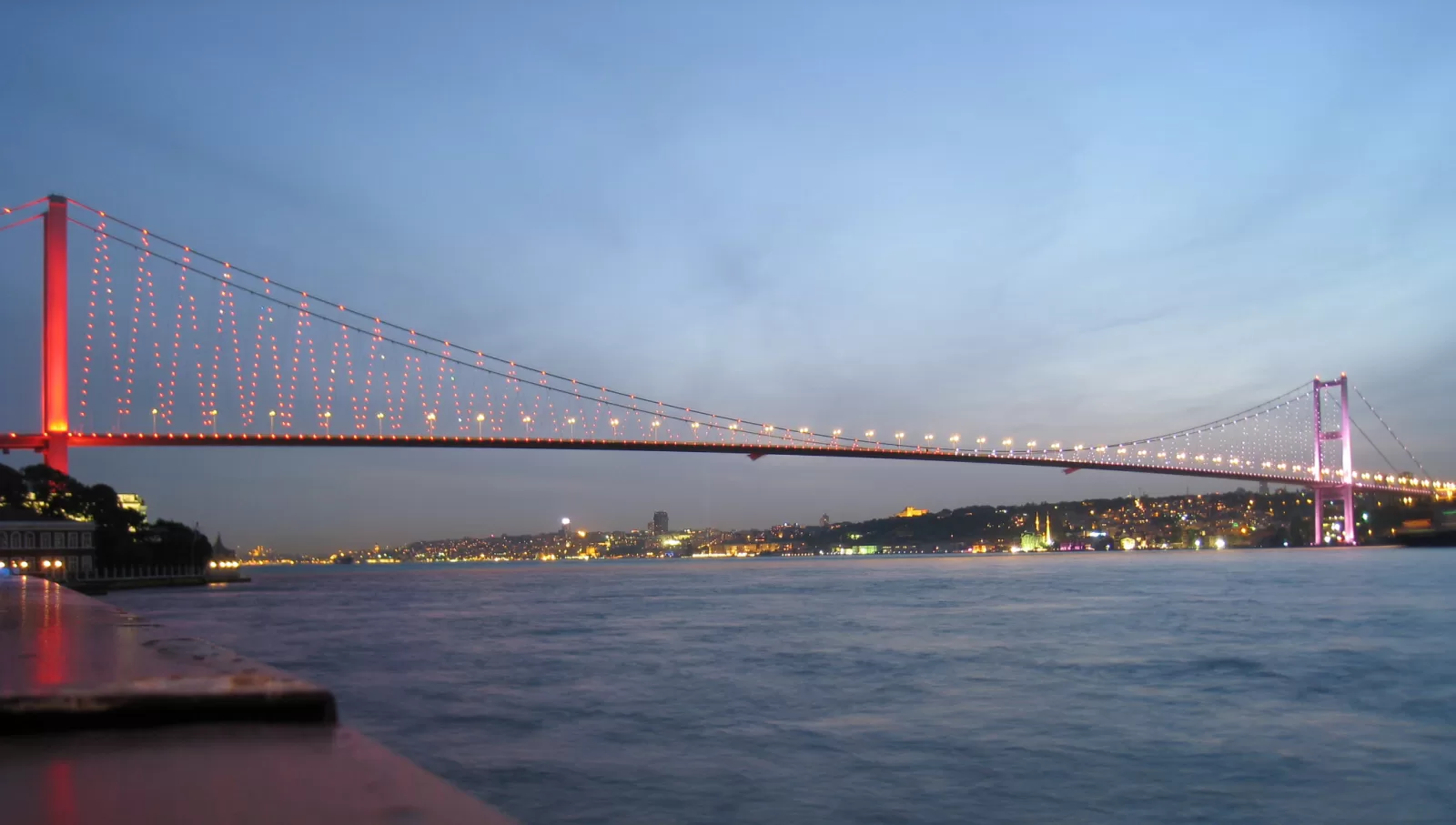
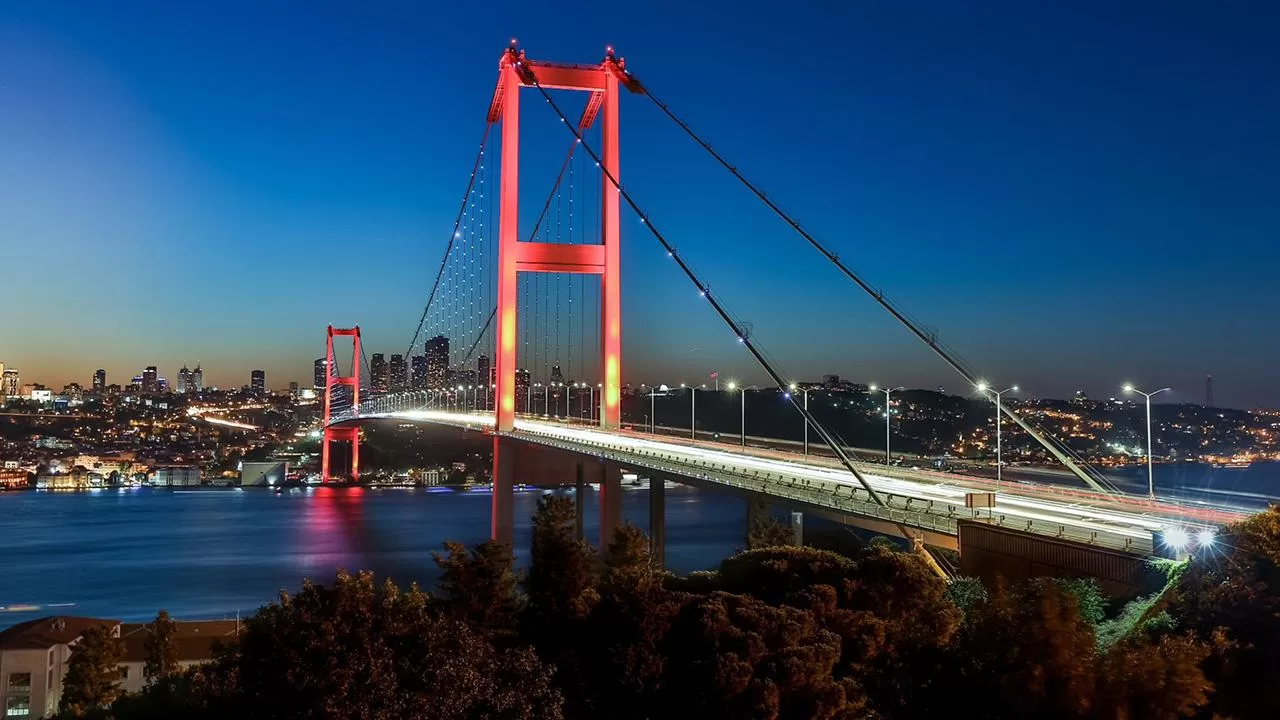
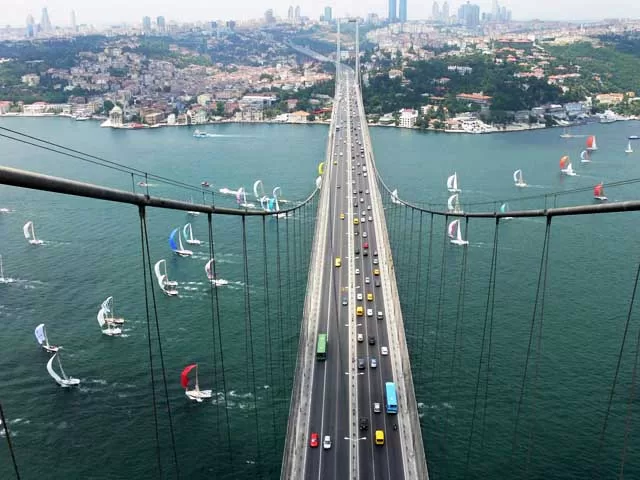
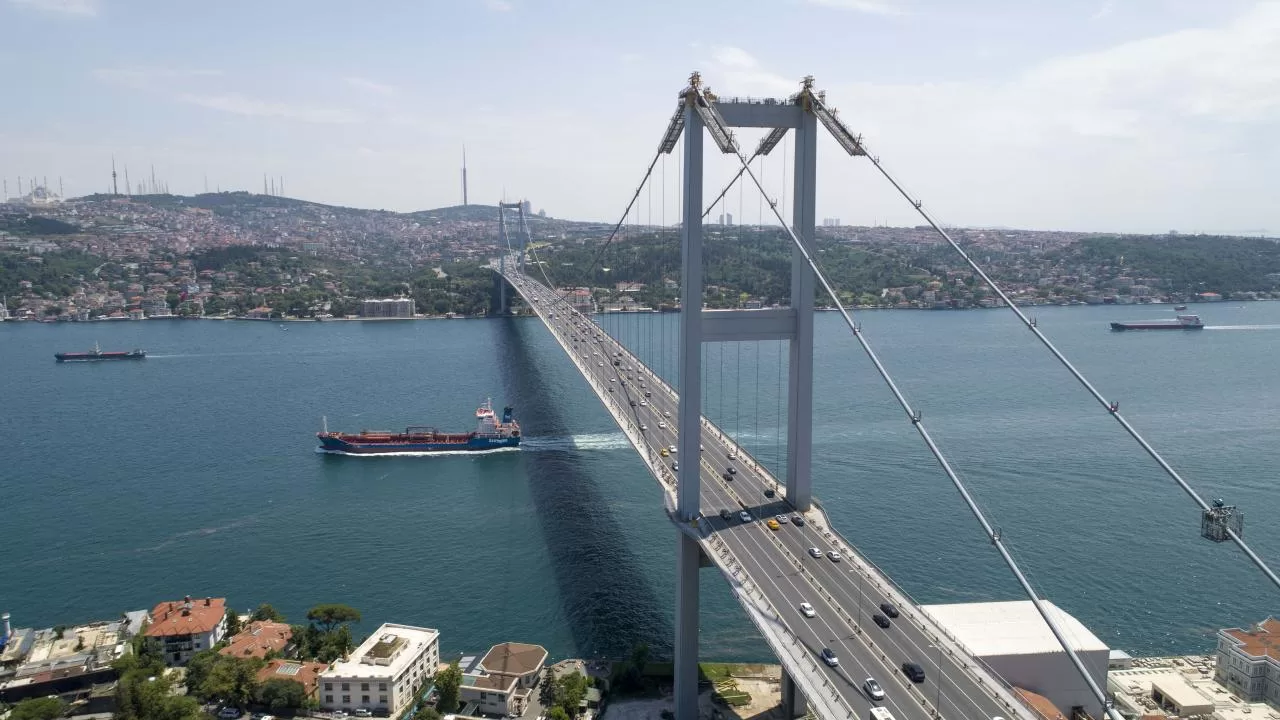
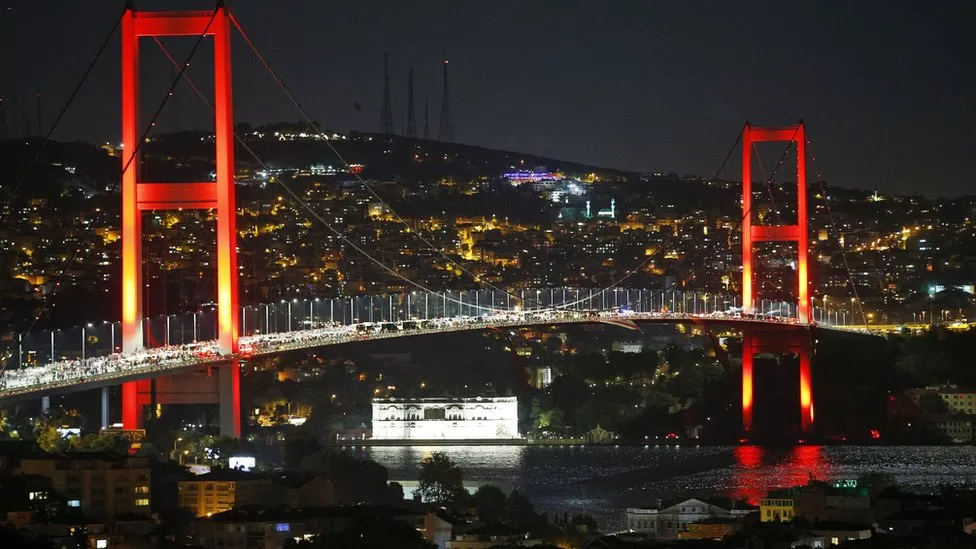
The 15 July Martyrs Bridge is a suspension bridge connecting Beşiktaş and Üsküdar across the Istanbul Bosphorus; it opened in 1973, is 1,560 meters long and 165 meters high. Vehicle crossing is subject to a fee, pedestrian access is not allowed.
Bearing the title of being the first bridge to cross the Istanbul Bosphorus, the 15 July Martyrs Bridge began construction on February 20, 1970, and was ceremonially opened on October 30, 1973, on the 50th anniversary of the Republic. This suspension bridge, connecting the districts of Beşiktaş and Üsküdar, is located on the O-1 highway and continues to be one of Istanbul's busiest connection points with approximately 200,000 vehicle crossings per day.
Designed by British engineers Gilbert Roberts, William Brown, and Michael Parsons, the structure is remarkable both technically and aesthetically with its 1,074-meter main span, 33.40-meter width, and 64-meter height above sea level. The bridge's towers reach a height of 165 meters. Still commonly referred to as the First Bridge or Bosphorus Bridge, the structure was renamed after the coup attempt in 2016; a memorial museum and martyrs' cemetery were also established at its Anatolian side foot.
Related discoveries: Places to visit in Istanbul, Historical Places, Historical places in Istanbul, Bebek Beach.
Guide's Note
History and Significance of the Bridge
The 15 July Martyrs Bridge is not merely a transportation structure connecting two continents; it is also a tangible symbol of Turkey's modernization history. Construction of the bridge began on February 20, 1970, was completed in approximately three and a half years, and opened on October 30, 1973, on the 50th anniversary of the Republic. The opening ceremony resonated greatly in the political and social atmosphere of the time; the bridge quickly became one of Istanbul's most recognized symbols.
The structure is the work of a British engineering team led by Gilbert Roberts, William Brown, and Michael Parsons. The steel suspension bridge has a main span of 1,074 meters and a total length of 1,560 meters. The tower height reaches 165 meters, while the bridge deck is positioned 64 meters above sea level; this height provides sufficient clearance for large cargo ships passing underneath.
The bridge was renamed after the 2016 coup attempt. Symbolizing that night, the structure is now not just a transportation bridge but an important part of national memory. The 15 July Memorial Museum, built at the foot of the Anatolian side, presents documents and artifacts from that period to visitors.
Best Photo Spots
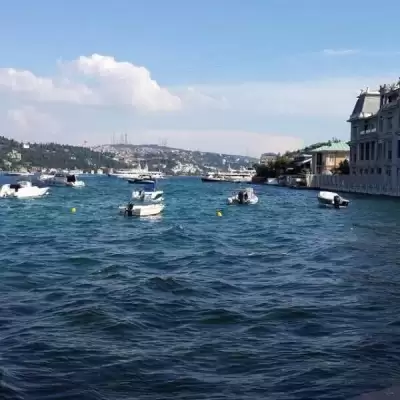
Since it is not possible to walk onto the bridge, the most impressive photos are obtained from surrounding neighborhoods. Ortaköy Square is perhaps the most popular spot where you can capture the bridge's European side tower and the Ortaköy Mosque in the same frame. Especially at sunset, the orange sky, mosque minarets, and bridge towers together create a captivating composition.
The Üsküdar coastline offers the widest angle from the Anatolian side to see the bridge in its full length. Long-exposure night photos taken from around the ferry pier also yield very successful results. Taking a Bosphorus tour and passing directly under the bridge is the most direct way to feel the scale of the structure. From Çamlıca Hill, it is possible to see the bridge as part of the Istanbul panorama from a bird's-eye view.
When to Visit?
The most enjoyable time to visit the bridge and its surroundings is during the spring and autumn months. The mild weather between March-May and September-November makes it easy to spend extended time on the Ortaköy and Üsküdar shores. Tourist density increases in the summer months; especially on weekends, Ortaköy Square can be quite crowded.
The most special moment of the day is undoubtedly sunset. As the sun descends towards the European side, the bridge and its surroundings are bathed in a golden light; this view is worth observing both with the eye and the camera. In the early morning, fog and the calm Bosphorus surface create a different atmosphere. Occasional snowfall in winter transforms the bridge and its surroundings into a completely different landscape.
How to Get There?
The bridge is located on the O-1 highway, so it can only be crossed by motor vehicles; pedestrian and bicycle access is prohibited. To reach the bridge from the European side, you can take the metrobus to Zincirlikuyu station, then a taxi or private car towards the ramp. It is also possible to reach the bridge area quickly by taxi from Beşiktaş.
On the Anatolian side, after taking a ferry to Üsküdar, you can reach the bridge foot and the Memorial Museum within a few minutes by taxi. For those who want to see the bridge up close, Ortaköy is the most practical starting point; it is within walking distance from Beşiktaş, and the European tower of the bridge is clearly visible from here. Bosphorus tour boats also pass under the bridge, allowing you to experience the structure up close.
What to Eat Nearby?
Ortaköy, located right at the foot of the bridge on the European side, is one of Istanbul's most beloved dining spots. The district's iconic kumpir (baked potato) is sold at dozens of stalls here; long queues form especially on weekends. Drinking tea with a view of the Bosphorus is an integral part of the Ortaköy experience.
Waffles and gözleme are also very popular in the cafes in the square. For a more comprehensive meal, fish restaurants lined along the shore can be preferred; fresh fish and seafood are served with a Bosphorus view. On the Üsküdar side, meatball restaurants, pide shops, and historic pastry shops reflecting traditional Istanbul cuisine stand out.
Suggested Itinerary
For those who want to fully experience the bridge and its surroundings, a half-day itinerary can be suggested. Start from Beşiktaş in the morning and walk along the coast to Ortaköy; the European tower of the bridge will gradually get closer along this route. After a kumpir break in Ortaköy Square, visit the Ortaköy Mosque and take your bridge photos.
In the afternoon, take a ferry to Üsküdar; this approximately 20-minute journey will take you directly under the bridge. From Üsküdar, you can visit the 15 July Memorial Museum by taxi. Ending the day by watching the sunset on the Üsküdar coast will allow you to see the bridge's silhouette in the most beautiful light. You can easily manage ferry and metrobus crossings with your Istanbul card.
Things to Know Before Visiting
It is strictly forbidden to walk onto the bridge; non-compliance with this rule can be both dangerous and create legal problems. Those wishing to cross the bridge by vehicle must be registered with the HGS or OGS system; cash payment is not possible. It is advisable to check the current toll fees on KGM's official channels.
Instead of going onto the bridge to take photos, Ortaköy, Üsküdar, or Çamlıca and other surrounding points should be preferred. If you plan to visit the Memorial Museum, it is recommended to check the current opening hours in advance. During peak traffic hours, long queues can form on the roads around the bridge; therefore, early morning or late-night crossings may be smoother.
15 July Martyrs Bridge Videos
15 July Martyrs Bridge videos load when you open this section to keep the page fast.
Show videos
FAQ

Updated: