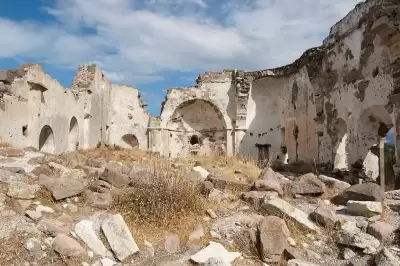
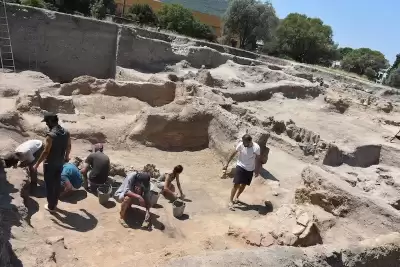
Bergama Asklepion is an ancient health center founded in the 4th century BC in the Bergama district of Izmir; this center, which healed patients with methods such as music therapy, water treatment, and medicinal mud baths, experienced its golden age during the Roman period.
Located southwest of Bergama, a few kilometers from the ancient city's acropolis, Asklepion is a healing complex dedicated to Asklepios, the god of health. Built in the 4th century BC and experiencing its golden age during the Roman period, this center was a truly functional ancient health city with its library, theater, sacred springs, and treatment rooms. This place, where the Roman physician Galen was trained, has gone down in history as one of the most respected medical education centers of its time.
The treatment methods applied in Asklepion reflect a remarkably advanced understanding from today's perspective: patients underwent fasting and thirst cures, drank sacred water, were subjected to medicinal mud baths, and received psychological support through music and dream interpretation. Incubation, a sleep therapy, was performed with the belief that the god would appear to patients in their dreams and provide healing. All these practices constitute the most concrete examples of holistic medicine in antiquity. Today, the surviving colonnaded street, temple ruins, tunnel, and sacred pool offer visitors tangible traces of this history.
Guide's Note

Asklepion, which even visitors who came to Bergama many times were unaware of for a long time, positively impresses most people when discovered. Those who visit this ancient Greek health center leave satisfied with the size and atmosphere of the area. Foreign visitors also find the place valuable and emphasize that those who come to Bergama should not only visit the Acropolis but also stop here.
At least one visitor comparing it to the Pergamon Acropolis states that they found Asklepion more impressive. Regarding the time you should allocate for the trip, it is stated that approximately 1 hour is sufficient.
- Low shutters: It is recommended to be careful as some shutters in the area are at a height that can hit your head.
- Awareness issue: In multiple comments, it is stated that the place is not sufficiently known and that most visitors pass by without stopping here; it may be beneficial to specifically add it to your plan.
When to Visit?
Since Asklepion is an open-air archaeological site, the choice of season directly affects your experience. Spring (April-May) and autumn (September-October) are the most balanced periods in terms of both temperature and crowds. In July-August, the Aegean sun can be quite harsh; during this period, make sure to have plenty of water, a hat, and sunscreen with you. Going in the early morning allows you to catch both the light and the quiet. In winter, the number of visitors drops significantly, and the weather remains mild; keep in mind that some days may be rainy.
How to Get There?
Bergama is approximately 100 kilometers from Izmir. There are regular bus services from Izmir Bus Terminal to Bergama, and the journey takes about 1.5-2 hours. Those traveling by car can follow the Izmir-Çanakkale highway and take the Bergama exit. After reaching Bergama bus terminal or the city center, you can go to Asklepion by dolmuş (shared taxi) or taxi. For those who want to visit the Acropolis and the Red Basilica on the same day, renting a car or joining a day trip with a local tour company is much more practical; this way, you can easily cover all three points.
Full-Day Itinerary in Bergama
For those who want to visit Bergama efficiently in one day, the suggested order might be as follows: Start with the Bergama Archaeological Museum in the morning, then walk to the Red Basilica. Before noon, move on to Asklepion; after spending 1.5-2 hours here, have lunch in the city center. In the afternoon, take the cable car or drive up to the Bergama Acropolis. You can complete the day with a short walk in the Bergama bazaar in the evening. To comfortably complete this entire route, you need to start around 08:30-09:00 in the morning.
What to Eat, Where to Eat?
Bergama is also an interesting district in terms of gastronomy. In the restaurants in the city center, you can find simple and delicious examples of Aegean cuisine; olive oil vegetable dishes, fresh fish, and lamb stand out. Bergama tulum cheese and local olive oil products are definitely worth tasting. There are small cafes and gözleme (Turkish flatbread) stalls right around the archaeological site; going to the city center for lunch offers more options.
Photo Spots
The most impressive photo spot in Asklepion is the colonnaded sacred street extending from the entrance of the archaeological site; in the morning light, as the shadows of the columns fall on the ground, truly powerful shots emerge. The ruins around the sacred pool and the Bergama plain stretching in the background also provide a solid basis for composition. The theater ruins and temple foundations from the Roman period are also among the preferred spots for photography. If you are considering using a drone, keep in mind that you need to obtain permission from the relevant institution beforehand.
Things to Know Before Visiting
The archaeological site is largely open-air and built on uneven ground; comfortable, closed-toe shoes are essential. Shaded areas are quite limited in summer, so bring a hat and a water bottle. Museum Pass holders can enter without paying an entrance fee. Those who want to take professional photos with a camera may need to obtain additional permission. There are no sales stands or cafes within the archaeological site; it is advisable to bring snacks with you. 1.5-2 hours is usually sufficient for a visit, but if you have a special interest in the subject, this period can extend up to 3 hours.
History and Importance of Asklepion
Asklepion was not just a temple; it was a truly functional health complex of its time. Built outside Pergamon in the 4th century BC, this center entered its most intensive period of use during the Roman Empire, especially in the 2nd century AD. In this place, which trained important figures of ancient medicine such as Galen, patients drank water from the sacred spring, entered medicinal mud, listened to music, and received psychological support through dream interpretation. The complex consisted of a library, theater, sacred road, incubation rooms, and water installations. Bergama was inscribed on the UNESCO World Heritage List in 2014, and Asklepion continues to be an integral part of this area.
This content originates from neresigezilir.com.tr and may not be copied without permission.
Bergama Asklepion Ancient City Videos
Bergama Asklepion Ancient City videos load when you open this section to keep the page fast.
Show videos
FAQ
Updated: