Erythrai is an Ionian ancient city located in Ildırı Village, Çeşme district of İzmir, continuously inhabited since the Early Bronze Age; it preserves its historical importance with its theater carved into the slopes, acropolis, and city wall remains.
Erythrai is an Ionian city stretching along the southern coast of the Karaburun Peninsula, just below today's Ildırı Village. Its name means "red" in Greek; this name is thought to derive either from the reddish soil structure in the region or from Erythros, the legendary hero who founded the city. Findings from excavations have revealed that the settlement here dates back to the Early Bronze Age. During the Hellenistic and Roman periods, the city became one of the important trade and cultural centers of the Aegean.
The most striking structure in the ancient city is the theater carved into the slopes; its spectator steps are largely intact and, with its view opening to the Aegean, it has become a true focal point for photographers. On the acropolis, city walls, temple ruins, and various architectural traces can also be seen. The texture of Ildırı Village, intertwined with the ancient city, makes the visit different from an ordinary archaeological tour; the houses of the villagers stand side by side with ancient stones.
Guide's Note
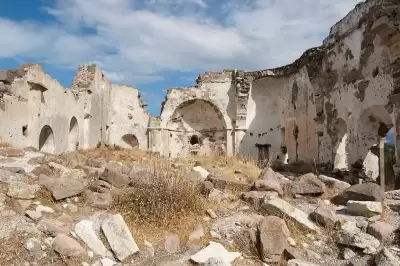
Erythrai Ancient City is an open-air site located within the borders of Ildırı Village, containing important remains of the Ionian civilization. Most visitors particularly appreciate the location of the Hellenistic period theater, built on the slope facing the sea, and the surrounding scenery. The fact that the area is free and open for exploration is also a positively received feature.
However, multiple visitors express their disappointment with the maintenance of the area. It is reported that historical structures are covered by dense vegetation, and even the theater is largely overgrown with plants. Observations that the village might have been built on top of the ancient city are also noteworthy; some visitors believe that the stones used in the village structures might have been taken from the ruins.
When planning your visit, it is recommended to pay attention to the following points:
- No parking: Multiple comments indicate that those arriving by car have serious difficulty finding parking.
- Narrow and unmaintained roads: The roads leading to the ancient city are narrow and covered with weeds, which can make vehicle and pedestrian access difficult.
- Difficulty seeing ruins: Due to vegetation, a significant portion of the historical structures cannot be clearly distinguished.
- Tiring in hot weather: Since the area is shadeless and open, visiting in summer months can be tiring; it is advisable to bring plenty of water.
Best Time to Visit
The most suitable period to visit Erythrai is spring (April-June) and the first half of autumn (September-October). During these months, the air temperature ranges between 20-28 degrees Celsius; as shaded areas are quite limited in the ancient site, the excursion will be much more enjoyable. In July-August, temperatures in the Çeşme region can exceed 35 degrees; if you still have to go, choose the early morning hours, preferably between 08:30-10:30. In winter, the area is generally deserted, and some facilities may be closed; during this period of increased greenery, it is possible to capture a different atmosphere from a photographic perspective.
How to Get to Erythrai?
By private car: From İzmir city center, take the O-32 Çeşme Highway, exit at Urla, and follow the Ildırı signs. The total distance is approximately 60 km, and the journey takes 50-60 minutes. From Çeşme center, it is 22 km and about 30 minutes. There is a parking area at the entrance of Ildırı Village.
By public transport: Regular bus services are available from İzmir to Çeşme; however, dolmuş (shared taxi) options from Çeşme to Ildırı are quite limited, and service times may be irregular. If you plan to go by public transport, we recommend checking return times in advance. A rental car or taxi is also a practical alternative.
Suggested Visit Route
After entering the ancient city, it is logical to head towards the theater first; it is both the best-preserved structure and the most impressive point of the visit with its view overlooking the Aegean. After the theater, you can go up to the acropolis area to examine the city walls and temple ruins. The view extending from the acropolis to the coastline of the peninsula is also valuable for photography. After exploring the area, a short walk through the narrow streets of Ildırı Village to see firsthand how ancient stones are intertwined with village houses is a beautiful experience that completes the visit.
What to Eat Nearby?
Since Ildırı Village is a small settlement, do not expect large restaurants; there are a few small cafes and eateries in the village. Fresh seafood and olive oil dishes stand out. If you are looking for a wider selection, Çeşme center, approximately 22 km away, or Alaçatı are ideal alternatives. Restaurants in the stone streets of Alaçatı successfully interpret Aegean cuisine. Don't forget to bring water and light snacks with you for your visit; there may not be a sales point in the ancient area.
Photography Spots
The most iconic photography spot in Erythrai is the ancient theater; behind the seating steps, the blue of the Aegean stretches out, and especially in the morning light, it yields wonderful shots. The city walls on the acropolis are also suitable for deep compositions. Within the village, there are corners suitable for street photography where ancient stones meet modern life. The golden hour, the 1-hour period before sunset, bathes the red-soiled peninsula in warm tones, and photos taken at that time look much more dramatic.
Things to Consider Before Visiting
The ground in the ancient area is uneven and stony; wearing comfortable, closed-toe shoes is important for both safety and comfort. Since shaded areas are extremely limited, do not forget to bring a hat, sunglasses, and sunscreen. Information in sources indicates that the area is closed on Saturdays; keep this in mind when planning your visit day and confirm current opening hours from official channels. Museum Card holders may benefit from discounted or free entry; keep your card with you.
How Much Time Should You Allocate?
Erythrai Ancient City alone can be explored in 1.5 to 3 hours. For those who love taking photos or want to examine every corner in detail, 3 hours will be sufficient. When combined with other points in Çeşme, Alaçatı, and the Karaburun Peninsula, allocating at least 2 full days to the region is logical to see everything adequately. Including Erythrai in a day trip program from Çeşme is also quite possible.
This content originates from neresigezilir.com.tr and may not be copied without permission.
Erythrai Ancient City Videos
Erythrai Ancient City videos load when you open this section to keep the page fast.
Show videos
FAQ

Updated: