


Merzifon Bedesten is a 17th-century Ottoman commercial building located in the Merzifon district of Amasya, and with its interior covered by nine domes and cut stone gates, it is one of the best-preserved bedestens in Anatolia.
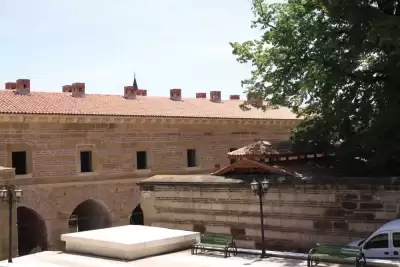
Merzifon Bedesten is a 17th-century Ottoman commercial building rising in Gazimahbup Neighborhood, Merzifon district of Amasya, just east of the Kara Mustafa Pasha Mosque. Supported by the Kara Mustafa Pasha Foundation, the structure, with its rectangular plan, monumental cut stone gates opening in four directions, and pointed arched piers inside, constitutes one of the most robust examples of Ottoman bedesten architecture in Anatolia.
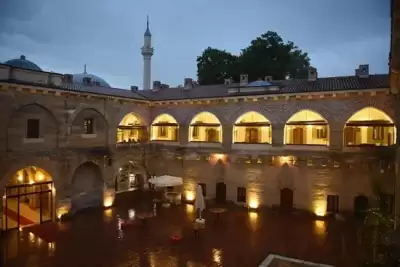
Inside, the piers are connected by pointed arches, and each of the nine sections formed by this arrangement is covered with a separate dome. Between the gates are arasta shops that surround the bedesten on all four sides; these shops historically housed various tradesmen such as butchers, barbers, tailors, shoemakers, coppersmiths, and saddlers. Restored in 2006 by the General Directorate of Foundations to be close to its original form, the building today opens its doors to visitors as a lively bazaar selling handicrafts, souvenirs, and local products.
Guide's Note
What is Merzifon Bedesten?
A bedesten is the name given to secure, enclosed commercial buildings in the Ottoman period where valuable goods were bought and sold. Merzifon Bedesten has survived to the present day as one of the most authentic examples of this tradition in Anatolia. The structure, which is part of the Kara Mustafa Pasha Complex, is located just east of the mosque and served to support the endowment revenues of the complex.
Although it is not known with certainty by whom and in what year the building was constructed based on definitive sources, the techniques and stylistic features used in its architecture indicate that the bedesten was built in the 17th century. The rectangular-planned building has large gates opening outwards on all four facades; in the sections between these gates, arasta shops line up, surrounding the bedesten.
Best Spots for Photography
Merzifon Bedesten offers a rich area for architectural photography. The monumental gates in four directions allow you to achieve strong compositions with their cut stone craftsmanship and the framing effect created by the gate arches. Early morning natural light filtering through the gates dramatically illuminates the domes and pointed arches in the interior.
Angular shots taken from between the piers inside, looking up towards the domes, are among the best photos to convey the depth and symmetry of the bedesten. The shopkeepers and handicrafts in front of the arasta shops offer unique frames for those who want to take documentary-style photographs. It is advisable to bring a wide-angle lens before your visit to easily fit the entire interior into the frame.
When to Visit?
Merzifon Bedesten can be visited throughout the year; however, spring and autumn months offer the most enjoyable period in terms of both weather conditions and bazaar atmosphere. During these seasons, the shops are more lively, and the activity within the bazaar allows you to experience the structure in a more authentic way.
Merzifon can be quite hot in summer; visiting early in the morning or late in the afternoon during this period offers a more comfortable experience. Some arasta shops may be closed in winter; therefore, if you want to see the full vibrancy of the bazaar, it is recommended to choose between April-June or September-October.
How to Get to Merzifon Bedesten?
Merzifon is approximately 49 km from Amasya city center. There are regular minibus and bus services from Amasya to Merzifon. If you are coming by your own car, simply follow the Amasya-Merzifon highway; once you enter the city center, you can use the Kara Mustafa Pasha Mosque signs as a reference.
After reaching Merzifon town center, the bedesten is about a 500-meter walk along Cumhuriyet Street. Once you find the Kara Mustafa Pasha Mosque, you will see that the bedesten is located just east of the mosque. It is easily accessible by taxi or on foot within the city.
What to Eat Nearby?
Merzifon is a small but friendly district that carries the flavors of Amasya cuisine. There are pide shops and small restaurants within and around the historical bazaar near the bedesten. Local stone oven pide and products made from Amasya's famous apple can be easily found in this region.
Local food products are also occasionally offered for sale in the arasta shops. For a more comprehensive dining experience, it is recommended to head to the established restaurants in Merzifon center or consider the facilities along the way when returning to Amasya.
Shopping at the Bedesten
Merzifon Bedesten partially maintains its historical function and continues to be a shopping venue today. In the arasta shops, you can find handicrafts, souvenirs, and local products. The authentic atmosphere of the building makes shopping a very different experience from a regular market.
For those who want to shop in a historical bedesten, this place offers both a cultural experience and a practical opportunity. Do not hesitate to ask if the products you buy come from local producers; unique handicrafts from Merzifon and its surroundings make the most beautiful souvenirs of the region.
Things to Know Before Visiting
Merzifon Bedesten is an actively used historical building. During your visit, it is recommended to avoid touching the architectural elements of the structure, such as walls, columns, arches, and domes. Adopting a respectful and quiet demeanor inside the building is a matter of courtesy to both other visitors and shopkeepers.
There is no entrance fee. Since shop opening hours can vary by season and day of the week, choosing weekday daytime hours would be a safer choice to see the full vibrancy of the bazaar. Photography is allowed; however, it is good practice to ask for permission before taking photos of shop owners.
This content originates from neresigezilir.com.tr and may not be copied without permission.
Merzifon Bedesten Videos
Merzifon Bedesten videos load when you open this section to keep the page fast.
Show videos
FAQ
Updated:


