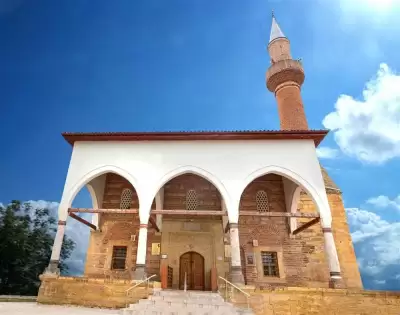
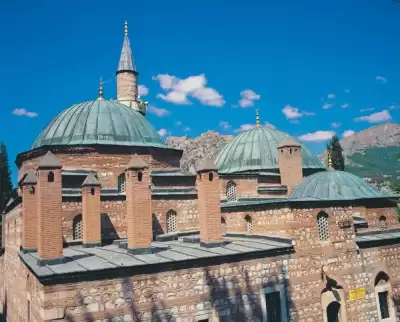
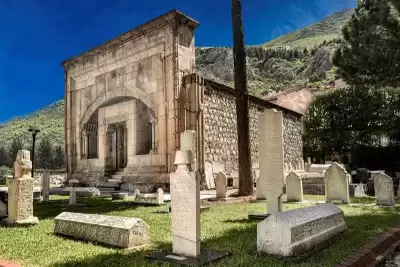
Mehmet Pasha Mosque is an Ottoman-era structure located on the banks of the Yeşilırmak River in Amasya, built in 1486 by Mehmet Pasha, the tutor of Şehzade Ahmet, son of Bayezid II. It is known for its reverse T-plan architecture and intricately carved wooden door, and can be visited for free as an active place of worship.
Among the structures that form the historical fabric of Amasya, the Mehmet Pasha Mosque holds a special place, particularly due to its architectural features. Built in 1486 by Mehmet Pasha, who was the tutor of Şehzade Ahmet, son of Bayezid II, the mosque is located on Pirinççi Street in the Mehmet Pasha neighborhood, near the Yeşilırmak River. Together with the adjacent Mustafa Bey Bath, this street forms one of the rare corners that carry the daily life of the Ottoman period into the present day.
The most distinctive feature of the mosque is its reverse T-plan structure; this plan type is encountered in multiple examples in Amasya and reflects the traces of early Ottoman architecture in the region. Its original wooden carved door is exhibited today in the Amasya Museum, and even when you see it in person, it is possible to understand the delicate craftsmanship with which the building was constructed. Since the mosque is still actively open for worship, it is recommended to plan your visit accordingly.
Guide's Note

Mehmet Pasha Mosque is described by the vast majority of visitors as a structure that stands out with its simple but balanced architecture. A modest aesthetic, far from ostentation, is noticeable in the mosque, where the classical Ottoman line is distinctly felt. Its square plan, stone and brick workmanship, and traces of 15th-century Ottoman architecture are among the main features highlighted by visitors.
Inside, the marble minbar and ornamentation stand out as elements particularly appreciated by visitors. The mosque's location on the banks of the Yeşilırmak River, along with historical structures such as inns, baths, and madrasahs in its vicinity, offers a holistic cultural atmosphere. Positive feedback on cleanliness and order is also present; multiple visitors note that the place is well-maintained and tidy.
While all comments are positive, it is difficult to make broad generalizations as the number of people who have directly experienced the place remains limited. You may consider the following points before your visit:
- The mosque is a small-scale structure; it is recommended not to go with expectations of a large interior space.
- Some comments are not specific to the mosque but rather to the general tour experience, thus limiting the number of direct feedback about the place.
When to Visit?
The most enjoyable periods to visit Amasya are April-May and September-October. During these seasons, the weather is mild, making it a much more comfortable experience to explore the historical streets on foot. When visiting Mehmet Pasha Mosque along with other structures on the Yalıboyu route, early mornings or afternoons can be preferred; the crowds are quite sparse at these times. Due to Amasya's inland climate, summer midday temperatures can be oppressive, so it is recommended to include hours between 9-11 AM or after 4 PM in your plan.
How to Get There?
Mehmet Pasha Mosque is located on Pirinççi Street, within the historical fabric of Amasya city center. Those following the Yalıboyu walking route will naturally reach the mosque, as the structure is on this historical corridor. You can arrive within 5-10 minutes on foot from hotels or accommodation points in the city center. If you are coming by car, the narrow streets nearby may limit parking options; it would be more practical to park at a wider spot in the city center and prefer to walk. For those coming to Amasya from afar, the nearest bus terminal is a few kilometers from the city center; it is possible to reach the center by taxi or dolmuş from there.
Route Suggestion: Exploring the Historic Center
Instead of visiting Mehmet Pasha Mosque alone, incorporating it into a walking route that covers Amasya's historic center offers a much more enriching experience. You can start from the Yalıboyu Houses and walk along the Yeşilırmak River, stopping at Mehmet Pasha Mosque, then seeing the nearby Mustafa Bey Bath. Continue your route with Gümüşlü Mosque and Saraçhane Mosque to have the opportunity to comparatively examine Ottoman-era religious architecture. For those who wish to see the mosque's original wooden door, it is logical to add a visit to the Amasya Museum to this route, as the door is exhibited there. This entire itinerary can be comfortably completed within approximately half a day.
Photo Spots
Mehmet Pasha Mosque attracts photography enthusiasts with its simple but unique facade. Photographing the mosque's exterior facade in the morning hours when the daylight falls at the best angle clearly reveals the texture of the stone workmanship. When the structure's relationship with the street and the adjacent historic bath are framed together, a strong composition reflecting the Ottoman-era urban fabric can be achieved. Additionally, the reproduction of the mosque's original wooden door or the original in the Amasya Museum is also a detail worth photographing. Wide-angle lenses can be preferred to capture the narrow street fabric.
What to Eat Nearby?
In the immediate vicinity of Mehmet Pasha Mosque, there are small local businesses offering Amasya's local delicacies. As mentioned in research sources, there is a famous çörek baker right next to the mosque; Amasya çörek is one of the best-known foods in this region and is highly recommended to try during your visit. Cafes and restaurants along the Yeşilırmak River in the city center offer suitable options for lunch. Amasya's unique apple products are also an integral part of the region's gastronomic identity.
Things to Know Before Visiting
Mehmet Pasha Mosque is an active place of worship. During your visit, it is important to pay attention to prayer times and not disturb those who are worshipping. Shoes must be removed when entering; female visitors are expected to cover their heads. When taking photos, it is important to avoid framing people who are worshipping out of respect. The mosque's original wooden door is no longer in place, it is exhibited in the Amasya Museum; therefore, those who wish to see the door should add the museum to their visit plans. It is recommended to pay attention to vehicle traffic in the narrow streets.
Architectural Features
Mehmet Pasha Mosque is considered one of the most prominent examples of early Ottoman architecture in Amasya, with its reverse T-plan structure. In this plan type, side spaces or iwans are located in front of the main prayer hall; this arrangement reflects the architectural understanding of the period both functionally and aesthetically. The structure was built in 1486 and constitutes a concrete example of the architectural production in Anatolia during the reign of Bayezid II. The most striking element of the mosque, its original wooden carved door, demonstrates the advanced level of Amasya's wood craftsmanship tradition. The structure still stands today and largely preserves its originality.
This content originates from neresigezilir.com.tr and may not be copied without permission.
Mehmet Pasha Mosque - Amasya Videos
Mehmet Pasha Mosque - Amasya videos load when you open this section to keep the page fast.
Show videos
FAQ

Updated: