Çilehane Mosque is a Halveti Lodge built by Yakup Pasha in 1413 in Amasya city center. Designed with a square plan and single-domed Early Ottoman architecture, the structure was built for dervishes to undergo spiritual discipline and was later converted into a place of worship. Admission is free.
Among the structures that bear witness to Amasya's deep-rooted history, Çilehane Mosque holds a special place with both its function and its past. Built in 1413 by Yakup Pasha, one of the commanders of Çelebi Sultan Mehmed, the structure was originally designed as a Halveti Lodge. This place, where dervishes underwent spiritual discipline and self-purification, was eventually converted into a mosque and is still used as a place of worship today.
Located at the foot of Mount Harşena, in the Mehmetpaşa Neighborhood, the structure bears the characteristic features of Early Ottoman religious buildings with its square plan and single-domed architecture. Each of the mosque and lodge sections is covered by a separate large dome. Damaged in the 1939 earthquake, the building was repaired in 1964 by the General Directorate of Foundations. Historical records reveal that Sultan Mehmed the Conqueror also received education in the madrasah connected to this structure; this adds a distinct meaning to Çilehane.
Guide's Note
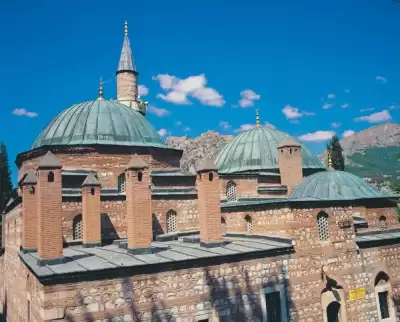
Çilehane Mosque, located in the historical fabric of Amasya, is considered by the vast majority of visitors to be one of the city's most striking structures. Built in 1413, the structure was originally a Halveti Lodge, consisting of a small mosque, a tomb, and ascetic cells. Its body walls, built with rubble stone and brick lines, its arched door, and marble-framed windows leave a strong architectural impression from the outside.
Upon entering, the small ascetic rooms that greet you are the most talked-about feature of the place. The fact that some of these rooms open directly into the mosque gives the structure a unique interior design. Visitors particularly emphasize the spiritual atmosphere and silence of the mosque; some visitors describe it as the place where they felt spirituality most intensely in Amasya. The structure stands out as an interesting stop for both faith tourism and architectural curiosity.
While it is difficult to make definitive generalizations due to the limited number of comments, a few points stand out:
- It is stated that the place is generally calm and quiet during visiting hours; it may not be well-known enough as it is not included in guided tour programs.
- Since the structure is not on the routes of tour companies, it may require some research to discover; however, it is accessible by walking or by car.
Best Time to Visit
Most of the year is suitable for visiting Çilehane Mosque; however, spring and autumn months offer the most pleasant period in terms of both weather conditions and Amasya's general atmosphere. You can find the structure quieter in the early morning or after the afternoon prayer. In summer, it is more appropriate to prefer a morning visit to avoid the midday heat. Those planning to visit during Friday prayer times should be prepared to wait a little to explore the interior after the prayer ends.
How to Get There
Çilehane Mosque is located within walking distance of Amasya city center, on Şeyh Abdurraman Street in Mehmetpaşa Neighborhood, opposite Pirler Park. It is possible to reach it by walking 10–15 minutes from Amasya's historical bazaar or the Yeşilırmak riverbank. For those arriving by car, parking spaces can be found in nearby streets; however, approaching by car may not always be easy due to narrow streets. Those coming to Amasya by intercity bus can reach the city center by minibus or taxi from the bus station and then walk to the mosque.
History and Architectural Features of the Structure
Çilehane Mosque was built in 1413 by Yakup Pasha, one of the commanders of Çelebi Sultan Mehmed. The original function of the structure was not a mosque, but a Halveti Lodge; that is, a religious place used by dervishes for spiritual purification and asceticism. It takes its name from this function: çilehane means a place where asceticism is practiced.
Architecturally, the structure is a typical example of square-plan and single-domed Early Ottoman religious architecture. Each of the mosque and lodge sections is covered by separate large domes, and these two sections are connected by a corridor. The structure, which was severely damaged in the 1939 earthquake, was extensively repaired by the General Directorate of Foundations in 1964. Historical records state that Sultan Mehmed the Conqueror also received education in the madrasah connected to this structure; this information makes Çilehane an important link in Ottoman history.
Photo Spots
Çilehane Mosque offers beautiful shots for photography enthusiasts with its simple but impressive architecture. The angle from which the domes are seen together from the outside reflects the essence of Early Ottoman architecture. Looking from Pirler Park, a holistic composition can be obtained with the facade of the building and its surroundings. In the morning light, the texture of the stone walls becomes quite distinct and captures a warm color tone. Wide-angle shots taken with the foothills of Mount Harşena beautifully convey the structure's location integrated with nature. When taking photos inside, remember to act respectfully if there are people praying.
Suggested Route: Amasya Historical Fabric Tour
Çilehane Mosque can easily be included in a day-long walking route covering Amasya's historical structures. You can start your day with the Ottoman houses along the Yeşilırmak riverbank and then visit the Amasya Museum. From there, you can walk past Bimarhane (Amasya Hospital) and Burmalı Minare Mosque to reach Çilehane Mosque. In the afternoon, you can climb to Harşena Castle to enjoy both history and panoramic views. This route allows you to experience the different layers of Amasya from various periods in a single day.
Things to Know Before Visiting
Çilehane Mosque is an active place of worship; therefore, you are expected to take off your shoes and be quiet when entering. Female visitors are required to cover their heads; it is advisable to carry a small scarf or shawl with you. Those wishing to visit during prayer times may choose to wait until the prayer is over before entering. The streets around the building can be narrow and steep; comfortable walking shoes are recommended. There is no official visitor center or guided tour service; for those seeking information, Amasya Museum is a good starting point.
What to Eat Nearby
There are various food and drink options near Çilehane Mosque and in Amasya city center. Among Amasya's unique flavors, the Amasya apple stands out; it can be found fresh or processed in every corner of the city. In the restaurants along the Yeşilırmak riverbank, you can try local tastes such as tarhana soup, keşkek, and höşmerim. Small coffee houses around the historical bazaar are nice spots to take a break between visits. For lunch, artisan restaurants in the city center offer both affordable and authentic options.
This content originates from neresigezilir.com.tr and may not be copied without permission.
FAQ

Updated: