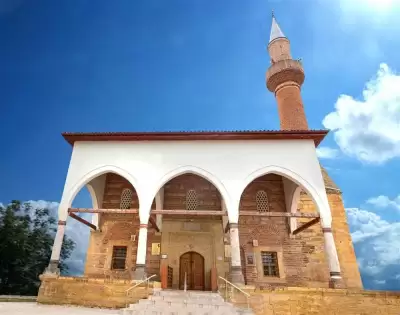
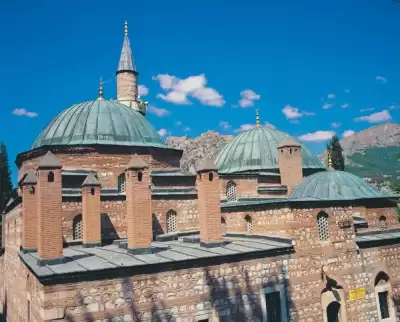
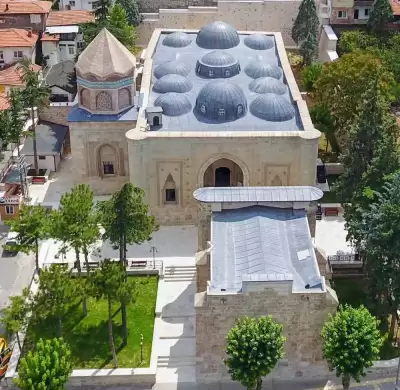
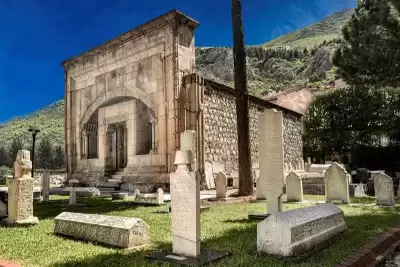
Kapı Ağası Madrasah is an Ottoman madrasah built in 1488 by Hüseyin Ağa, the chief gatekeeper of Sultan Bayezid II, on the banks of the Yeşilırmak River in Amasya. It deviates from classical madrasah architecture with its octagonal courtyard plan and garden with a pool, and is currently open to visitors as a museum.
Among the structures imbued with Amasya's historical fabric, the Kapı Ağası Madrasah holds a special place. This madrasah, built in 1488 by Hüseyin Ağa, the chief gatekeeper of Sultan Bayezid II, is also known as Büyük Ağa Madrasah and Madrasah-i Hüseyniyye. Located on the northern bank of the Yeşilırmak River, in the Şamlar neighborhood, the structure has witnessed the city's intellectual and cultural life for centuries.
The most striking feature of the madrasah is its octagonal courtyard scheme, which distinctly deviates from the classical Ottoman madrasah plan. This design is considered one of the pioneering examples of its period, as it incorporates a plan concept more commonly found in Seljuk tomb monuments into madrasah architecture. Its courtyard with a pool and adorned with flowers adds a calm, peaceful atmosphere to the structure. Today, the madrasah is used for cultural and tourism purposes and is one of the must-visit stops for anyone exploring Amasya.
Guide's Note

Kapı Ağası Madrasah stands out as one of the historical structures that most visitors to Amasya recommend seeing. Visitors state that the place strongly conveys its historical atmosphere; the building's centuries-old past is clearly evident when you are inside.
The fact that the madrasah is still actively used for hafiz (Quran memorization) courses is a detail that attracts attention and is positively received by visitors. This allows you to view the structure not only as a historical site but also as a living educational institution. The recent carpet renovation work has also been noticed by visitors.
While existing comments are generally positive, they are limited in number and mostly consist of brief impressions. Therefore, it is currently difficult to make a comprehensive assessment of the detailed strengths or weaknesses of the place. It is safe to say that it is a recommended stop to include in your Amasya travel plan.
The Story and Architectural Significance of the Madrasah
Kapı Ağası Madrasah takes its name from its founder, Hüseyin Ağa; Hüseyin Ağa served as the chief gatekeeper (Kapı Ağası) in the palace of Sultan Bayezid II and was known for his statesmanship as well as his charitable works. By building this madrasah in Amasya in 1488, he both provided the city with a permanent center of learning and inscribed his name in history.
The most unique aspect of the structure is its octagonal courtyard plan. While the vast majority of Ottoman madrasahs were designed around rectangular or square courtyards, Kapı Ağası Madrasah broke this mold by adapting the octagonal scheme, found in Seljuk tomb monuments, to an educational building. This choice places the structure in a unique position within Ottoman architectural history. The pool in the center of the courtyard and the flowers surrounding it add a simple beauty to the space.
When to Visit?
Amasya has a unique charm in all four seasons; however, April and May are particularly recommended for Kapı Ağası Madrasah. During this period, the flowers in the courtyard are in full bloom, and sitting by the pool becomes a real pleasure. The cool days of autumn are also ideal for a visit; tourist density decreases, and the light becomes extremely favorable for photography.
Visiting in the early morning during the summer months will both protect you from the heat and allow you to explore the madrasah in a calmer environment. For winter visits, we recommend checking in advance as opening hours may be shorter.
How to Get There?
The madrasah is located in the Şamlar neighborhood on the northern bank of the Yeşilırmak River, within walking distance of Amasya city center. Since Amasya's historical center has a very compact structure, it is possible to reach it on foot from most accommodation points.
Those arriving by intercity bus will alight at Amasya bus terminal, from where they can reach the center in a few minutes by city minibus or taxi. If you are traveling by private car, you can look for parking spaces on the streets along the Yeşilırmak riverbank; moving early in the day will make it easier to find parking during peak season.
Photo Spots
The madrasah's crown gate is the most natural stop for the first shot; the geometric ornaments carved into the stone and the inscription offer rich detail for close-ups. As you step into the courtyard, you can frame the pool and the surrounding porticoes together; this shot is particularly impressive when the morning light falls softly into the courtyard.
Looking from the corners of the octagonal courtyard, the symmetrical geometry of the structure is clearly felt; it is possible to capture this perspective with a wide-angle lens. During the period when the flowers bloom, the poolside offers a ready stage for colorful compositions.
What to Eat Nearby?
There are many restaurants and cafes serving local delicacies in the immediate vicinity of Kapı Ağası Madrasah and throughout Amasya's historical center. Amasya's famous çekme helva (pulled halva) and apple products are considered symbols of the city; we highly recommend tasting them during your visit.
Taking a break with tea or Turkish coffee at the cafes along the Yeşilırmak riverbank becomes a pleasant ritual after visiting the madrasah. For lunch, you can opt for restaurants offering traditional Amasya cuisine such as meatballs and tarhana soup.
Budget and Practical Information
Admission to the madrasah is charged and MuseumPass is accepted. If you plan to visit multiple historical sites in Amasya, acquiring a MuseumPass significantly reduces the total cost; the card is valid at many museums and archaeological sites across Turkey.
The visit duration usually varies between 30–60 minutes; if you combine this with a short walk along the Yeşilırmak riverbank or other nearby historical structures, you will make efficient use of your day. Prices in nearby cafes and restaurants are quite reasonable compared to big cities.
Amasya Itinerary Suggestion
Kapı Ağası Madrasah is an ideal starting point for exploring Amasya's rich heritage in the historical center. After visiting the madrasah, you can cross to the opposite bank of the Yeşilırmak to visit the Bayezid Mosque, and then walk along the river to the Amasya Museum.
In the afternoon, climbing up to the rock-cut Pontus King Rock Tombs will crown your day both historically and scenically. In the evening, the illuminated view of the riverside mansions along the Yeşilırmak offers perhaps Amasya's most romantic tableau.
This content originates from neresigezilir.com.tr and may not be copied without permission.
Kapı Ağası Madrasah (Büyük Ağa Madrasah) – Amasya Videos
Kapı Ağası Madrasah (Büyük Ağa Madrasah) – Amasya videos load when you open this section to keep the page fast.
Show videos
FAQ
Updated: