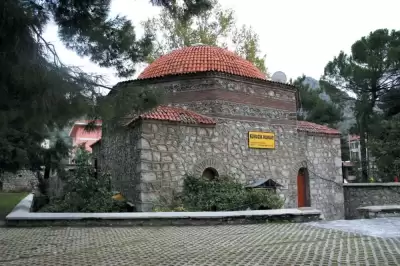
The Torumtay Tomb is a Seljuk tomb located in the center of Amasya, opposite the Gök Medrese, built in 1278 for Governor Seyfeddin Torumtay. Noteworthy for its dark green tiles and cut stone masonry, the structure houses nine sarcophagi.
Among the many Seljuk structures imbued with Amasya's historical fabric, the Torumtay Tomb holds a special place both for its architectural features and its historical significance. Built in 1278, after the death of Seyfeddin Torumtay, the then Governor of Amasya, the tomb houses not only the governor's sarcophagus but also those of his children and grandchildren. A total of nine sarcophagi are located in the deep rectangular space that greets you as you step through the entrance.
The structure has a decorative style that distinctly deviates from the Seljuk tomb tradition. While decorations in other tombs are generally concentrated around doors and windows, in the Torumtay Tomb, ornamental elements have been moved to the upper sections of the building. The high relief motifs on the two upper corners of the south facade are considered among the most mature examples of Seljuk stone craftsmanship. The brick-built vault and the rubble stone used in the inner wall structure remain hidden beneath a layer of plaster. When all these features are considered together, the structure, along with the Gök Medrese, one of the few mosques in Anatolia with an iwan-shaped portal, creates the impression of a complete complex.
Guide's Note
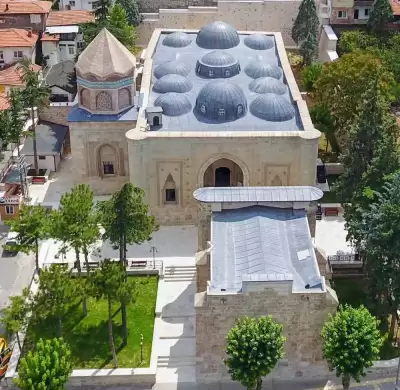
The Torumtay Tomb stands out as one of the important structures from the Anatolian Seljuk period that has survived to the present day, located in the city center of Amasya, right next to the Gök Medrese Mosque. Built in 1278 by Seyfeddin Torumtay, the then Governor of Amasya, the tomb houses the graves of Torumtay, as well as his children and grandchildren. Visitors emphasize that the structure clearly reflects Seljuk architecture and forms a complex with the Gök Medrese.
The turquoise tiles adorning the upper section of the octagonal-planned and cut-stone tomb are the most striking architectural element that attracts visitors' attention. It is stated that the structure has a simple but unique texture, and this simplicity adds a distinct solemnity to the space. When visited together with the adjacent Gök Medrese, it is possible to gain a comprehensive impression of Seljuk period architecture.
While existing comments are generally positive, it is difficult to make a definitive assessment on the following points as their number is limited. Nevertheless, we recommend you pay attention to:
- No complaints or negative experiences have been reported in the comments; however, since it is based on only five reviews, it is recommended to check current conditions (opening hours, accessibility status) separately before your visit.
History and Significance of the Tomb
The Torumtay Tomb takes its name from Seyfeddin Torumtay, the governor who ruled Amasya during the Anatolian Seljuk State period. The governor had the Gök Medrese built in the city in 1267; after his death, this tomb was constructed in his memory in 1278. The tomb is the final resting place not only for the governor but also for his children and grandchildren; there are a total of nine sarcophagi inside.
The structure has a design that consciously transcends the conventional patterns of Seljuk tomb tradition. While decorations in other tombs of the period were largely concentrated around doors and windows, here the ornamental elements have been moved to the upper sections of the building. This choice gives the tomb both a visual originality and serves as a showcase for the mastery of the stone craftsmen of the era.
Best Spots for Photography
The south facade of the tomb, with its high relief motifs, should be the first stop for photography enthusiasts. In the early morning hours, the light coming from the east highlights the reliefs on the stone surface, allowing you to capture deep and detailed shots. To include both the Gök Medrese and the tomb in the same frame, you can take a wide-angle shot from the opposite sidewalk.
Inside, the perspective created by the pointed barrel vault and the natural light falling on the sarcophagi provide a suitable environment for atmospheric photos. Considering the visitor density that enters during the middle of visiting hours, it is recommended to prefer the early morning hours.
How to Get There?
The Torumtay Tomb is located right in the heart of Amasya city center, making access extremely easy. You can reach İstiklal Street within a few minutes by city minibus or taxi from Amasya bus station. Since the tomb is directly opposite the Gök Medrese, you can use the minaret of the madrasah as a reference when you arrive in the area.
The tomb is a natural point on the historical city walk along the Yeşilırmak river. It is possible to walk to the Gök Medrese and Torumtay Tomb starting from the Yalıboyu Houses. For those arriving by car, there is limited parking available in the vicinity.
When to Visit?
The ideal times to visit Amasya are April–June and September–November. During these periods, the weather is extremely suitable for both walking and outdoor photography. In mid-summer, the city may experience a short-term tourist influx; however, since the tomb is not as crowded as large museums, it offers a peaceful visiting experience even in the summer months.
Visiting the tomb in the early morning hours, before the daytime visitor traffic begins, will provide a much more satisfying experience both in terms of photo quality and spirituality. During Friday prayer times, activity in the area may increase due to nearby mosques.
Amasya Historic Center Route Suggestion
The Torumtay Tomb is an integral part of the intense cultural route in Amasya's historic center. You can combine a visit to the Gök Medrese and the tomb, then walk along the Yeşilırmak river to the Yalıboyu Houses. From there, proceeding to the Amasya Museum forms a logical sequence; examining Seljuk period artifacts in the museum will deepen the impression you gain at the tomb.
In the afternoon, you can climb to the King Rock Tombs to see the city from above, and in the evening, you can complete the day by relaxing at the historic bridge by the Yeşilırmak river. This route can be completed in approximately half to a full day.
What to Eat Nearby?
The historic center where the tomb is located is close to one of Amasya's most vibrant dining routes. Restaurants and small cafes along the Yeşilırmak river offer ideal options for a break after your visit. Amasya's unique Amasya apple desserts and apple products are among the top local delicacies.
For those who want to taste the city's traditional cuisine, small restaurants in the surrounding streets are reliable addresses for testi kebab and local soups. If you plan your tomb visit for early morning, you can try Amasya simit and local pastry varieties for breakfast at nearby bakeries.
Things to Consider Before Visiting
As the tomb is a religious site, a quiet and respectful demeanor is expected during your visit. It is important to consider the peace of other visitors when taking photos inside. It is a traditional expectation for female visitors to cover their heads; it would be practical to carry a thin scarf with you.
Access to the lower-level burial chamber may not always be possible; restoration work can sometimes close certain parts of the structure to visitors. We recommend following current announcements from Amasya Municipality or the Museum Directorate before your visit.
This content originates from neresigezilir.com.tr and may not be copied without permission.
Torumtay Tomb Videos
Torumtay Tomb videos load when you open this section to keep the page fast.
Show videos
FAQ

Updated: