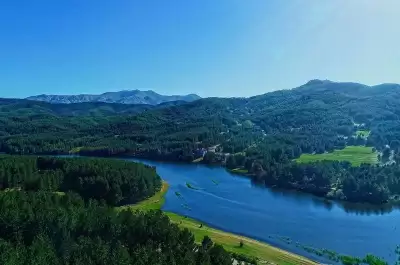
Göynüş Valley, located near Afyonkarahisar, is the largest necropolis of Mountainous Phrygia. The rock-cut tombs, dating back to the 7th century BC, are adorned with lion figures and geometric reliefs. It can be visited free of charge.
Göynüş Valley carries one of the deepest imprints left by the Phrygian civilization on Anatolian lands. Easily accessible via the Afyonkarahisar-Eskişehir highway, this valley stands out as the largest necropolis of Mountainous Phrygia. The rock-cut tombs, dating back to the 7th century BC, showcase the craftsmanship of the era with their geometric reliefs and lion figures.
Beyond being merely an archaeological site, the valley also attracts nature hikers with its steep slopes shaped by volcanic rocks, cool air, and secluded beauty. For those who wish to see the culture of Phrygia, synonymous with King Midas, and its rock-carved architectural tradition firsthand, Göynüş Valley remains one of the region's least known but most impressive stops.
Guide's Note

Göynüş Valley, as one of the prominent stops in the Phrygian region, welcomes both history and nature seekers. Visitors realize how vibrant the Phrygians' stone craftsmanship remains centuries later when they see rock-carved monuments like Aslantaş and Yılantaş up close. The Maltaş monument also stands out as a stop that completes the historical depth of the valley.
The valley is also considered a quiet hiking and photography route. For those who want to see the relief details on the monuments more clearly, a visit in the early morning or late afternoon, when the light is not direct, is recommended. Many visitors, including those from nearby areas, state that it is worth stopping by on their way.
However, there are some practical points to consider:
- Lack of signage: It is reported that there are not enough signs to find Aslantaş and other reliefs, and one visitor had to ask passing vehicles for directions.
- Seasonal preference: In winter months, it can be difficult to explore the entire valley; spring or summer months are more suitable for a comprehensive visit.
Best Time to Visit
The ideal time to visit Göynüş Valley is during April-May and September-October. In these seasons, the weather is neither scorching nor cold; the reliefs on the rock surfaces are much clearer in soft light, and hiking is enjoyable. In mid-summer, the valley can be quite hot; if you are coming in the summer months, prefer the early morning hours. In winter months, roads can sometimes become difficult, especially in rainy weather, the dirt ground can be slippery.
How to Get to Göynüş Valley
The most practical way to reach the valley is by private car. You need to turn right at the 27th kilometer of the Afyonkarahisar-Eskişehir highway and continue for approximately 4.7 km. You can navigate by typing Göynüş Valley or Bayramaliler Village into navigation apps. For those who prefer public transport, minibuses departing from Afyonkarahisar village garage towards Kayıhan are an alternative; however, be prepared to walk for the last few kilometers. There is approximately a 2 km walking distance from Bayramaliler village to the valley.
Photography Spots
Göynüş Valley is one of the most striking photography locations in the Phrygian geography. The lion figures and geometric reliefs on the facades of the rock tombs provide excellent shots, especially in the early morning and late afternoon with soft side lighting. As you proceed from the entrance of the valley inwards, the perspectives opening up between the rocks are perfect for wide-angle shots. It is also possible to frame the entire valley by climbing to high points; from this angle, the texture created by the volcanic rock layers is extremely impressive. If you are considering using a drone, we recommend checking local regulations beforehand.
Route Suggestion: Combine with the Phrygian Way
Göynüş Valley is part of the Phrygian Way route, which opened in 2013. This long hiking and cycling trail, marked to international standards, extends across the Eskişehir, Kütahya, and Afyonkarahisar triangle. If you want to see not only Göynüş Valley but also other Phrygian remains in its surroundings, you can approach the region from three main branches: Yazılıkaya in the Eskişehir leg, Ayazini and the Döğer area in the Afyon leg, and various rock monuments in the Kütahya leg await you. Completing the Göynüş Valley visit by starting from Bayramaliler village and extending through Döğer to Emre Lake adds meaning to the day.
Food and Drink
There are no restaurants or cafes immediately around Göynüş Valley; therefore, it is essential to bring enough water and snacks with you. When you return to Afyonkarahisar city center, you will encounter the city's famous delicacies. Afyon clotted cream (kaymak) and sausage (sucuk) are nationally recognized products; you can obtain them fresh from established shops in the city center. In the Döğer district, it is also possible to find small restaurants along your way.
Things to Know Before Visiting
Since Göynüş Valley is an open-air area, wearing sturdy hiking shoes is very important; the ground is uneven and rocky. Bring enough water with you, especially in summer months, shaded areas are quite limited. The rock tombs and reliefs are thousands of years of historical heritage; be careful not to touch surfaces or move anything. Since signal problems may occur, download your route beforehand or print a map. As the region is within the Phrygian Valley Nature Park boundaries, avoid behaviors that could harm nature.
How Much Time to Allocate
For Göynüş Valley alone, half a day is sufficient; you can comfortably explore the rock tombs and their surroundings with a 2-4 hour walk in the valley. However, if you want to explore the entire Phrygian Valley, you need to plan at least 2-3 days for this geography covering the Afyon, Kütahya, and Eskişehir triangle. Using Afyonkarahisar as a base and visiting a different Phrygian site each day is both a practical and comfortable approach.
This content originates from neresigezilir.com.tr and may not be copied without permission.
Phrygia - Göynüş Valley Videos
Phrygia - Göynüş Valley videos load when you open this section to keep the page fast.
Show videos
FAQ

Updated: