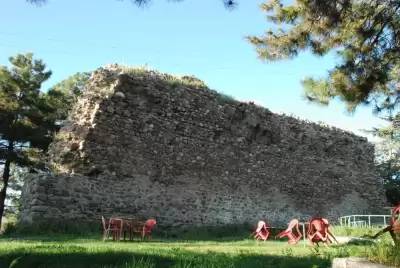
Yılantaş is a Phrygian rock tomb located in the Göynüş Valley in the İhsaniye district of Afyonkarahisar. It reflects the stonework of the Phrygian civilization with its fragmented triangular ceiling beams and reliefs on its outer surface.
Yılantaş stands out as one of the most striking rock monuments in the Phrygian Valley Region, located within the Göynüş Valley in the İhsaniye district of Afyonkarahisar. This tomb chamber, carved into the rock by the Phrygians, is situated immediately west of Aslantaş, continuing along the same rocky mass. Although a large part of the monument has fragmented over time, its triangular ceiling beams are still in place; the reliefs on the outer surface reveal the unique traces of Phrygian art.
Believed to belong to a nobleman, Yılantaş, along with Aslantaş, forms one of the most remarkable points of the Göynüş Valley archaeological site. This monument, which can be visited along the same route with other Phrygian remains such as Göynüş Castle and Maltaş in the valley, is an indispensable stop for those who want to experience Phrygia's history carved into the rocks firsthand.
Guide's Note
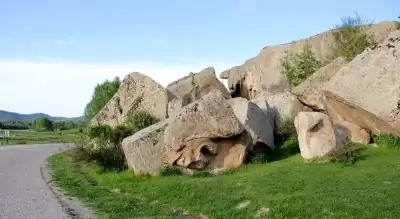
Yılantaş is a rock monument located in the Göynüş Valley, dating back to the 7th century BC; it is believed to be the tomb of an important Phrygian king. Visitors generally find the lion figure carved into the stone and the historical atmosphere intertwined with nature to be valuable. The location of the site by the roadside and the lack of parking problems provide ease of access.
With its tranquil structure, it stands out as a suitable stop for those who want to visit historical sites and have a picnic. Restoration work at the nearby Maltaş archaeological site and road improvements by the municipality have positively contributed to the region; however, visitors note that Yılantaş has not received enough attention from this interest.
While overall visitor satisfaction is positive, some notable points can be listed as follows:
- Lack of maintenance and protection: It is stated that there has been damage to the monument, which has not yet been rectified by the authorities.
- Low interest: Multiple visitors emphasize that the site is not sufficiently known by the public and gives the impression of being abandoned to its fate.
- Regional context: Since there are dozens of Phrygian valleys in the vicinity, Yılantaş can be considered as part of a regional tour rather than planning a long visit alone.
Best Time to Visit
The ideal time to visit Yılantaş and Göynüş Valley is during the spring and autumn months. In April–May, the valley is covered in fresh greenery, and the contrasting landscape among the rocks offers perfect light for photography. In September–October, temperatures drop to a more comfortable level for hiking, and visitor density relatively decreases.
During the summer months, the weather in the interior of Afyonkarahisar can be quite hot; especially at noon, the temperature on the rocks becomes oppressive. In winter, roads can sometimes be muddy or slippery, so caution is advised. Entering the valley early in the morning allows you to enjoy the cool air and explore the monuments in a calmer environment.
How to Get There
The most practical way to reach Yılantaş is by private vehicle. From the 32nd kilometer of the Afyonkarahisar–Eskişehir highway, turn west at the indicated sign and drive approximately 1.5 km to reach the entrance of the Göynüş Valley archaeological site. The journey from Afyonkarahisar city center takes about 30–40 minutes.
Public transportation is very limited; although minibuses are available to the İhsaniye district, the walking distance from there to the archaeological site is long. Therefore, car rental or day trips organized from Afyonkarahisar center might be more suitable options. You can search for Aslantaş–Yılantaş Archaeological Site or Göynüş Valley in navigation applications.
Suggested Route: Göynüş Valley Tour
Visiting Yılantaş not alone, but as part of a route that covers the entire Göynüş Valley, offers a much more rewarding experience. From the entrance of the archaeological site, it makes sense to first visit Aslantaş, then walk along the same rocky ridge to Yılantaş. Göynüş Castle and Maltaş are also located along the route.
It is recommended to allocate at least 2–3 hours to visit all these points at a comfortable pace. Since the hiking trail is partly uneven, it is important to wear sturdy hiking shoes. Shady areas in the valley are quite limited; don't forget to bring plenty of water, a hat, and sunscreen.
Photo Spots
Yılantaş offers a highly unique composition thanks to the triangular ceiling beams revealed by the monument's fragmented structure. Photos taken from a low angle in front of the rock best convey the monument's size and its relationship with its surroundings. In the morning, the play of light and shadow created by the sun coming from the east on the rocks is visually very impressive.
If you want to capture Aslantaş and Yılantaş in the same frame, you need to step back a bit from the rocky ridge. To capture the general view of the valley, the high points where Göynüş Castle is located offer ideal shooting locations. A wide-angle lens and a polarizing filter will be useful for enhancing rock textures and sky contrast.
Things to Know Before Visiting
Part of the road leading to Göynüş Valley is on an unpaved surface; it can become muddy in rainy weather. It is advisable to confirm road conditions with local sources before going with low-clearance vehicles. Some rocky passages within the archaeological site can be steep and slippery, so families with children should be careful.
The monuments are protected cultural heritage sites; touching reliefs, climbing on them, or causing any damage is prohibited. Bring enough water and snacks with you; there are no sales points within the valley. It is recommended to get information in advance, considering that visiting hours may vary by season.
Phrygia's Heritage Carved in Rocks
Yılantaş is one of the rare examples that embodies the understanding of death and the afterlife of the Phrygians, who established a powerful civilization in the interior of Anatolia approximately 3000 years ago. The Phrygians built tomb chambers for their noble and important figures by carving or sculpting directly into the rocks; these structures served as symbols of both permanence and status.
The reliefs and architectural details on the outer surface of Yılantaş reflect the unique geometric and figurative language of Phrygian art. Compared to the lion reliefs at Aslantaş, Yılantaş exhibits a simpler appearance, but even its fragmented structure contains important clues about the stonework of the period. Göynüş Valley, along with these monuments, is considered one of the most valuable areas of the Phrygian Valley, serving as an open-air museum.
This content originates from neresigezilir.com.tr and may not be copied without permission.
Yılantaş Videos
Yılantaş videos load when you open this section to keep the page fast.
Show videos
FAQ

Updated: