The Hayran Veli Sultan Tomb, located in Kayıhan town of Afyonkarahisar's İhsaniye district, is a historical structure dedicated to a Khorasan saint and folk healer believed to have lived in the 13th-14th centuries; it stands out with its adjacent rubble stone construction and double dome architecture, and is open to visitors free of charge.
Standing right in the center of Kayıhan town, part of Afyonkarahisar's İhsaniye district, the Hayran Veli Sultan Tomb is a concrete reflection of the Khorasan saints tradition woven into Anatolia's spiritual fabric. Hayran Veli, rumored to have settled in the Kayıhan region with his students during the Mongol invasions, is a name known for his folk medicine and remembered with deep respect by the local people. The tomb remains the most important structure carrying this deep-rooted spiritual heritage to the present day.
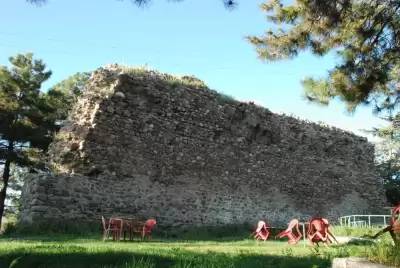
Built of rubble stone, the tomb stands out with its double dome architecture; its roof is covered with tiles. The structure is designed adjacent to the Hayran Veli Mosque, and inside the tomb, in addition to Hayran Veli, there are also the sarcophagi of his disciples. The striking historical stone masonry and wall paintings in the interior enhance the aesthetic value of the structure. The local belief in seeking healing for skin diseases transforms the tomb into not only a historical but also a living pilgrimage site.
Guide's Note

The Hayran Veli Sultan Tomb, located adjacent to a mosque in Kayıhan Town, İhsaniye District of Afyonkarahisar, is described by the vast majority of visitors as a peaceful and spiritual place. The tomb belongs to Hayran Veli Sultan, a folk healer believed to have come from Khorasan with Hacı Bektaş Veli in the 13th or 14th century. Around the sarcophagus are also the graves of his wife, son, and disciples; a hermitage is located nearby.
Visitors particularly mention the calm and clean environment of the tomb. The site remains a traditional pilgrimage point for those seeking healing for skin diseases; it is stated that soil called "cevher" (essence/gem) is used for this purpose at the tomb. While there are visitors who convey positive impressions regarding maintenance and cleanliness, a small number of different opinions are also noted.
Before planning your visit, it is recommended to pay attention to the following points:
- Location information: Map applications are sometimes reported to show the tomb at the wrong location; the tomb is located adjacent to, not inside, the mosque.
- Maintenance needs: One visitor stated that the tomb needs repainting and the turbans on the sarcophagi need renewal.
Who is Hayran Veli Sultan?
Hayran Veli is one of the Khorasan saints believed to have lived in the 13th-14th centuries. During this period when the Mongol invasion ravaged Anatolia, like many dervishes and scholars, he migrated west with his students and settled in the Kayıhan region. Hayran Veli, who stood out with his folk medicine, is remembered with a strong local belief that he provided healing for skin diseases. This name, which has been the spiritual refuge of the local people for centuries, continues to live on today with the tomb and mosque bearing his name.
When to Visit?
While the tomb is open to visitors all year round, spring and autumn months offer the most pleasant periods in terms of both weather conditions and the greenery of the surroundings. In summer, the Afyonkarahisar area can be quite hot; therefore, choosing early morning hours for summer visits provides a more comfortable experience. During special days such as Friday prayers and religious holidays, visitor density at the tomb increases; those who desire a calmer atmosphere can choose weekday mornings.
How to Get There?
The easiest way to reach the tomb is by private car. When leaving Afyonkarahisar city center towards Eskişehir, a right turn sign is seen at the 27th kilometer of the highway; from there, driving approximately 4.7 km further leads to Kayıhan town. The tomb is easily found as it is located in the center of the town, adjacent to the Hayran Veli Mosque. Regular minibus services are also available from Afyonkarahisar to İhsaniye district; however, it is recommended to research local transportation options for the final connection to the town in advance.
Photo Spots
The rubble stone texture of the tomb's exterior facade offers impressive photos, especially in soft light during the morning and afternoon. The silhouette created by the double dome with its roof tiles provides an interesting composition for wide-angle shots. The courtyard of the mosque adjacent to the tomb also stands out as a suitable spot for frames reflecting architectural integrity. We would like to remind you that before taking photos inside, it is necessary to consult with officials and show respect for the spiritual atmosphere.
Things to Know Before Visiting
The tomb is an actively used religious site; it is important to adopt a quiet and respectful attitude during your visit. Shoes may need to be removed when entering the tomb; appropriate attire is also expected. It should be noted that the tomb may be temporarily closed during prayer times. Since Kayıhan town is a small and quiet settlement, accommodation or dining options in the immediate vicinity are quite limited; for these needs, İhsaniye district or Afyonkarahisar city center should be preferred.
Combine with a Surrounding Tour
The Hayran Veli Sultan Tomb is a valuable stop that can be included in Afyonkarahisar's culture and history route. It is possible to see other historical structures in İhsaniye district on the same day. When returning to Afyonkarahisar city center, you can also add iconic places such as Afyon Castle, Ulu Mosque, and the archaeology museum to your visit plan. For those interested in folk medicine and the Khorasan saints tradition in the region, the nearby Karacaahmet Sultan Tomb can also be a meaningful stop.
Local Delicacies
Since Kayıhan town itself is a small settlement, dining options are limited. However, when moving to İhsaniye district or Afyonkarahisar city center, it becomes easier to access the region's famous delicacies. Afyon sucuk (spicy sausage) and pastırma (cured beef) are among the geographically indicated products recognized throughout Turkey. Having breakfast in Afyon, famous for its clotted cream (kaymak), is also an experience frequently preferred by visitors. You can easily find these local tastes in restaurants and patisseries in the city center.
This content originates from neresigezilir.com.tr and may not be copied without permission.
FAQ

Updated: