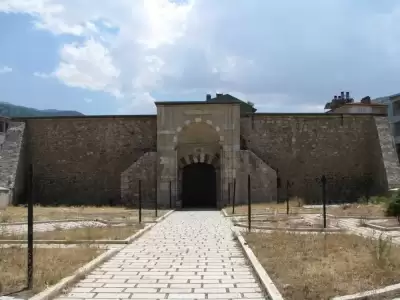
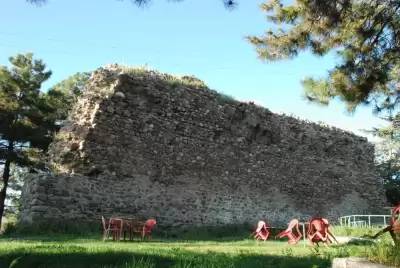
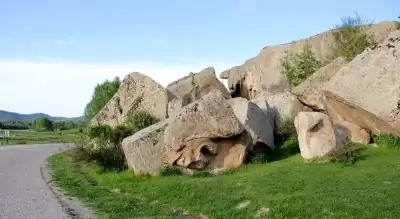
Aslantaş Rock Tomb Monument is a Phrygian period rock tomb located near Döğer Town in Afyonkarahisar, named after the two lion figures rising beside its door opening.
Aslantaş is one of the most striking traces left by the Phrygian civilization, dating back to the 8th-6th centuries BC, in the lands of Afyonkarahisar. This monumental tomb chamber, carved into the rocks near Döğer Town, has become a symbol of the region with its two large lion reliefs standing like guards on either side of its facade. The Phrygians are known for their tradition of making their dead and sacred places permanent by carving them into rocks; Aslantaş presents one of the most powerful examples of this tradition.
The monument is located approximately 1.5 kilometers west of the Afyonkarahisar–Eskişehir highway. As it is situated on the Phrygian Valley route, it can easily be included in a single travel itinerary along with other Phrygian remains such as Yılantaş, Maltaş, and the Midas Monument. This structure, which has preserved its existence for thousands of years on the region's hard volcanic rocks, is an indispensable stop for both history enthusiasts and photography lovers.
Guide's Note

Aslantaş Rock Tomb Monument is a Phrygian rock monument located in the Göynüş Valley, dating back to the 7th century BC. The structure, believed to belong to an important Phrygian king, draws attention with its carved lion figure. Visitors generally find this environment, where nature and history intertwine, calm and peaceful; it can also be considered an area for picnics.
Positive feedback regarding transportation stands out: The monument is located right by the road, the surrounding roads are organized, and there are no parking issues. Restoration work at the nearby Maltaş archaeological site has also been positively received by visitors.
- Lack of maintenance: Some visitors state that the place gives the impression of being abandoned to its fate; limited public interest is emphasized.
- Structural damage: It is reported that a collapse occurred in the Yılantaş section, and intervention from authorities is needed.
- Recognition: According to one visitor, films shot play a decisive role in making the place's name known; this points to a lack of promotion.
Best Time to Visit
The most suitable period to visit Aslantaş is during April–May and September–October. In spring, the valley surroundings turn green, and the mild weather is suitable for long walks. In autumn, the rock and vegetation, adorned in yellow-orange tones, offer a unique atmosphere for photographers. As temperatures can rise significantly in summer, those planning a visit during this season are advised to prefer early morning hours and bring plenty of water. In winter, roads leading to the region may occasionally be affected by adverse weather conditions; therefore, it is advisable to check road conditions before winter visits.
How to Get There?
The most practical way to reach Aslantaş is by private car. From Afyonkarahisar city center, head towards the İhsaniye district and follow the Afyonkarahisar–Eskişehir highway. You can reach Döğer Town by following the signs directing to the monument approximately 1.5 kilometers west of the road. The total driving time from the city center is approximately 45 minutes. Those coming from Ankara can easily reach the region via the Eskişehir route. Public transport options are quite limited; after arriving in İhsaniye by intercity bus, you may need to use a taxi or rental car. For those who want to explore the entire Phrygian Valley, day trips organized by local tour operators can also be considered.
Phrygian Valley Route Suggestion
Planning your visit to Aslantaş not alone, but as part of the Phrygian Valley route, makes the visit much more efficient. Starting from Afyonkarahisar early in the morning, you can first visit Aslantaş, then proceed to the Yılantaş and Maltaş monuments a few kilometers away. In the afternoon, a stop at the most famous point of the Phrygian Valley, the Midas Monument, completes the route. This route, passing through the Göynüş Valley, offers both a historical and natural experience with its volcanic rocks, rock-cut structures, and wide valley views. It is recommended to allocate a full day to comfortably see all these points.
Photography Spots
Aslantaş is an extremely rich place for photography. The most striking shot of the monument is close-up compositions that highlight the lion figures on both sides of the door opening. While the sun illuminates the rocks directly at midday, the oblique light created in the early morning and late afternoon makes the texture and relief details on the stone surface much more prominent. Wide-angle shots obtained by standing in front of the monument and looking towards the valley are also quite impressive. The surrounding volcanic rock formations and sparse vegetation, when framed with the monument, create a unique Anatolian landscape. Remember to check relevant regulations and local restrictions before using a drone.
What to Eat Nearby?
Dining options immediately near Aslantaş are quite limited; therefore, it is recommended to bring sufficient water and snacks with you. On the other hand, Afyonkarahisar holds a special place among Turkey's gastronomy cities. On your return from the trip, Afyon sucuk (spicy sausage), Afyon pastırma (cured beef), and kaymak (clotted cream) must be tried in the city center. Especially Afyon pişi (fried dough) and lokum (Turkish delight) served with fresh kaymak are indispensable tastes of the region. There are also small restaurants and cafes in the İhsaniye district center where you can meet your basic needs.
Recommendations for Visitors
Since Aslantaş and the surrounding Phrygian remains are located in an open area, a few practical points should be considered during your visit. Wearing comfortable and sturdy-soled shoes makes walking on rocky and uneven terrain easier. In summer, it is important to carry a hat and sunscreen to protect against sunstroke. Climbing the rocks around the monument should be avoided as it is both dangerous and can damage the historical texture. Since the signal may be weak in the region, downloading an offline map beforehand will make navigation easier. Before your visit, following the current information from the Afyonkarahisar Provincial Directorate of Culture and Tourism will inform you in advance about possible closures or restrictions.
About Aslantaş
Aslantaş is located within the Phrygian Valley, one of the most densely populated Phrygian settlement areas in Anatolia. The Phrygian civilization established a powerful political and cultural structure in Central Anatolia in the 8th century BC; it developed a unique style, especially in rock carving and tomb architecture. The tomb chamber at Aslantaş reflects a typical example of this style: The door opening carved into the flattened rock surface, geometric decorations, and the lion reliefs placed on both sides give the structure both a protective and monumental identity. The lion figure was widely used as a symbol of power and protection in ancient times. The presence of similar monuments in the region, such as Yılantaş (with snake figures) and Maltaş, clearly demonstrates the importance the Phrygians attached to this valley.
This content originates from neresigezilir.com.tr and may not be copied without permission.
FAQ
Aslantaş Rock Tomb Monument videos load when you open this section to keep the page fast.
Updated: