Asar Castle is the remnant of a historical settlement known as Kedrea during the Byzantine period, built on a natural rock mass in the İhsaniye district of Afyonkarahisar. It features rock-carved rooms and cisterns, situated in a commanding position overlooking the Phrygian Valley. Admission is free.
Hidden within the impressive geography of the Phrygian Valley in Afyonkarahisar's İhsaniye district, Asar Castle bears the traces of an important settlement known as Kedrea during the Byzantine period. Situated on a naturally elevated conical rock mass, the castle is not merely a defensive structure; it is a living space carved into stone, with rock-hewn rooms and a cistern where life once thrived.
In this region, which bears the imprints of the Phrygian civilization, architectural elements carved into the rock face and a large cistern with stairs filled with stone still stand today. Combined with the endless views of the surrounding valley, Asar Castle becomes a unique stop that attracts both history enthusiasts and nature hikers.
Guide's Note
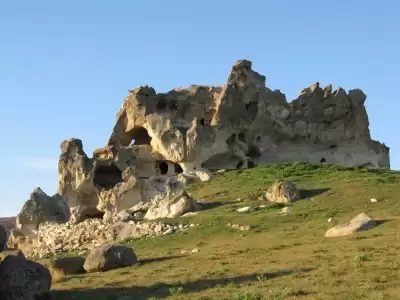
Asar Castle distinctly differs from the classical understanding of a castle with its rock-carved structure. Visitors find the site's historical past, extending back to the Phrygian period, and its location on steep cliffs intriguing. The accessible castle clearly reveals why it was used as a lookout point for centuries when climbed to the top.
The climb is generally considered easy, and the panoramic view from the top is among the most appreciated features by visitors. It is also highlighted as a suitable spot for photography. However, one visitor notes that similar structures are common in the region, suggesting the castle's uniqueness might be limited; therefore, shaping your expectations before visiting might offer a more realistic experience.
Before your visit, it is recommended to pay attention to the following points:
- Lack of information: There are no sufficient explanatory signs or information boards inside and around the castle; researching the historical context beforehand can enrich your experience.
- Insufficient promotion: Multiple visitors point out that such places are not adequately promoted; you might need to plan your route in advance to find the location.
Best Time to Visit
The ideal times to visit Asar Castle are April–May and September–October. In spring, the valley turns green, rocky surfaces are covered with flowers, and the weather is perfect for hiking. In autumn, exploring both the castle and the surrounding valley amidst a riot of colors offers a unique pleasure.
During the summer months, the Afyonkarahisar region can be quite hot. Those planning a visit during this season should prefer early morning hours for a more comfortable climb and a less crowded experience. In winter, rocky paths can become slippery due to rain and frost; caution is advised during this period.
How to Get There?
Asar Castle is located approximately 40–45 km from Afyonkarahisar city center, within the borders of the İhsaniye district. The most practical way to reach it is by private vehicle; after heading towards İhsaniye from the city center, follow the Phrygian Valley signs to reach the castle.
Public transport options are quite limited. Although there are minibus services from Afyonkarahisar to İhsaniye, the walking distance from there to the castle can be long. Therefore, car rental or joining Phrygian Valley tours organized by tour operators in the city center stands out as a much more practical option.
Route Suggestion: Combined with Phrygian Valley
While Asar Castle is a valuable stop to visit on its own, it transforms into a much richer experience when combined with other points along the Phrygian Valley route. On the same day, you can also visit Avdalas Castle, the rock churches in Ayazini village, and other rock-carved structures of the Phrygian Valley.
Starting your route early in the morning and reaching Asar Castle before noon will help you avoid the harshest hours of the sun during the climb. In the afternoon, you can explore the more shaded sections of the valley. It is crucial to carry sufficient water and light snacks with you, as resupply points are limited in the region.
Photo Spots
Asar Castle is an extremely fertile location for photography enthusiasts. Wide-angle shots of the conical rock mass reveal the dramatic silhouette of the structure, integrated with nature, in all its glory. The entrances to the rock-carved rooms and corridors offer interesting detailed photos in terms of texture and play of light.
The Phrygian Valley panorama that opens up when you reach the top of the castle is perhaps the most impressive shot. Especially in spring, this view framed by the valley's green cover yields much softer and more profound results if photographed in the early morning or late afternoon to avoid harsh midday sunlight.
Things to Know Before Visiting
The ascent to the castle involves a rocky and uneven path. Sturdy hiking shoes are definitely recommended; climbing with flat-soled or slippery-soled sports shoes can be both tiring and risky. The terrain is not suitable for wheelchairs and strollers.
Since shaded areas are very limited in the region, make sure to bring sunscreen, a hat, and plenty of water. Visiting after dark is not recommended; both safety and navigation on the path become difficult. We would also like to remind you to avoid touching the traces and damaging the rock surfaces to preserve the historical texture.
Historical and Architectural Features
Asar Castle contains the remnants of a structure known as Kedrea during the Byzantine period, which was one of the important settlement centers of the region. A naturally elevated conical rock mass was functionally used for both defense and settlement; rooms, corridors, and storage areas were created by carving the rock surfaces.
The large stepped cistern, whose traces can still be seen today, although filled with stone over time, reveals how comprehensive the settlement plan of the structure was. This architectural approach, which also aligns with the rock craftsmanship of the Phrygian civilization, is a concrete reflection of the region's thousands of years of continuous habitation tradition.
This content originates from neresigezilir.com.tr and may not be copied without permission.
Asar Castle Videos
Asar Castle videos load when you open this section to keep the page fast.
Show videos
FAQ

Updated: