Ephesus Terrace Houses are residential remains consisting of seven Roman villas located on the slope of Bülbül Mountain in the ancient city of Ephesus, Izmir; adorned with mosaics, frescoes, and marble floors, these structures were used from the 1st century BC to the 7th century AD.
Rising in the middle of the Ephesus Archaeological Site, right next to Curetes Street, the Terrace Houses consist of seven Roman residences that housed the most distinguished inhabitants of the ancient city. These structures, continuously inhabited from the 1st century BC to the 7th century AD, have survived earthquakes and fires to reach us with surprising integrity. The houses are arranged in a stepped fashion on the southern slope of Bülbül Mountain, rising on successive terraces; this arrangement is extremely valuable both architecturally and in terms of urban planning history.
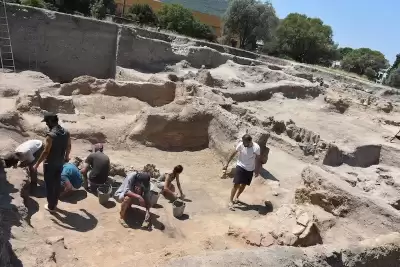
The colorful mosaics, wall frescoes, marble-clad surfaces, and atrium arrangements remaining inside the structures are tangible evidence of upper-class Roman life. Traces of plumbing and heating systems can even be discerned in some rooms. All these remains are protected by a giant steel-glass covering system, allowing visitors to explore comfortably without being affected by sun or rain. Excavation work has been ongoing for decades under the leadership of the Austrian Archaeological Institute, and it is possible to encounter active excavation areas during a visit.
Guide's Note
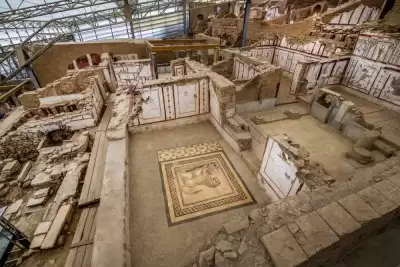
Ephesus Terrace Houses is a section within the ancient city of Ephesus that requires a separate ticket, and the vast majority of visitors state that this additional fee is worth paying. The mosaics, wall paintings, and marble decorations of the rich Roman-era residences are extremely well preserved; many visitors emphasize that they have not seen this level of detail in other ancient sites. Thanks to the modern roof system covering the structure, the colors of the artifacts retain their vibrancy, and the tour can largely be done protected from the sun.
For entry, Turkish visitors are charged 200 TL, and foreign visitors approximately 12-15 Euros separately; Museum Pass holders can enter without paying an additional fee. For those who want to avoid crowds, visiting in the early months of the year, especially early April, offers a very calm experience. In addition to guided tour options, an audio guide can also be used via the MuseumCard.
Some notable points in the comments are:
- Staff attitude: At least one visitor reports that despite the no-smoking rule, staff were smoking and displayed a negative attitude towards visitors.
- Student discount: A visitor who had to pay full price despite being a student complains that no student discount was applied.
- Height sensitivity: There are sections with glass floors and considerable height in the area; it is recommended that those with a fear of heights take this into consideration.
What are the Terrace Houses?
The Terrace Houses are the section of the ancient city of Ephesus that contains the most comprehensive residential remains. They consist of seven separate building blocks nestled on the slope of Bülbül Mountain, just west of Curetes Street. These houses were used from the 1st century BC to the 7th century AD; meaning that for approximately eight hundred years, the wealthy families of Ephesus lived here.
The wall paintings, mosaic floors, marble coverings, and water channels unearthed during the excavations reflect the quality of life of that period. Excavations conducted by the Austrian Archaeological Institute are still ongoing; therefore, you may encounter active work areas during your visit. This transforms the site into a living laboratory.
When to Visit?
The Terrace Houses are protected by a large steel-glass covering system, so they can be comfortably visited even in rainy weather. It can be quite hot under the roof in mid-summer; choosing between 08:00 AM and 10:00 AM in July-August will protect you from both the heat and the crowds.
April-May and September-October are the most balanced periods in terms of both climate and visitor density. In winter months, Ephesus becomes almost deserted; it is possible to visit the site more calmly during this period, but some facilities may operate with limited services.
How to Get There?
The most practical way to reach Selçuk from Izmir is by İZBAN train. Trains departing from Basmane or Alsancak stations reach Selçuk in approximately 1.5 hours. From Selçuk station, you can walk or take a taxi to the north gate of Ephesus.
For those coming from Kuşadası, a minibus (dolmuş) option is available; the approximately 18 km distance takes 20-25 minutes. For those arriving by car, there are parking lots at both entrances of Ephesus. The Terrace Houses appear right after the Celsus Library when entering from the south entrance, and after walking along Curetes Street when entering from the north entrance.
Suggested Route
To visit Ephesus most efficiently, the classic recommended route is to start from the south entrance and proceed north. This way, you enter the Terrace Houses immediately after seeing the Celsus Library; you face the structure requiring the most detailed examination before getting tired.
After leaving the Terrace Houses, you can visit the Temple of Hadrian, the Fountain of Trajan, and the Prytaneion on Curetes Street. As you proceed towards the north entrance, the Great Theater and Harbor Street also enter your route. This entire itinerary takes approximately 3-4 hours; comfortable walking shoes and plenty of water are essential.
Photo Spots
The most impressive photo opportunities at the Terrace Houses are obtained from the walking platforms overlooking the inner courtyards. The metal walkways built over the structures allow you to see the mosaics and frescoes from a bird's-eye view; a wide-angle lens is a great advantage from this perspective.
A good macro or telephoto lens is useful for capturing the details of the wall frescoes. Tripod use may be possible in areas where natural light is limited under the roof; however, it is recommended to ask the guide or ticket office for permission beforehand. In the early morning hours, the light filtering through the edges of the roof beautifully highlights the stone textures.
Things to Consider
The Terrace Houses require a separate entrance fee in addition to the Ephesus Archaeological Site ticket. You can purchase it directly at the ticket office; MuseumCard holders can benefit from a discounted price. Free entry may apply for Turkish citizens under 18 and over 65; confirm current conditions through official channels.
Since the walking platforms inside the structure are made of metal grates, walking with high heels is both dangerous and uncomfortable. Flash photography is generally prohibited as it can damage the frescoes. To avoid hindering the work of archaeologists in active excavation areas, be careful not to stray from the marked route.
What and Where to Eat?
There is a cafeteria inside the Ephesus archaeological site; however, prices are high and options are limited. For lunch, it is much more logical to go to the Selçuk town center. In Selçuk, there are small restaurants offering classics of Izmir cuisine such as olive oil appetizers, fresh fish, and Aegean herb dishes.
For those coming for a day trip from Kuşadası, restaurants along the coast are also an option; however, prices can be high as it is a tourist area. If you are planning a long trip, taking water and light snacks with you can be life-saving, especially in summer months.
This content originates from neresigezilir.com.tr and may not be copied without permission.
Ephesus Terrace Houses Videos
Ephesus Terrace Houses videos load when you open this section to keep the page fast.
Show videos
FAQ

Updated: