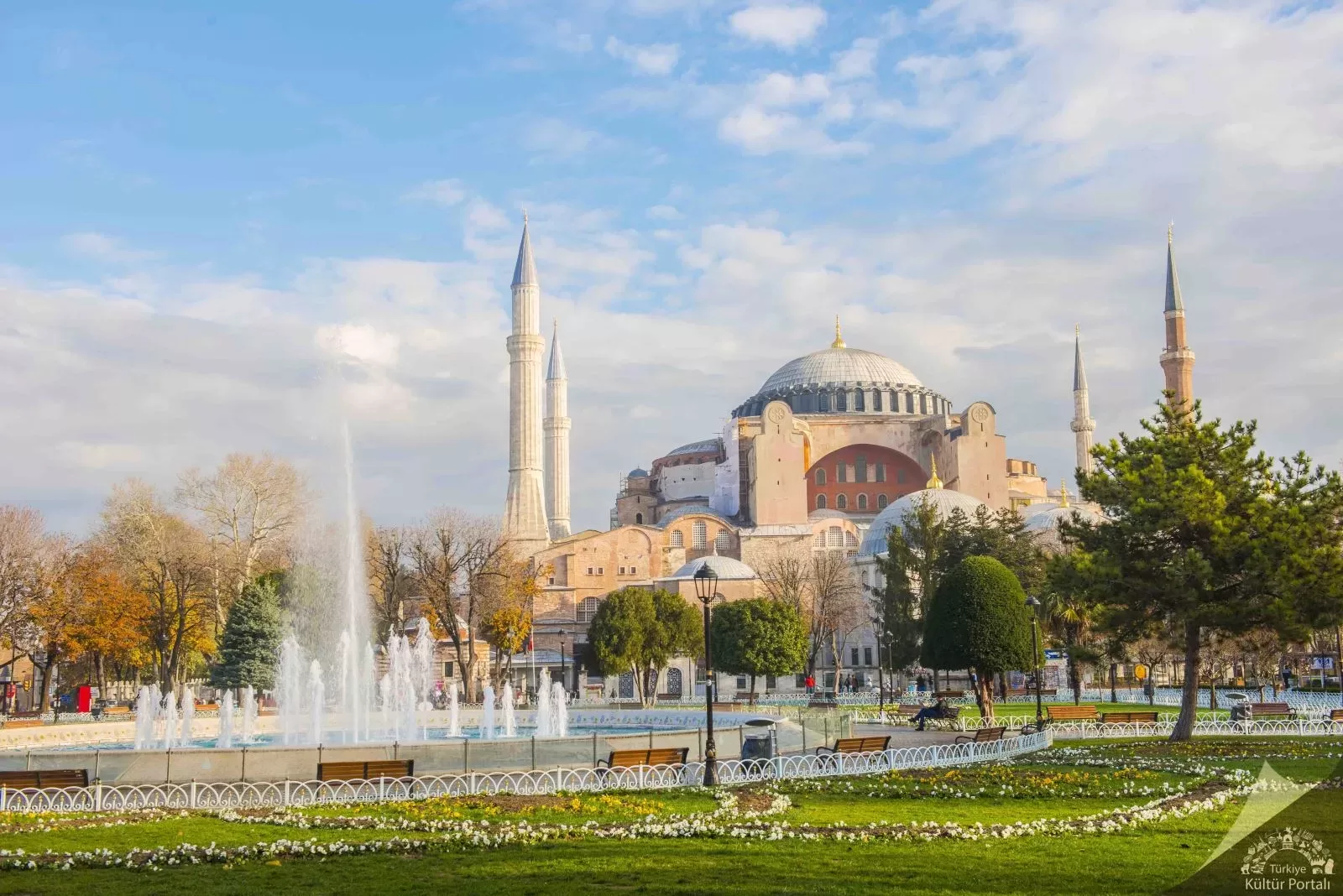
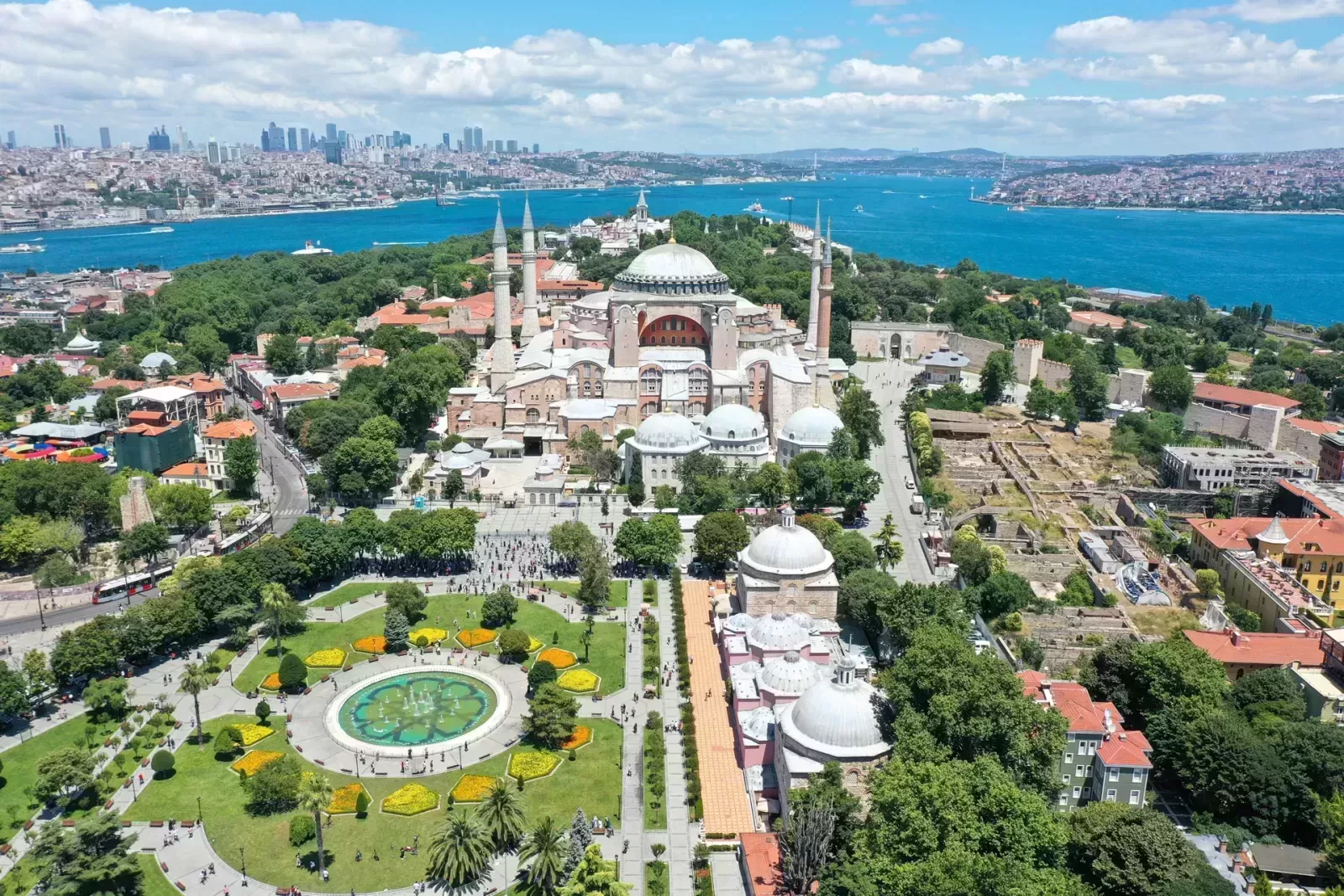
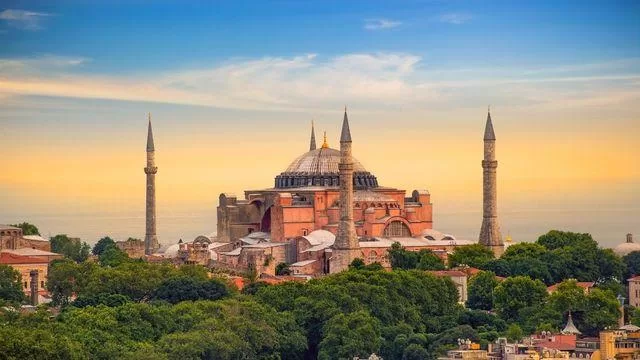
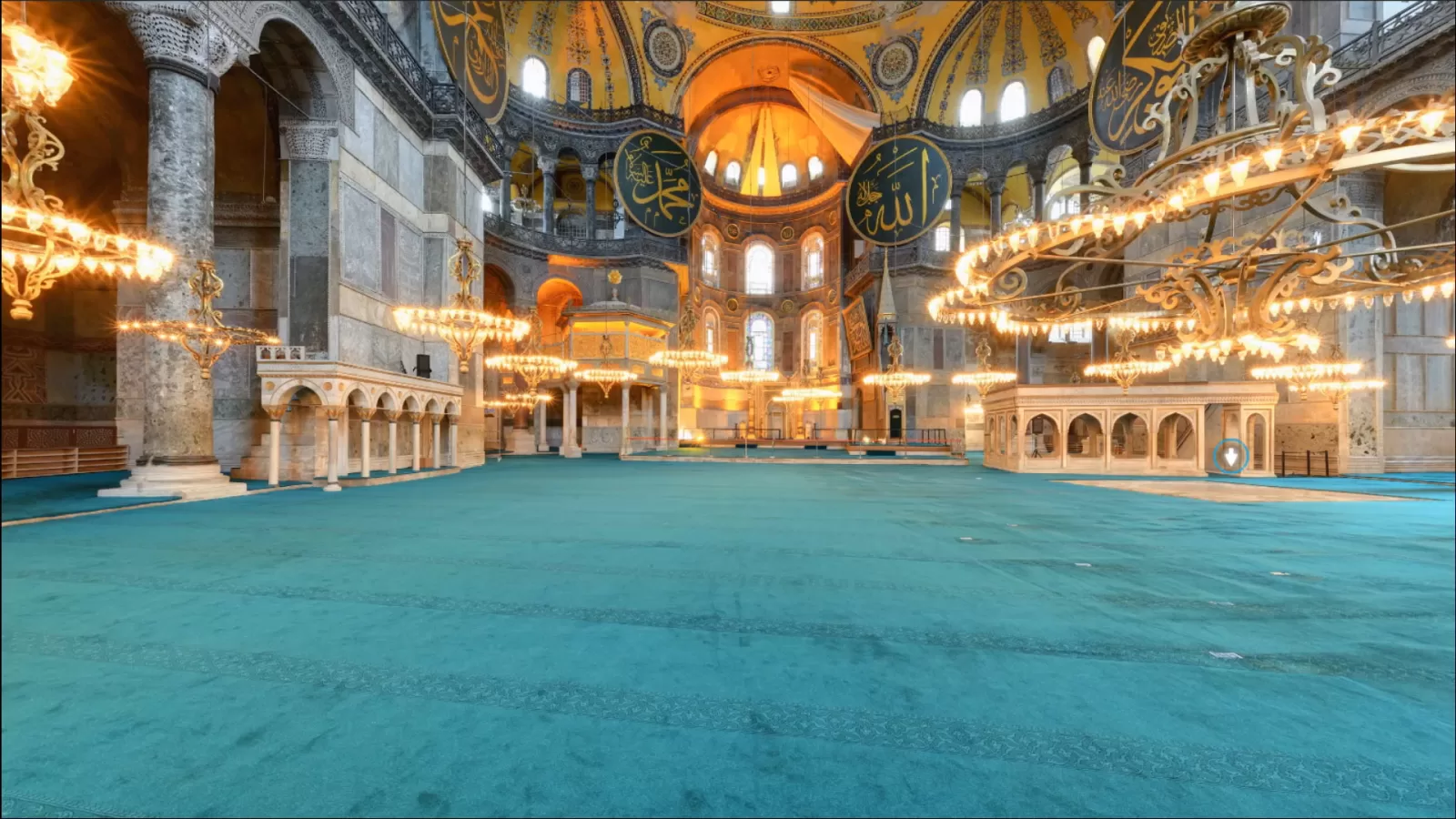
The Hagia Sophia Grand Mosque is a historical structure located in Istanbul's Sultanahmet Square, built in 537, encompassing Byzantine, Ottoman, and modern periods. With its 55.6-meter-high main dome, mosaics, and calligraphic panels, it is an important example in architectural history.
The Hagia Sophia Grand Mosque is located in the heart of Sultanahmet Square, on Istanbul's Historical Peninsula. Built as a Christian cathedral in 537 during the reign of Emperor Justinian, the structure served as the center of Orthodox Christianity for approximately 916 years. After Sultan Mehmed the Conqueror's conquest of Istanbul in 1453, Hagia Sophia was converted into a mosque and became a reference point for Islamic architecture during the Ottoman period. Converted into a museum in the 20th century, the building regained its mosque status in 2020 and is now open for both worship and visitors under the name Hagia Sophia Grand Mosque.
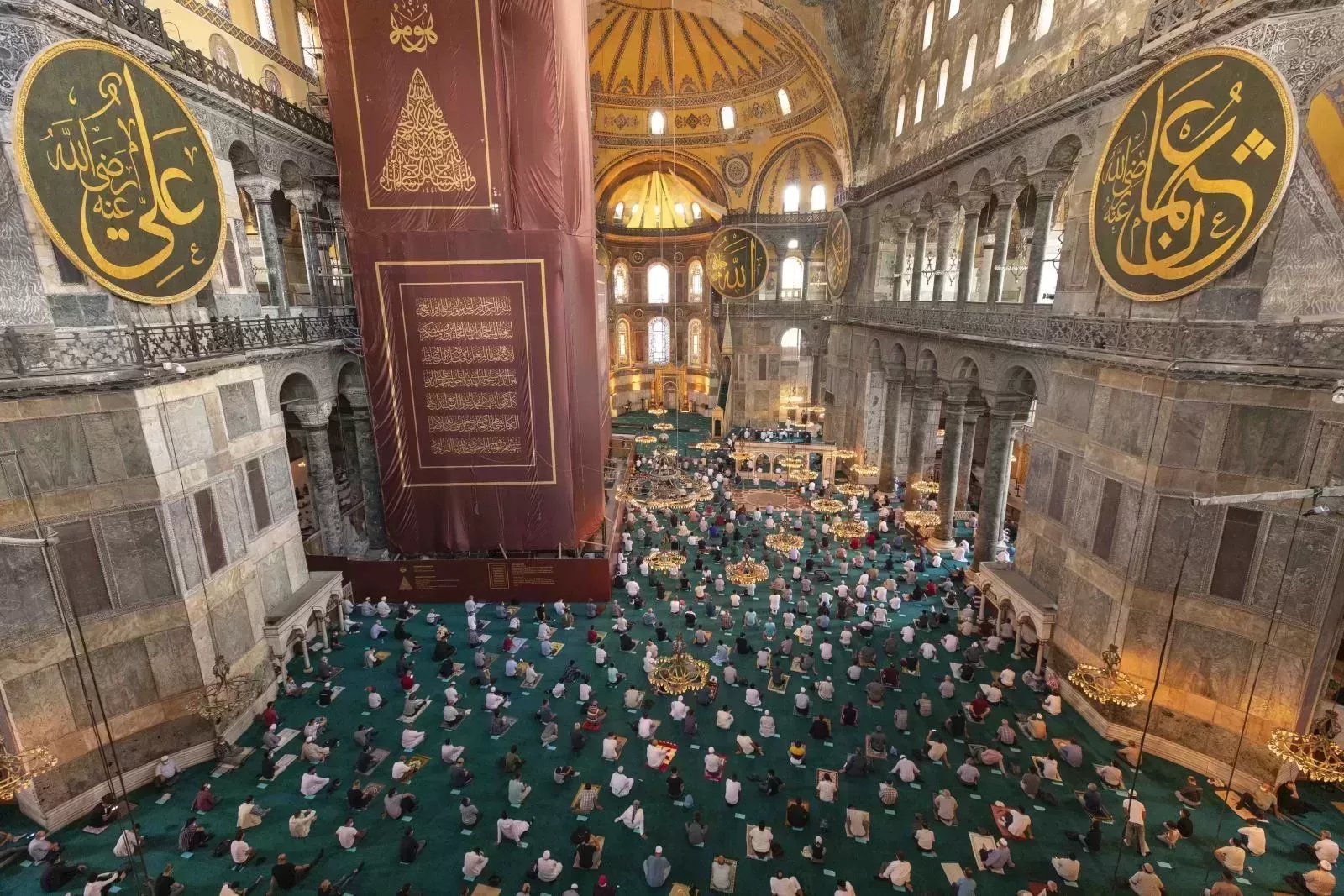
The most striking feature of the structure is its main dome, which is 55.6 meters high, almost incredible considering the era in which it was built. The Byzantine mosaics, Ottoman calligraphic panels, and columns inside reveal the traces left by successive civilizations in this space. The gallery floor is especially worth visiting as it offers the opportunity to view the mosaics much more closely. It should be noted that there is a separate paid entrance for tourists to the gallery floor, while Turkish citizens coming for worship can enter for free.
Related discoveries: Places to visit in Istanbul, Historical Places, Historical places in Istanbul, Bebek Coast.
Guide's Note
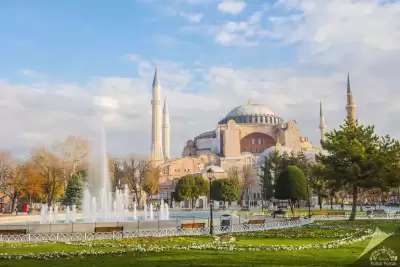
The Hagia Sophia Grand Mosque stands out as one of Istanbul's most important structures, hosting many visitors from different countries and faiths. The vast majority of visitors describe the building as a must-see stop; both its architectural significance and the sense of gravitas felt within the space are frequently mentioned impressions. Those who have the opportunity to pray here during Friday prayers particularly find the experience meaningful.
However, you should consider that the building is currently undergoing an intensive restoration process. Multiple visitors report that large parts of the interior and exterior are not visible due to ongoing work. Taking this into account when planning your visit will help set more realistic expectations.
Some practical information and points highlighted by visitors can be summarized as follows:
- Female visitors are required to wear a headscarf inside; be prepared for this in advance.
- Several visitors mention experiencing a smell issue inside.
- Pickpocketing attempts have been reported in the surrounding area, especially in crowded places; it is recommended to be careful with your bag and belongings.
- Some comments emphasize that non-Muslim visitors have limited access to the ground floor; it may be useful to get information about this in advance.
- Since restoration is ongoing, especially if you plan to take photos, you might consider postponing your visit to a later date.
When to Visit?
The ideal time to visit Hagia Sophia is during April-May and September-October. In mid-summer (July-August), crowds peak; waiting times both outside and inside can significantly increase. During winter months, visitor numbers decrease, allowing for a calmer visit; however, you should consider that the closing time is 17:00.
From a daily perspective, the first hours in the morning when the doors open are the most productive visiting times. In the afternoon, especially between 11:00–14:00 when tour groups are concentrated, the interior can be quite crowded. Since tourist entry is temporarily stopped during Friday prayer times, exclude these hours from your visit plan.
How to Get There?
Hagia Sophia is one of the most easily accessible points in Istanbul's public transportation network. Take the T1 Tram and get off at the Sultanahmet stop; the structure is directly opposite the stop. It is possible to board this line from Sirkeci, Eminönü, and Karaköy. The Sultanahmet Station on the M1 Metro line is also within walking distance.
If you are coming from Üsküdar or Kadıköy, taking a ferry to Eminönü and then a tram is both an economical and enjoyable alternative. Finding parking in the area is quite difficult for those coming by taxi or car; choosing public transportation is both practical and stress-free.
What to Eat Nearby?
Sultanahmet and its surroundings are full of tourist restaurants, but taking a few more steps helps for quality and reasonably priced food. Restaurants immediately around the square can keep their prices high due to heavy tourist traffic. More authentic options can be found on Divan Yolu and towards Çemberlitaş.
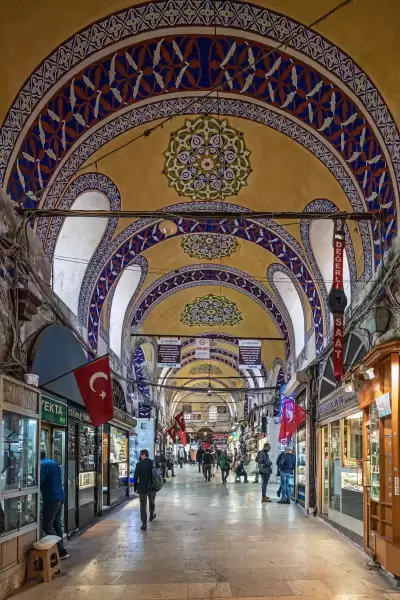
In Eminönü, close to the Grand Bazaar and Spice Bazaar, street delicacies like fish sandwiches (balık ekmek) and stuffed mussels (midye dolma) offer an iconic experience. Starting the day with a traditional breakfast at one of the places around Sirkeci before morning visits is also a good idea.
Photo Spots
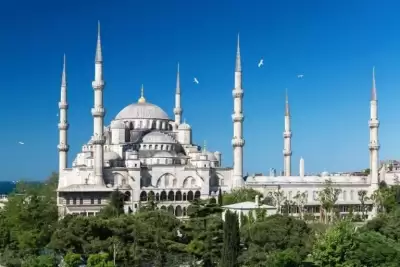
The best external photo of Hagia Sophia is taken from the opposite corner of Sultanahmet Square or from the courtyard of the Blue Mosque; from this angle, both historical structures fit into the same frame. At sunset, the dome takes on a golden hue, and the lighting conditions create a very dramatic atmosphere.
Inside, the gallery floor is the most productive photo spot; close-up shots of the Byzantine mosaics can be taken, and an overhead view of the main dome can be captured. Standing directly under the main dome and looking up provides a powerful composition that conveys the scale of the architecture. Morning light filters through the eastern windows, illuminating the interior and creating an ideal environment for photography.
Things to Note Before Visiting
As Hagia Sophia is an active place of worship, dress codes must be observed. Shoulders and knees must be covered; female visitors are required to cover their heads. Free coverings can be provided at the entrance, but during crowded periods, stock may run out; it's always useful to carry a thin scarf with you.
During prayer times, tourist entry to the prayer area is restricted or completely stopped. Buying your gallery floor ticket online in advance, especially in summer, allows you to bypass ticket queues. It is expected to avoid speaking loudly and behaviors that might disturb those praying inside the structure.
How Much Time to Allocate?
1 to 1.5 hours is sufficient to visit only the main hall. If you want to examine the Byzantine mosaics and Ottoman calligraphy up close, go up to the gallery floor, and absorb the historical layers of the structure, we recommend allocating 2 to 2.5 hours.
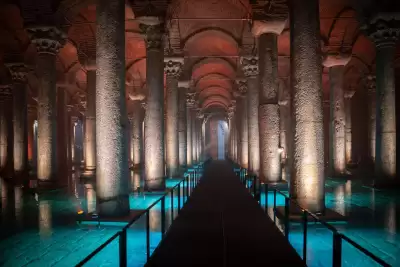
You can combine Hagia Sophia with other important structures in the Sultanahmet area (Blue Mosque, Topkapi Palace, and Basilica Cistern) to create a complete historical peninsula tour. For this entire route, you should plan for most of the day.
Suggested Itinerary
To efficiently visit the Sultanahmet area in one day, start at Hagia Sophia at 09:00. After spending about 2 hours, including the gallery floor, walk to the Basilica Cistern; this place is 5 minutes away from Hagia Sophia. After having lunch on Divan Yolu, you can visit Topkapi Palace in the afternoon. Conclude the day at the Blue Mosque and watch the sunset in the square to best experience the atmosphere of the area.
FAQ
Hagia Sophia Grand Mosque videos load when you open this section to keep the page fast.

Updated: