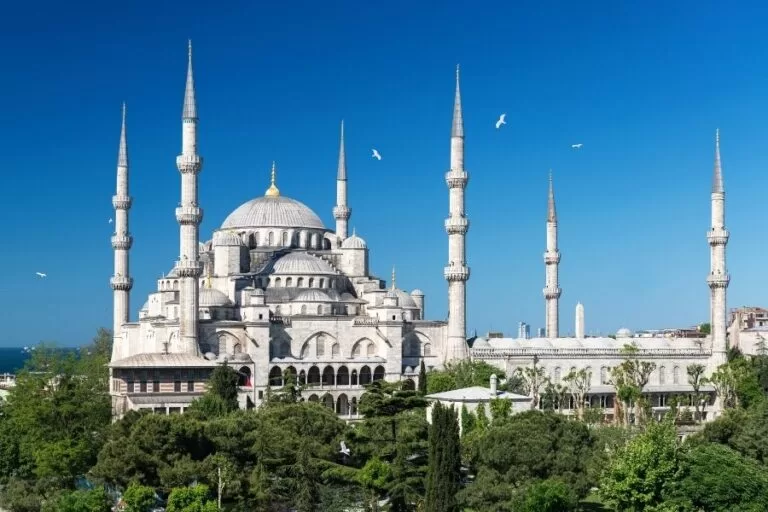
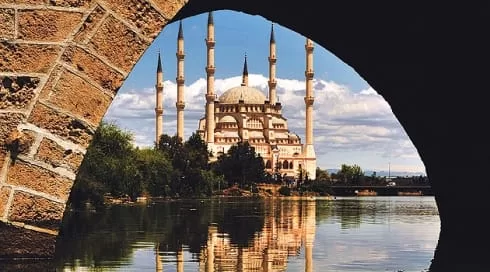
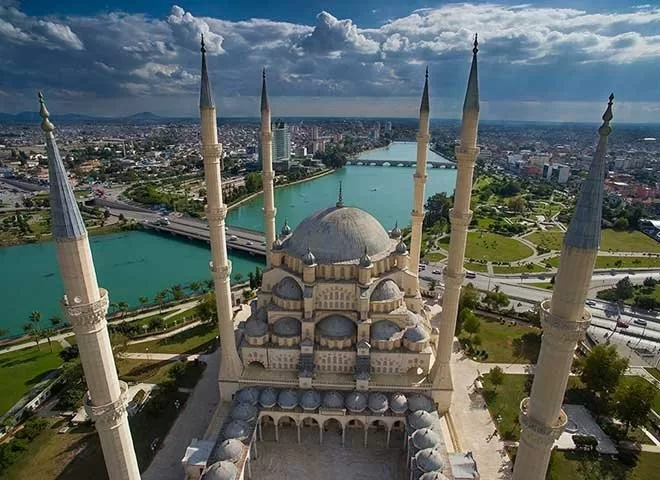
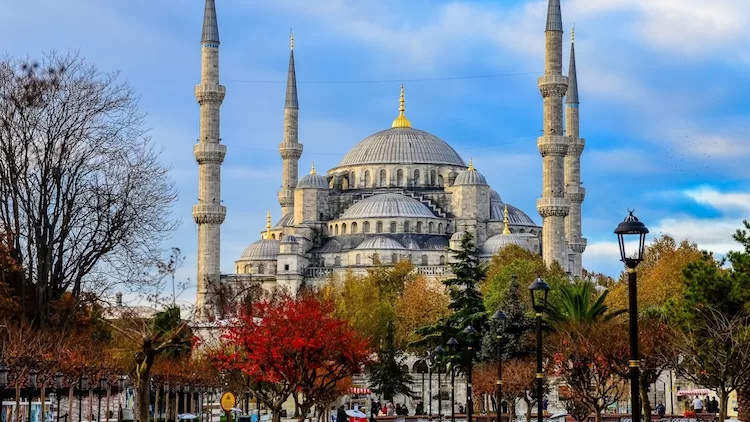
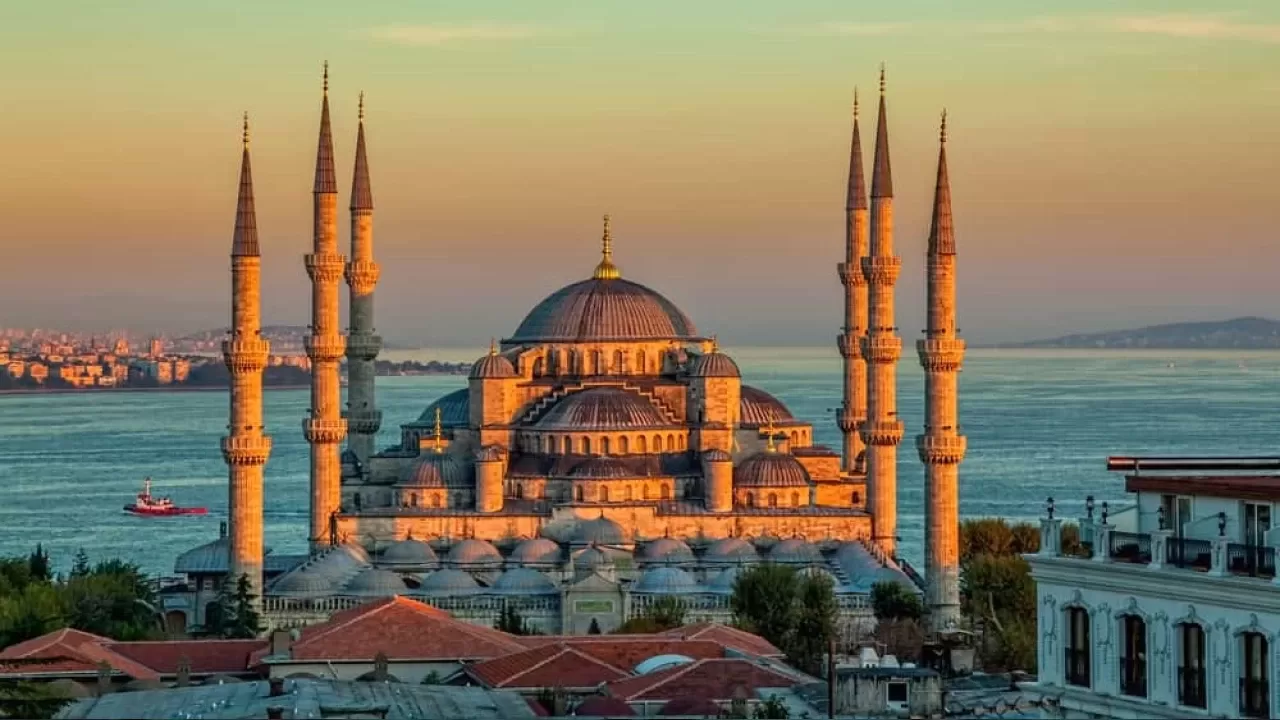
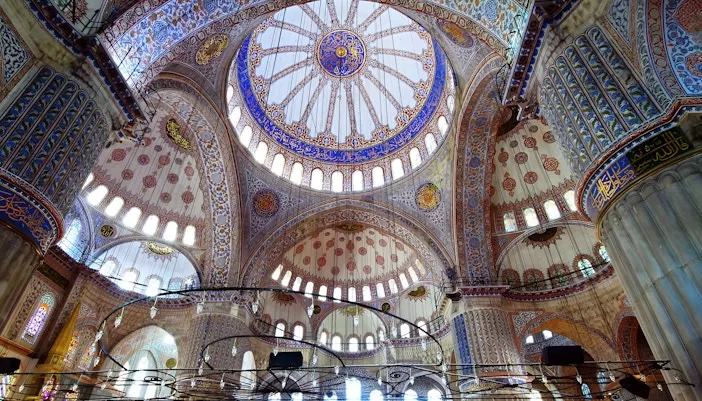
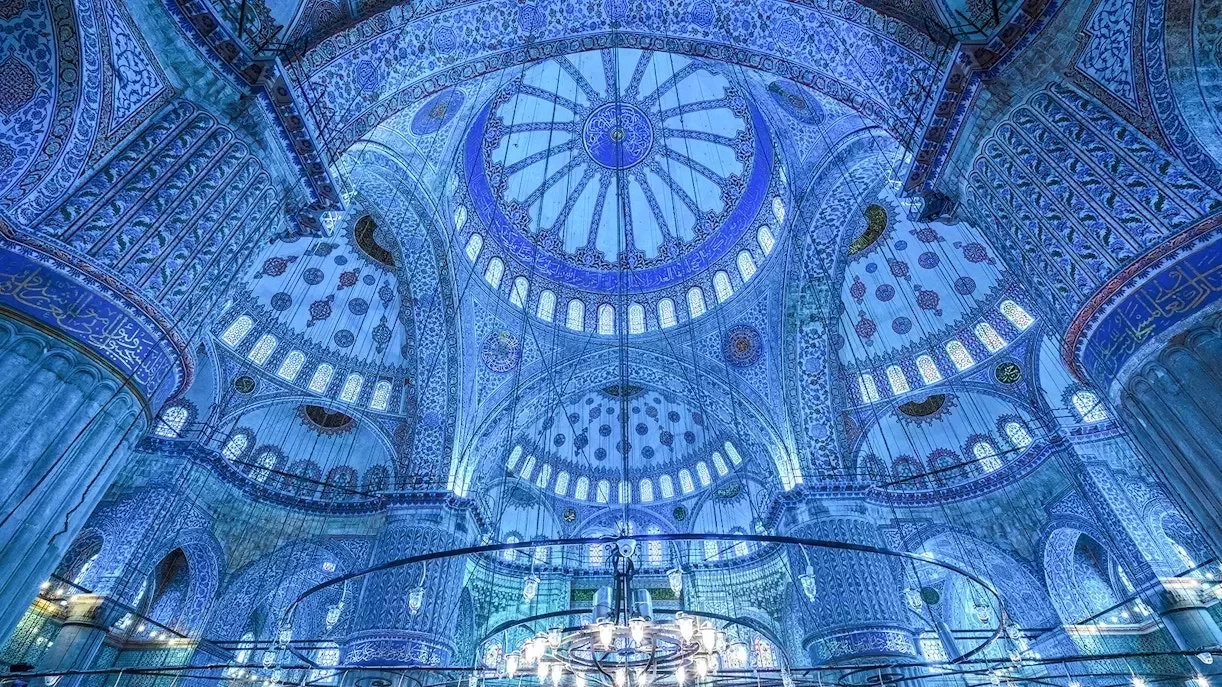
Sultanahmet Mosque is an Ottoman mosque built between 1609-1617 in Istanbul's historic peninsula, decorated with over 20,000 Iznik tiles. The structure, famous for its six minarets and dome, is open for free visits, though entry is temporarily restricted during prayer times.
Sultanahmet Mosque was commissioned by Ahmed I and built by Sedefkar Mehmed Aga. The seven-year construction was completed in 1616. It takes its name from the blue-toned Iznik tiles on the mihrab and walls, and is also known among locals as the Blue Mosque. Its six minarets are the mosque's most striking feature. During that period, no other mosque in Istanbul had this many minarets, and this fact even created controversy comparable to comparisons with the Kaaba in Mecca.
Inside, a 43-meter dome resting on four elephant-leg columns creates a spacious interior filled with light from numerous windows. A point frequently mentioned by visitors is how the tiles' colors have visibly revived after restoration. Particularly, visitors note that the blue turquoise tones appear more brilliant than before. The mosque is still an active place of worship, so visits are closed during prayer times. You should adjust your visit plan accordingly.
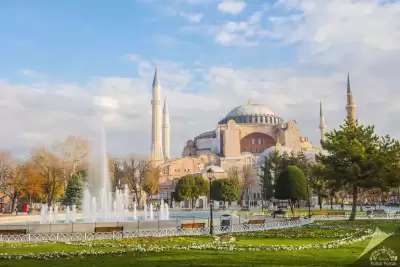
Group tours become concentrated in the afternoon; those visiting in the morning report having a more relaxed experience. Since the mosque is located in Hippodrome Square across from Hagia Sophia, it's possible to see both structures in a single tour.
Guide's Note
Sultanahmet Mosque receives positive feedback from the vast majority of visitors. Comments particularly highlight the friendly and helpful attitude of the staff. Visits with families and children are also reported to be enjoyable.
Its location within walking distance of Hagia Sophia offers a route that can be planned with nearby museums. There is no admission fee to enter the mosque.
We recommend keeping the following practical information in mind when planning your visit:
- Visitor entry does not occur during prayer times; you may need to arrange your schedule accordingly.
- A significant portion of existing reviews are very brief and limited in content, so sufficient detailed information about experiences is not provided.
Best Time to Visit
Morning hours are the quietest period. It's frequently mentioned that group tours increase noticeably in the afternoon, with crowds making photography difficult. Prayer times are when the mosque closes for worship; entry is not possible during these intervals. You may need to wait outside and use the next prayer time interval. Visitor traffic is especially heavy before and after Friday noon prayer.
How to Get There
The most practical way is by tram. Get off at the Sultanahmet stop on the Kabatash-Bagcilar line and walk a few minutes. If coming from Sirkeci or Eminonu, it's within walking distance, approximately 15-20 minutes. For those taking a taxi, vehicle traffic is restricted around Hippodrome Square; getting off at walking distance is faster.
Other Nearby Stops
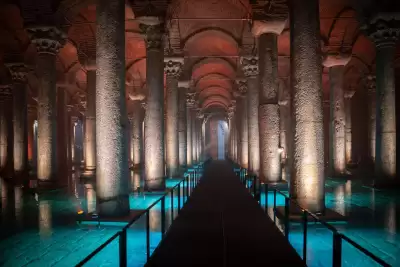
The mosque is directly across from Hagia Sophia. Visiting both on the same day is a common choice. Sultan Ahmed I Mausoleum is in front of the mosque with free entry. Basilica Cistern and Museum of Turkish and Islamic Arts are within walking distance. Topkapi Palace is a bit further, in the same area.
How Much Time to Allocate
30-45 minutes is sufficient for the mosque itself. However, one day may not be enough for those wanting to explore the entire Sultanahmet area. Travelers note that thoroughly exploring the area requires at least 2 days. The time extends a bit if you add the mausoleum visit.
Things to Keep in Mind
Since it's an active place of worship, dress codes apply: knees and arms must be covered, women must cover their heads. Headscarves are provided at the entrance, but bringing your own scarf reduces waiting time. Shoes are removed at the entrance; bags are usually available at the door. Since tourist entry is closed during prayer times, plan your schedule accordingly.
Good Photography Spots
It's possible to frame the mosque's six minarets together from Hippodrome Square. Inside, the angle toward the dome and the tile density around the mihrab are among the most preferred shots. Comments mention that the tiles' colors have revived after restoration, making interior photographs more striking compared to before.
Things to Know
It was added to the UNESCO World Heritage List in 1985. The mosque is at the center of a large complex that includes structures such as a seminary, arcade, fountain, mausoleum, hospital, and school. For visitors with mobility challenges, ramps and elevators are available near Hippodrome and the Obelisk.
This content originates from neresigezilir.com.tr and may not be copied without permission.
FAQ

Updated: