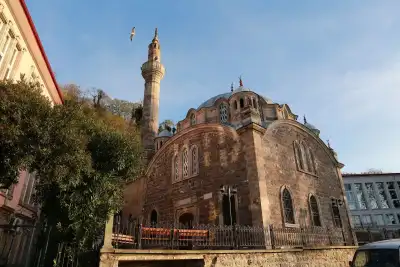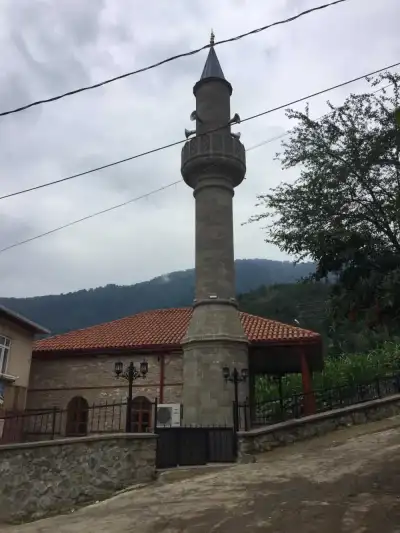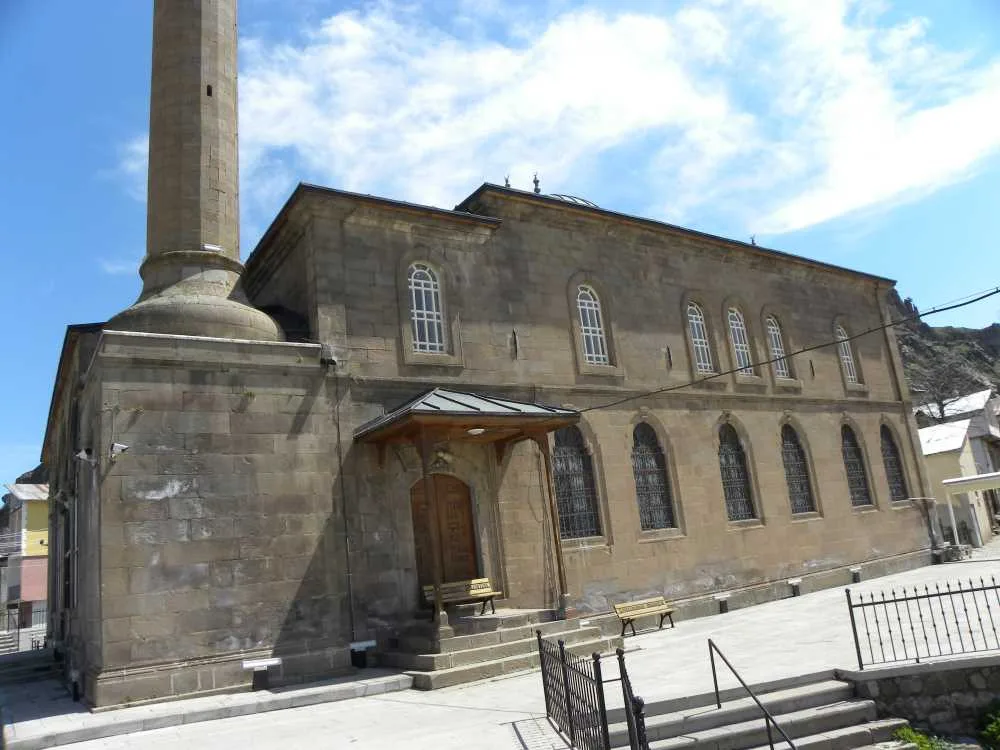
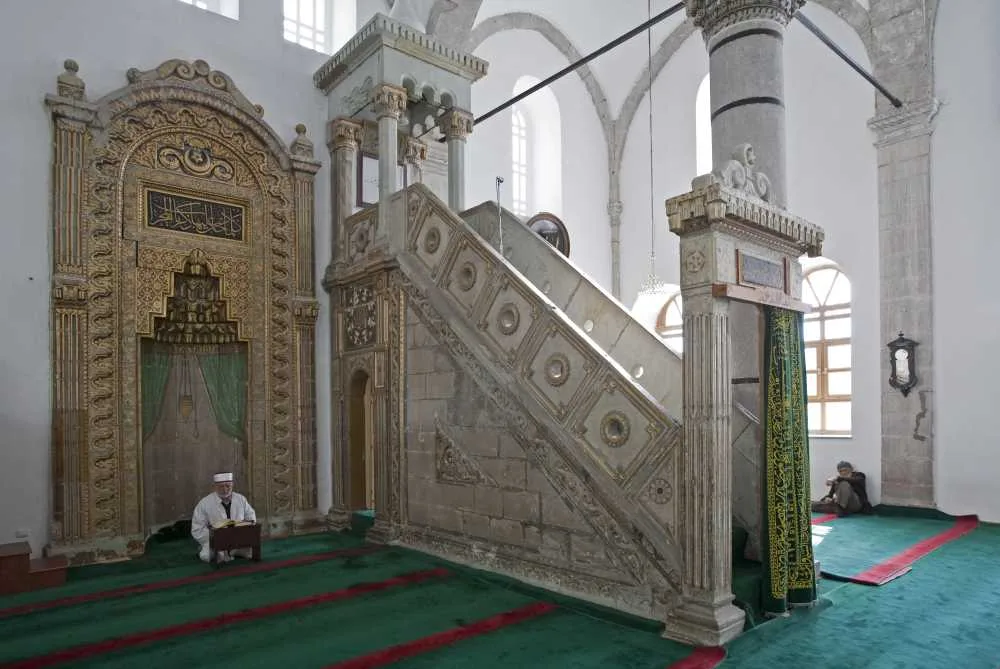
Şebinkarahisar Fatih Mosque in Giresun, Türkiye, is a stone mosque built in 1888 with origins dating to 1473, featuring a striking polygonal mihrab with muqarnas and free entry for visitors.
The story of Fatih Mosque dates back to 1473. After Fatih Sultan Mehmet won the Battle of Otlukbeli on August 29, he came to Şebinkarahisar and initiated the construction of the mosque, which took five years to complete. Its original form was wooden but it burned down twice. The stone structure we see today was built by Rasih and Mahmut Pashas in 1888. Its domes collapsed in the 1939 earthquake, were repaired in 1950, and underwent another minor intervention in 1977. Thus, the building standing today is the result of a multi-layered history of repairs.
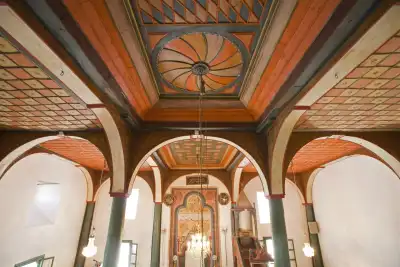
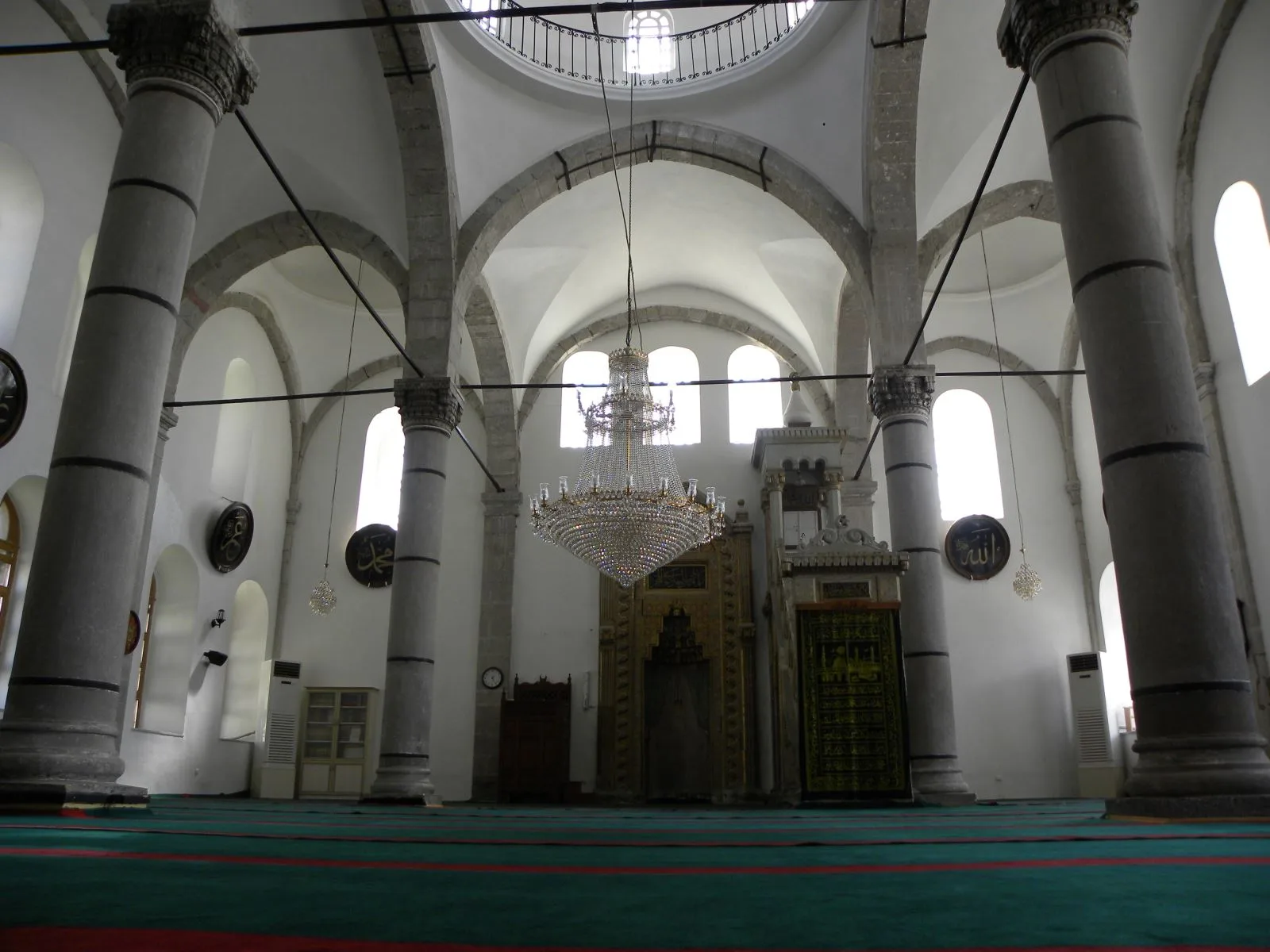
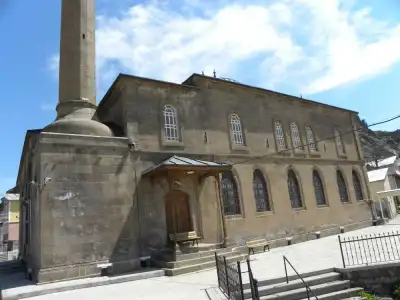
The structure, with a long rectangular plan in a north-south direction, is made of regular cut stone. The three-arched last prayer section on the north facade rests on two monolithic stone columns, and is currently enclosed with glass. The interior is entered through a low-arched, double-winged wooden door. The gallery above the entrance is accessed by a 15-step staircase; the wooden railings are carved with an inverted palmette sequence in the lower part. There is almost no ornamentation in the interior, the walls are plastered and painted. But the stone mihrab on the south wall is striking: it has a polygonal niche and seven rows of muqarnas. Visitors note that the minbar and mihrab stand out, and that the interior feels spacious despite not having a courtyard. Some also notice that the column capitals resemble spolia.
The mosque stands on the road leading up to the castle, at a point with a bird's-eye view of the city. It is open for worship and actively used. Those who stop by for evening prayers leave satisfied with the well-maintained condition of the mosque, their only complaint being that it takes a little time to find the WC and ablution facilities. It is a natural stop for those visiting the castle.
Guide's Note
Best Time to Visit
The mosque is open for worship all year round, but if you plan to visit it along with Şebinkarahisar Castle, spring and summer months are more comfortable. In winter, due to the altitude, the weather can be harsh and the castle slopes can be icy. Those who want to visit in a quiet environment outside of prayer times can prefer the afternoon hours.
How to Get There
Şebinkarahisar is a district located inland, approximately 120 km from Giresun city center. The mosque is in the district center, on the route to the castle. There is no transportation problem; you can come to the district center by car and walk up. It is possible to reach the district from Giresun or surrounding provinces by bus and minibus.
How to Get Around the District
The mosque is located at the end of the road extending from stiklal Fountain towards the castle, on the right side, opposite the stone inns. Since the district center is small, walking is the most practical option. If you are going up to the castle, the mosque becomes a natural resting point.
Suggested Route
It makes sense to visit Fatih Mosque along the same route as Şebinkarahisar Castle. First, visit the mosque and examine the stone mihrab and gallery, then continue along the same road to the castle. The stone inns at the foot of the castle and the stiklal Fountain are also part of the same route. Sufficient for a half-day tour.
Things to Pay Attention To
One point frequently mentioned by visitors is that finding the WC and ablution facilities can be a bit challenging, as the signage is insufficient. Since the mosque is an active place of worship, it is necessary to behave respectfully during prayer times, and female visitors should have a headscarf. There is a floor where shoes must be removed.
Photo Spots
The mosque's location overlooking the castle provides a good shot; in exterior shots, the cut stone facade and dome stand out. Inside, the mihrab niche and the wooden railings of the gallery are suitable for detail shots. The monolithic stone columns in the last prayer section are also a striking detail for architecture enthusiasts.
Historical Layers of the Mosque
The story of the structure does not fit into a single period. The first wooden mosque burned down twice, then was rebuilt with stone; its current form from 1888 is the work of Rasih and Mahmut Pashas. The 1939 earthquake destroyed the domes, repairs came in 1950, and a minor renovation was done in 1977. This history of repairs has transformed the mosque into a structure with traces of different periods, rather than a single architectural style.
This content originates from neresigezilir.com.tr and may not be copied without permission.
Şebinkarahisar Fatih Mosque Videos
Şebinkarahisar Fatih Mosque videos load when you open this section to keep the page fast.
Show videos
FAQ
Updated: