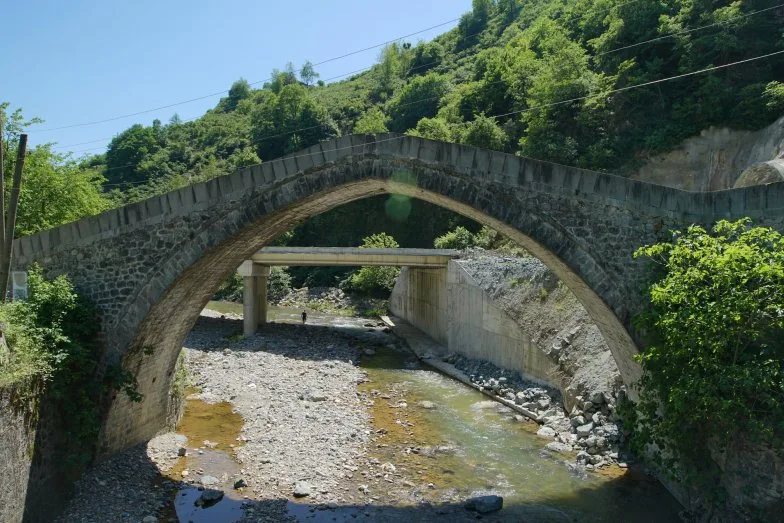
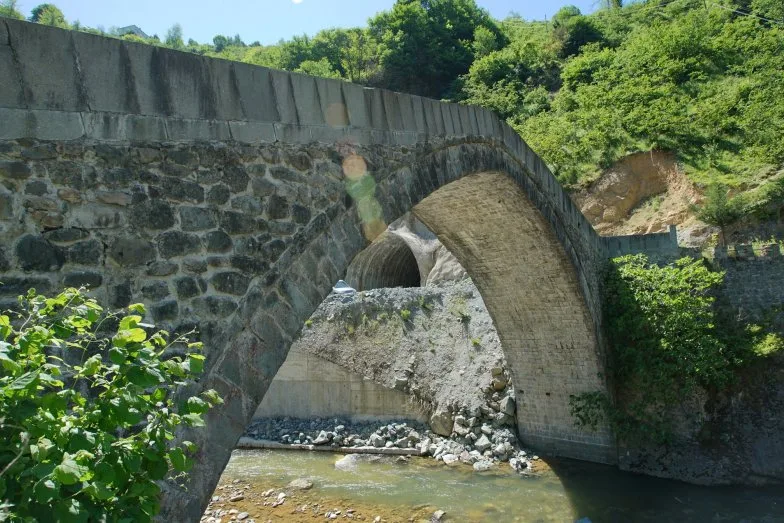
Yağlıdere Ağa Bridge spans the Yağlıdere River in Giresun, Türkiye, a single-arch stone structure commissioned in 1816 with a 20-meter span, now closed to vehicles but open for foot traffic.
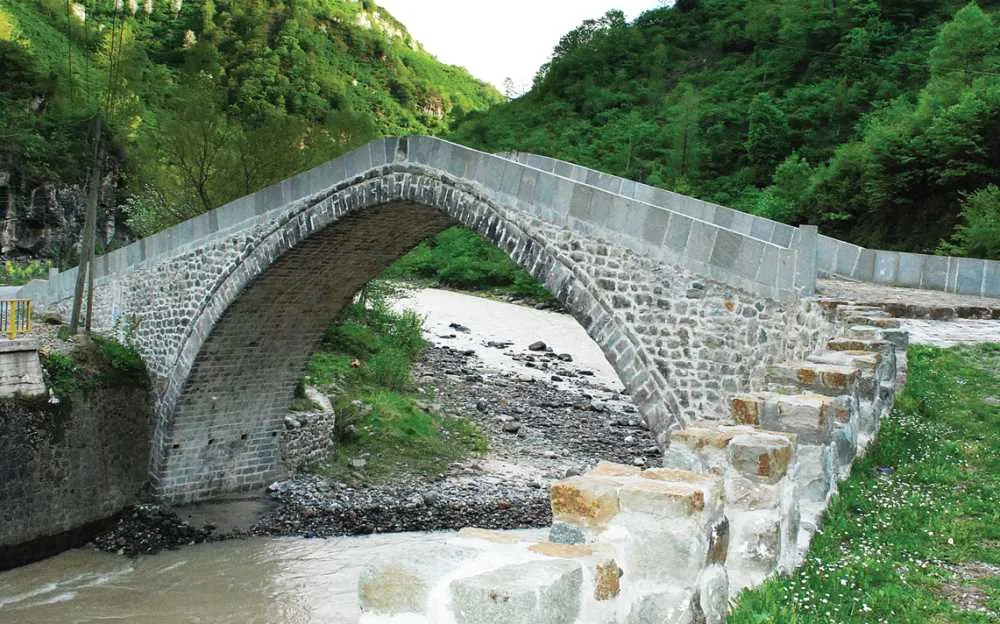
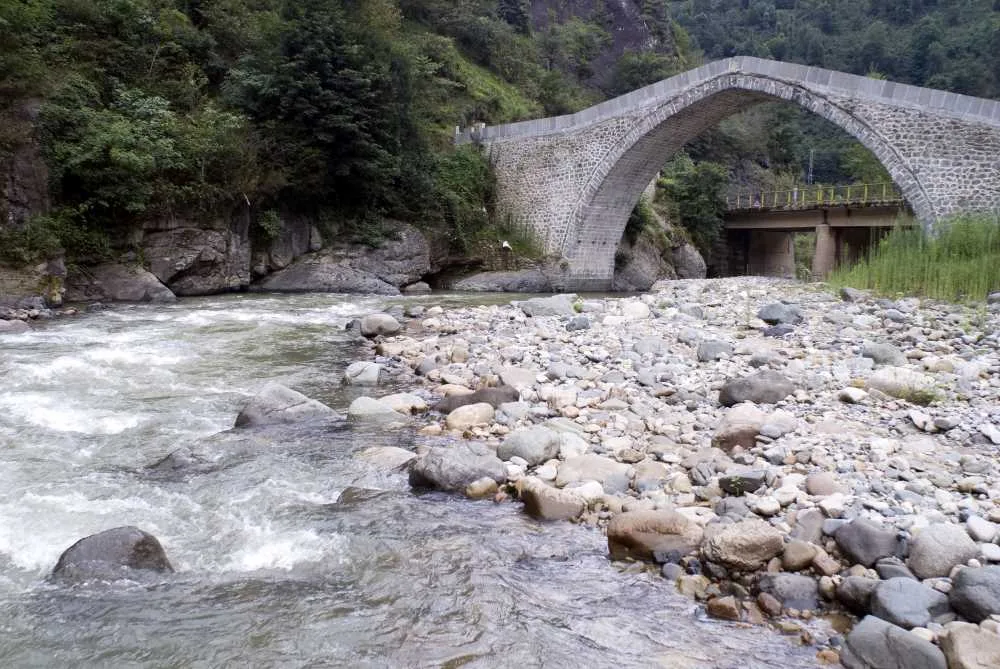
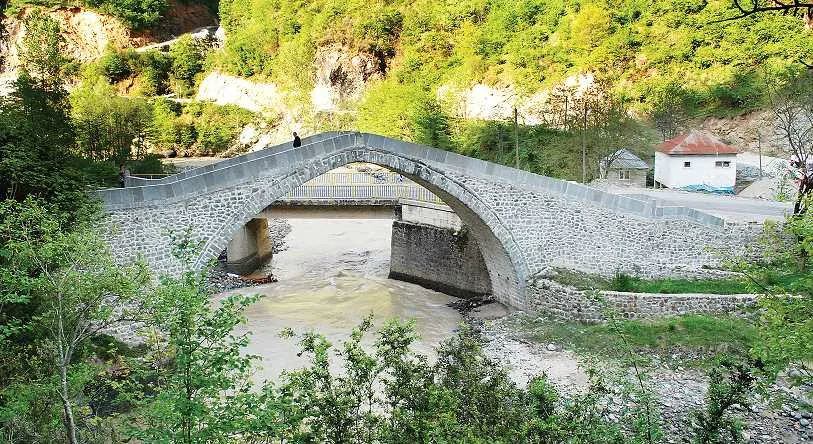
Ağa Bridge stands over the Yağlıdere River near Ümitbükü village, approximately 3.5 km from the Yağlıdere district center. Its inscription has partially survived to the present day. According to it, the bridge was commissioned by Kethüdazade Emin Ağa in 1232 AH (1816 AD). It is a single-arch, round-arched structure built using fine-cut andesite on the arch, rubble stone on the spandrel walls, and ashlar stone on the parapets.
Four square weep holes (barbacans) are carved face-to-face into the intrados of the arch. It is a small detail, but it speaks volumes about the stone craftsmanship of the era. The deck slopes downward from the keystone in two directions and is stepped, paved with rubble stone. Parts of the parapets were later restored with ashlar stone. The arch span is around 20 meters, and its height is approximately 11 meters.
The bridge has been restored and remains mostly intact, but it is closed to vehicle traffic. Today, it stands as a historical monument that can be visited on foot along the Alucra-Yağlıdere highway route.
Guide's Note
The Story of the Bridge
Built in 1816 by Kethüdazade Emin Ağa, this bridge was one of the infrastructure investments made by local Ottoman rulers of the era. Because its inscription has partially survived, both its construction date and benefactor are clearly known. Constructed using traditional masonry techniques, the combination of fine-cut andesite on the arch and rubble stone on the walls demonstrates how local stonemasons cleverly layered materials.
Best Time to Visit
It can be visited year-round, but spring and autumn months present the bridge at its most striking due to higher water levels and lush surrounding foliage. In summer, the riverbed can occasionally dry up, while regional roads can become challenging during winter.
How to Get There
The bridge is about a 30-40 minute drive from Giresun city center to Yağlıdere district. From the district center, follow the Alucra highway towards Ümitbükü village, where the bridge is located. Since public transportation options are limited, going by private vehicle is the most convenient method.
Best Photo Spots
The bridge's most striking features are the weep hole niches under the arch and its single round-arch structure. Heading down into the riverbed to take photos from below highlights the stonework more clearly. A wide-angle shot from the opposite hillside also allows you to frame the bridge within its natural surroundings.
Things to Keep in Mind
The bridge is closed to vehicular traffic, so you will need to park nearby and walk over. If you plan to climb down into the riverbed, the ground can be rocky and damp, so wearing sturdy footwear is recommended.
How to Include in Your Itinerary
If you are visiting Yağlıdere, combining Ağa Bridge with a brief walk around the district center makes good sense. You can easily plan a day trip along the Yağlıdere-Alucra route to explore other historic stone bridges and natural sights in the region.
This content originates from neresigezilir.com.tr and may not be copied without permission.
FAQ
Yağlıdere Ağa Bridge videos load when you open this section to keep the page fast.
Updated: