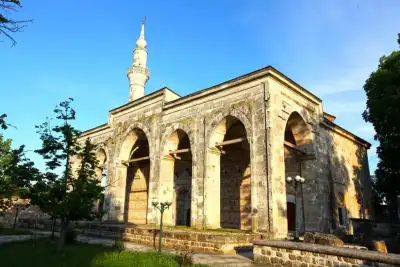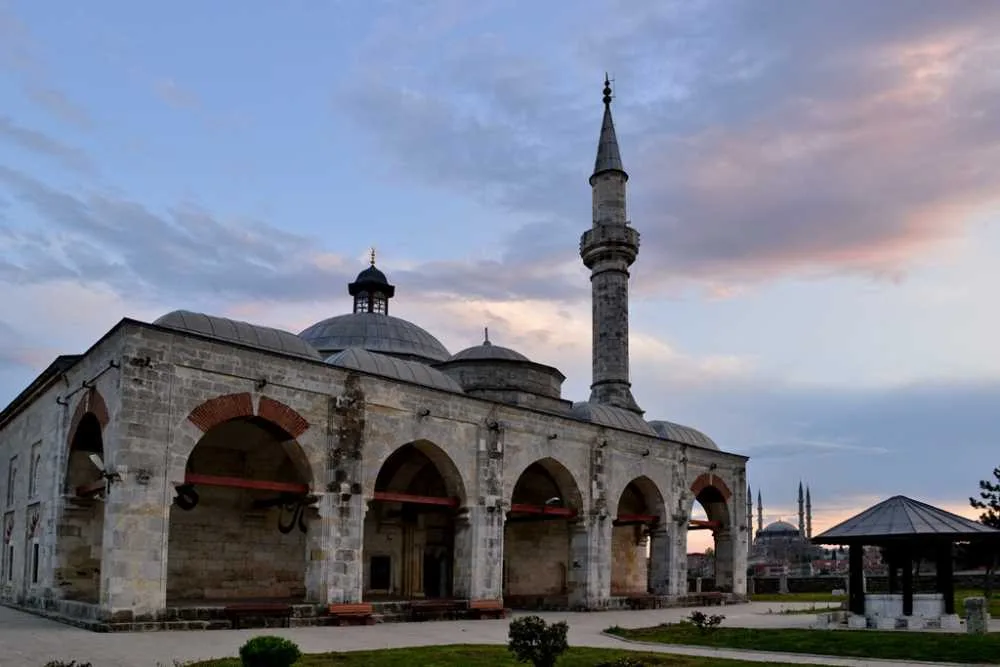
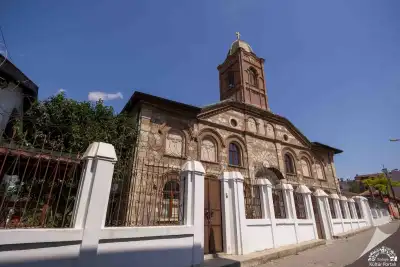
Muradiye Mosque in Edirne, Türkiye, built in 1435-36, features exceptional blue-and-white hexagonal tiles and a zawiya-plan design. Free entry for worship.
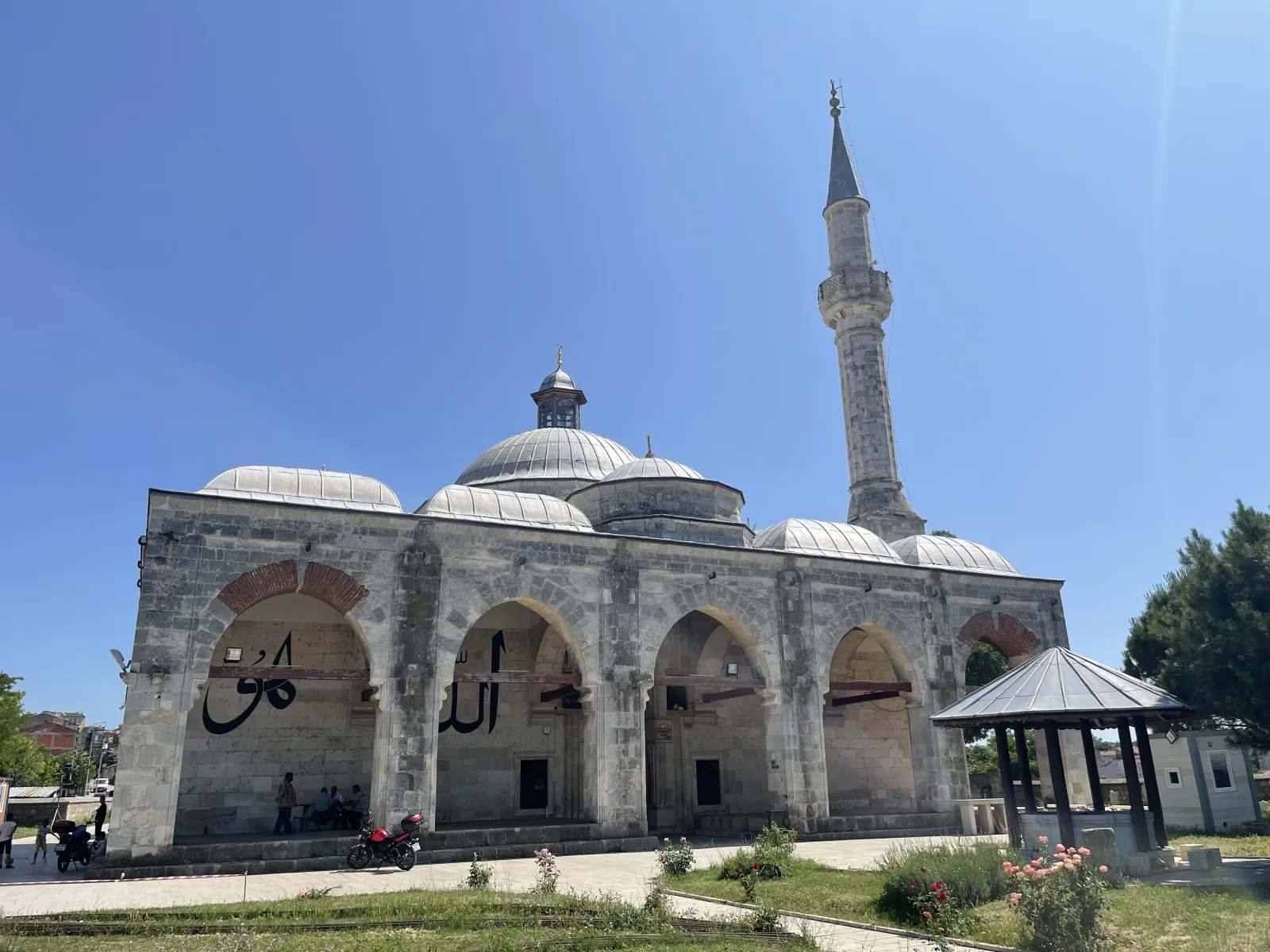
Muradiye Mosque stands on a hill overlooking Sarayiçi in the Küçükpazar district of Edirne. The inscription above the door gives the date 1435-36, but the waqf (endowment) deed belonging to Murad II is dated 1427. The architect is not definitively known, but sources point to Architect Şehabeddin. It is one of the most striking examples of the zawiya-plan type: the main space, two consecutive domed sections, and a five-bay portico form this arrangement.
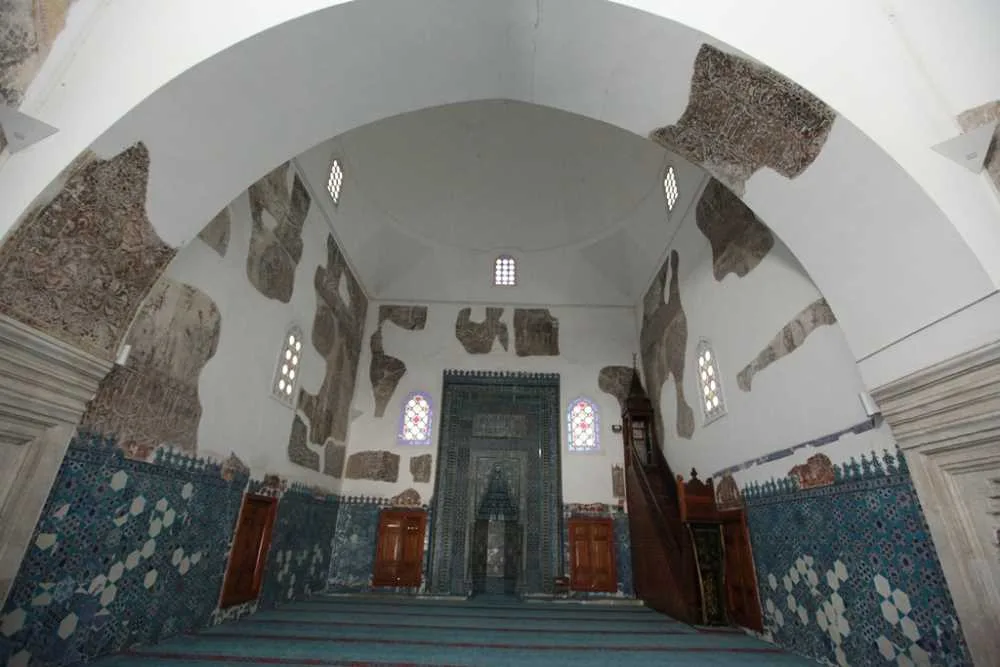
The structure, which appears simple from the outside, tells a different story once inside. The walls of the domed section in front of the mihrab are covered with hexagonal blue-and-white tile panels and turquoise triangular pieces between them. These tiles, which combine colored glaze and underglaze techniques, are considered among the most important examples of Turkish tile art. The mosque was part of a complex consisting of a mosque, a Mevlevi lodge, an imaret (soup kitchen), a fountain, and a school; today, the only surviving structures are the mosque and its surrounding graveyard.
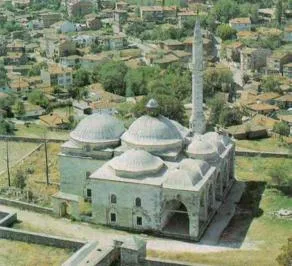
While visitor comments praise the historical significance and tiles of the structure, complaints about the landscaping and restoration process are also frequent. Some visitors state that the courtyard looks unkempt, while others mention that the mosque might be undergoing a long-term restoration. There are reports of a young imam providing information about the history of the structure at the entrance. Some also mention that the garden overlooks the river and that there are graves in front.
Guide's Note
History and Architecture
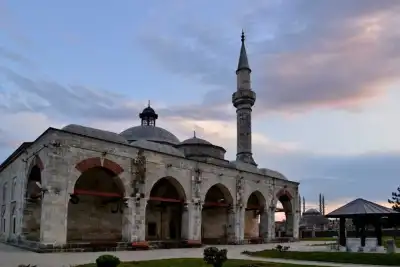
The structure was built by Murad II; the inscription on its door indicates 1435-36, but the waqf deed is dated 1427. Its architect is not definitively known, with the name Architect Şehabeddin appearing in sources. It has a zawiya (tabhane) plan: the main space, two consecutive domed sections, one domed room on each side, and a five-bay portico are combined. There is a fountain in the courtyard. The complex originally consisted of a mosque, a Mevlevi lodge, an imaret, a fountain, and a school; today, only the mosque and its graveyard remain intact.
Tiles and Interior Decoration
Although the mosque appears simple from the outside, its interior is considered one of the most important examples of 15th-century Ottoman art. The walls of the domed section in front of the mihrab are covered with hexagonal blue-and-white tile panels with natural floral motifs and turquoise triangular pieces between them. Both colored glaze and underglaze techniques were used in the mihrab tiles. Some visitors report that the tiles are peeling in places, but they feel a sense of humility and tranquility upon entering.
When to Visit
It can be visited year-round as a mosque, but the structure is known to undergo periodic restoration. Some visitors mention that the courtyard is filled with construction materials, while others state that the renovation might take a long time. It is advisable to confirm whether the mosque is open from local sources before visiting. Morning hours are highlighted as a time when it is less crowded and the light hits the mihrab more beautifully.
How to Get There
Muradiye Mosque is located on a hill in the Küçükpazar district, close to Edirne city center. It can be reached on foot from the city center, but there is an uphill path. Since it is close to Selimiye Mosque, it is possible to visit both structures consecutively on the same day. For those arriving by public transport, the nearest prominent point is around the Edirne Archaeology and Ethnography Museum; a few hundred meters walk from there is sufficient.
How Much Time to Allocate
30-45 minutes is sufficient for a visit. Exploring the interior of the mosque, viewing the mihrab tiles, and then walking around the graveyard in the courtyard easily fits within this time. For those spending a day in Edirne, it can be considered part of a planned route along with Selimiye, Eski Mosque, and Üç Şerefeli Mosque.
Things to Note
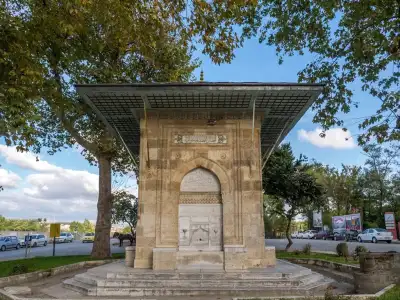
Some visitor comments report the presence of stray dogs at the back entrance of the mosque, causing discomfort; entering from the front, from the direction of Sultan Süleyman Fountain, seems safer. Additionally, restoration work on the structure continues periodically, so the courtyard arrangement or scaffolding may be present. As the mosque is open for worship, it is necessary to pay attention to prayer times and dress codes.
What's Around
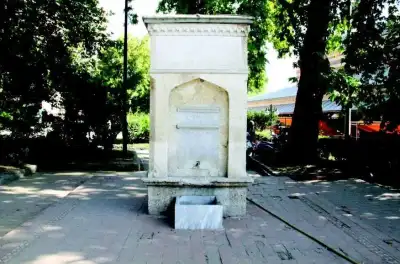
Within a few hundred meters of Muradiye Mosque, you can find the Edirne Archaeology and Ethnography Museum, Merzifonlu Kara Mustafa Pasha Fountain, and the Turkish-Islamic Arts Museum. From the mosque, you can see the silhouette of Selimiye Mosque; it is located on a high vantage point between the two structures. It is also possible to add the Sarayiçi area to the same route.
This content originates from neresigezilir.com.tr and may not be copied without permission.
FAQ
Updated: