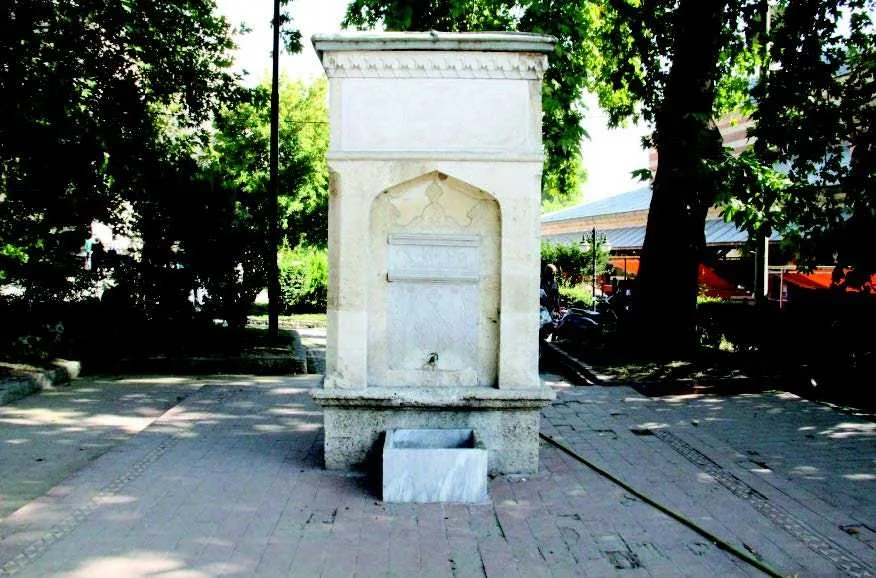
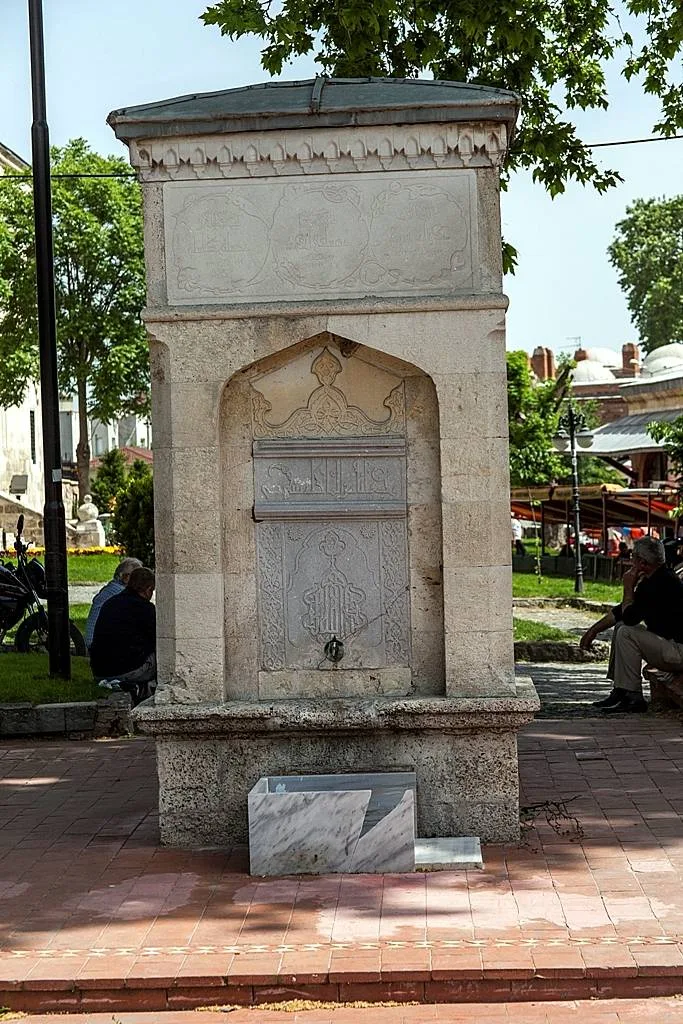
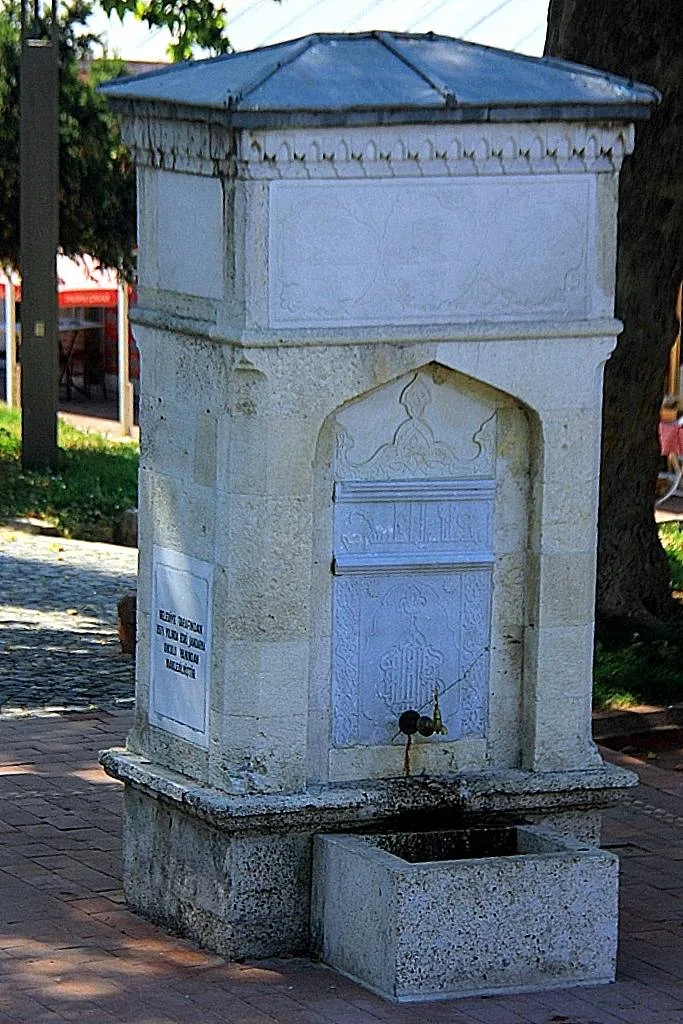
Askeri Hastane Çeşmesi, Edirne'nin Kadınlar Parkı'nda yer alan ve 1915'te kolera, tifo salgınlarında hayatını kaybeden asker ile hekimlerin anısına yapılan tarihi çeşmedir.
In Kadınlar Park, in the area between the Old Mosque and the Bedesten, there is a small fountain with a profound story. It has a horizontal rectangular plan, is 2.86 meters high, and 1.29 meters wide. At first glance, it looks like an ordinary neighborhood fountain, but its inscription tells a different tale.
The fountain was built in 1915 by Dr. Rıfat Osman Tosyavizade, the chief physician of the Edirne Central Military Hospital. A year earlier, between 1913-1914, the city struggled with cholera and typhoid epidemics; 1070 people were hospitalized for cholera, 984 for typhoid, and 801 for fever. Of these, 581 died from cholera, 344 from typhoid, and 72 from fever. Among them were three doctors from the hospital staff. The fountain was erected in memory of these deceased.
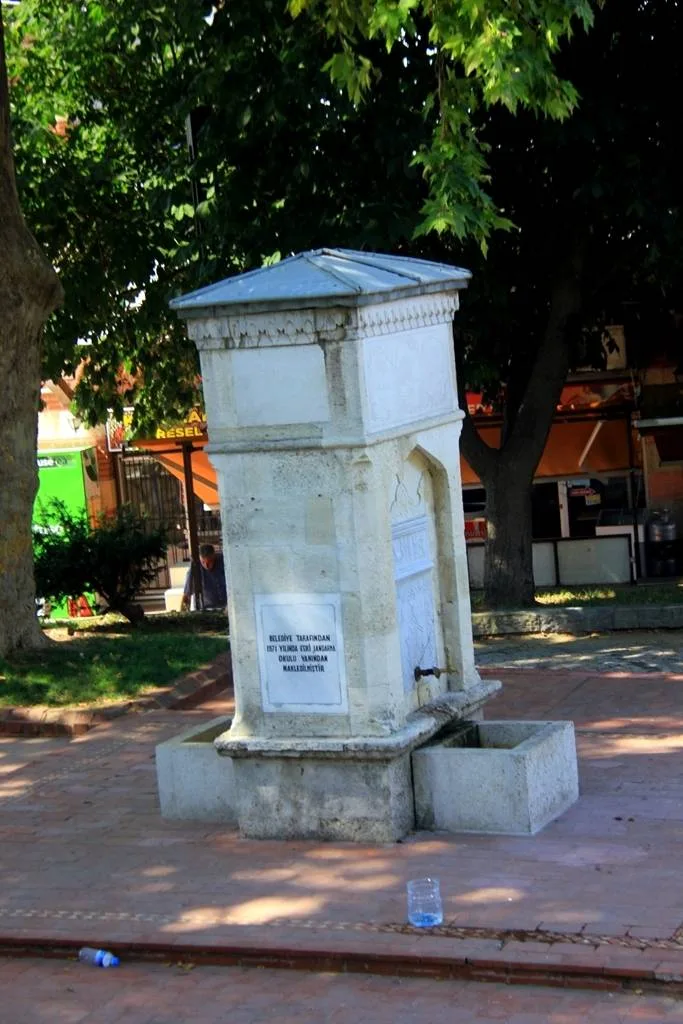
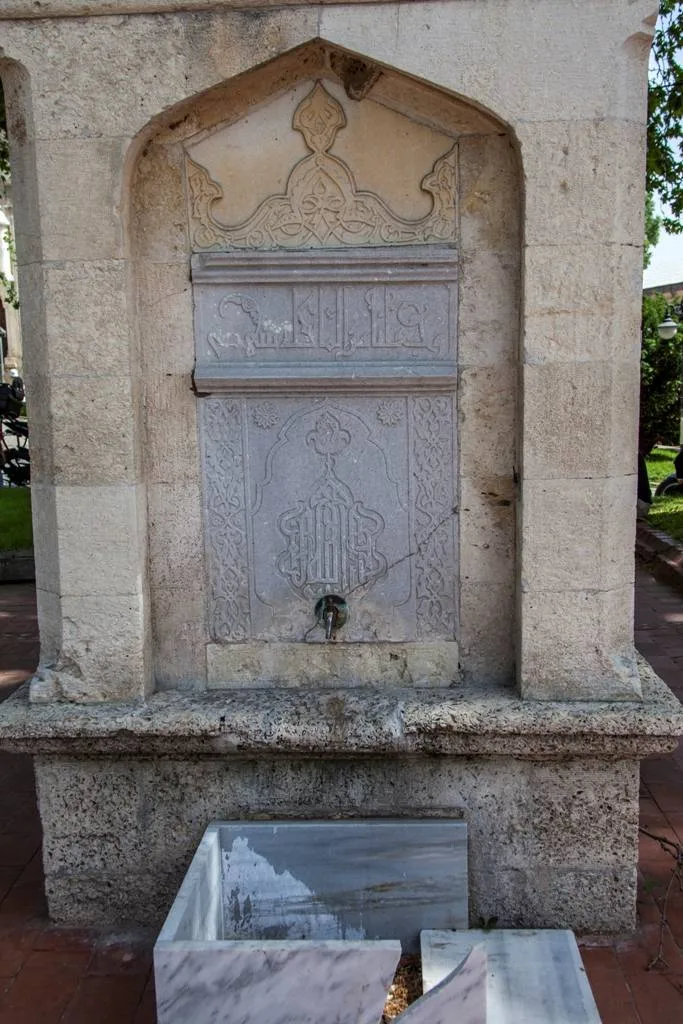
The structure was originally in the garden of the Old Military Central Hospital in northern Edirne. When it eventually faced the risk of collapse, the Edirne Municipality dismantled the fountain in 1971 and moved it to its current location in Kadınlar Park. During the relocation, the original water trough broke; the marble troughs you see today on the north and south facades were added later and are not entirely original. The inscription on the east facade also changed during the relocation; it now bears a text describing the 1971 transfer. The fountain still flows.
Guide's Note
The Story of the Fountain
The fountain bears the trace of the cholera and typhoid epidemic that hit Edirne between 1911-1915. The epidemic began in July 1913 and ended in May 1914. During this period, hundreds of the thousands of patients hospitalized could not be saved. Hospital chief physician Dr. Rıfat Osman had this fountain built in memory of the patients and colleagues they lost. Rıfat Osman was also a significant researcher on the history of Edirne; he remained in the city where he started his duty in 1904 and recorded the city's past.
When to Visit
As it is an outdoor space, it can be visited throughout the year. Spring and autumn are more comfortable for walking in the park. If you want to see the inscription clearly, prefer midday hours when there is plenty of daylight, as the park can be a bit dark in the evening.
How to Get There
The fountain is located in Edirne's historic bazaar area, right next to the Old Mosque. It's a 10-15 minute walk from Selimiye Mosque and a few steps from the Bedesten. It's more practical to explore the city center on foot rather than by car. The area is already pedestrian-friendly.
How to Add to Your Itinerary
It's not a place to visit on its own, but a natural stop within the Old Mosque-Bedesten-Kadınlar Park triangle. After visiting the Old Mosque, passing through the park to see the fountain on your way to the Bedesten will take 5 minutes. It can easily be added to a half-day historical center tour starting from Selimiye Mosque.
Things to Consider
The fountain is a small-scale structure; don't expect a grand monument. Its true value lies in the story it carries. Since the inscription text is in old script, most visitors pass by without knowing its meaning. Reading the story beforehand makes the visit more meaningful. It's also useful to know that the original water trough broke during relocation and that today's troughs were added later.
Good Spot for Photos
The east facade of the fountain, where the inscription is located, is the most photographed angle. It's possible to take photos with the greenery in the park as a background. If you come before noon, there is less shadow, and the stone texture appears clearer.
This content originates from neresigezilir.com.tr and may not be copied without permission.
Military Hospital Fountain Videos
Military Hospital Fountain videos load when you open this section to keep the page fast.
Show videos
FAQ
Updated: