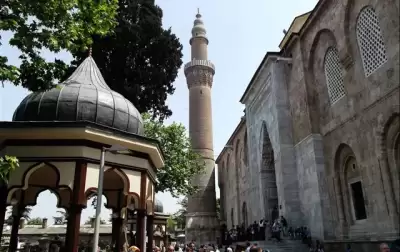
The Tomb of Şehzade Mustafa is an octagonal tomb located in the Muradiye Complex in Bursa, built in 1573 by his brother Selim II for the son of Suleiman the Magnificent. It is notable for its 16th-century Iznik tiles and woodwork, and its visit is free.
Located in the Muradiye district of Bursa, southwest of the Tomb of Murad II, the Tomb of Şehzade Mustafa is one of the structures bearing deep traces of Ottoman history. Şehzade Mustafa, son of Suleiman the Magnificent and Mahi Devran Sultan, was executed in 1553 by his father's order; subsequently, his brother Selim II had this tomb built in 1573. The structure is also known as Mustafa-i Cedid Tomb.
The interior of the tomb is remarkably striking with its 16th-century Iznik tiles and fine woodwork. It is stated that within the octagonal structure, in addition to Şehzade Mustafa's sarcophagus, there are also sarcophagi belonging to his mother. When visited together with the other tombs and structures of the Muradiye Complex, it is possible to see the architectural integrity of the early Ottoman period firsthand. Visiting all the tombs within the complex is free of charge.
Guide's Note
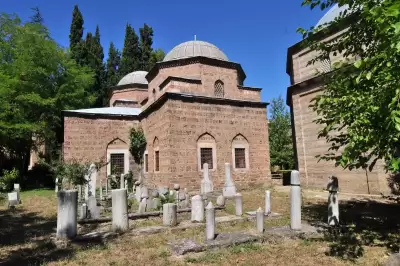
The Tomb of Şehzade Mustafa stands out as a must-visit stop for history enthusiasts coming to Bursa. Visitors emphasize that the tomb embodies a heavy page in Ottoman history: Şehzade Mustafa, who died in Konya by order of Suleiman the Magnificent, was first buried in a cemetery in Bursa; his tomb, however, was built only after Suleiman's death, during the reign of Selim II. Another striking detail mentioned is that, in addition to Şehzade Mustafa, his sons are also buried in the tomb.
The historical and cultural weight of the place leaves a significant impact on visitors. It is stated that for those interested in the Ottoman dynasty and the political atmosphere of the period, the tomb should be evaluated in this context. However, since some of the comments are not directly related to the place, and considering the limited number of visitors, it would be healthier to read the following feedback as individual observations rather than a general consensus.
- Maintenance and cleanliness: It is stated that the maintenance work carried out by the municipality is not sufficient.
- Lack of information: There are no guiding signs or brochures for visitors about the history and importance of the tomb; this makes it difficult to understand the place.
- Surrounding construction: Opinions have been expressed that the construction in the immediate vicinity of the tomb negatively affects the preservation of the historical fabric.
About the Tomb of Şehzade Mustafa
Bursa, as the first capital of the Ottoman Empire, hosts many important tombs. The Muradiye Complex, in this respect, contains one of the city's densest historical layers. The Tomb of Şehzade Mustafa within the complex attracts visitors not only with its architectural value but also with the tragic story behind it.
Şehzade Mustafa, the eldest son of Suleiman the Magnificent, was known as the most talented and beloved prince among the people of his time. However, in 1553, he was executed by his father's order at the headquarters in Ereğli. This event is considered a deep turning point in Ottoman history. It is known that there was great mourning among the people after Mustafa's death, and elegies were written in his name. The tomb was built approximately twenty years after his death by his brother Selim II in 1573.
When to Visit?
The most favorable periods to visit Bursa are between April–June and September–November. During these months, the weather is mild, allowing you to comfortably explore both the Muradiye Complex and its surrounding historical fabric. In the summer months, the city becomes more touristically active; visiting in the early morning provides a calmer experience.
Since the tomb's visiting hours can change seasonally, especially in winter, it is advisable to confirm the current opening hours before going. During religious prayer times, such as Friday prayers, it would be a respectful approach to keep your visit short or wait until these hours pass.
How to Get There?
The Tomb of Şehzade Mustafa is located in the Muradiye district of Osmangazi, Bursa. The Çarşamba Merinos tram stop is the closest public transport point to the tomb; from there, you can reach it by walking for about 5 minutes. Municipal buses departing from different parts of Bursa also serve Muradiye.
If you are coming by private car, it is possible to find parking around the Muradiye Complex, but you may need to be careful on narrow streets. It can also be easily reached by taxi from the city center; driving time varies between 10–15 minutes depending on traffic.
Suggested Route: Muradiye Complex Tour
Visiting the Tomb of Şehzade Mustafa not alone, but within the entirety of the Muradiye Complex, offers a much more rewarding experience. The complex includes the Tomb of Murad II, the Tomb of Alaattin, and various other tombs from different periods. It is recommended to allocate approximately 1.5–2 hours for a tour covering all of them.
After completing your visit to Muradiye, you can also add the Bursa Archaeology Museum and the Uluumay Ottoman Folk Costumes and Jewelry Museum, which are within walking distance, to your travel plan. The afternoon then leaves an ideal time slot to move on to the Grand Mosque (Ulu Cami) and the Covered Bazaar (Kapalı Çarşı).
Photo Spots
For photos taken from outside the tomb, the marble inscription above the door and the general silhouette of the structure offer beautiful shots. Inside, the wall surfaces with dense Iznik tiles and the area around the sarcophagus, where woodwork stands out, are the most striking points for photography.
The cypresses and historical cemetery in the complex garden create an impressive atmosphere, especially in autumn, in terms of light and color. A wide-angle lens will be very functional for capturing the octagonal form of the tomb and the entire interior. Not using flash inside is a preferred approach, both out of respect for other visitors and for the more natural appearance of the tile surfaces.
Things to Know Before Visiting
Since the tomb is a religious site, a quiet and respectful demeanor is expected during the visit. Although there is no specific dress code, modest and conservative clothing is appropriate. The interior of the tomb is quite small; the space becomes cramped when too many people enter at once. Visiting in the early morning or on weekdays provides a more comfortable experience.
The entire Muradiye Complex can be visited free of charge. It is advisable to plan your visit accordingly, keeping in mind that visiting hours may vary seasonally and some tombs might be temporarily closed for maintenance.
This content originates from neresigezilir.com.tr and may not be copied without permission.
Tomb of Şehzade Mustafa Videos
Tomb of Şehzade Mustafa videos load when you open this section to keep the page fast.
Show videos
FAQ

Updated: