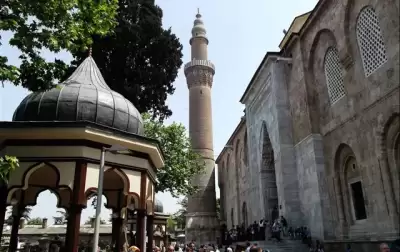
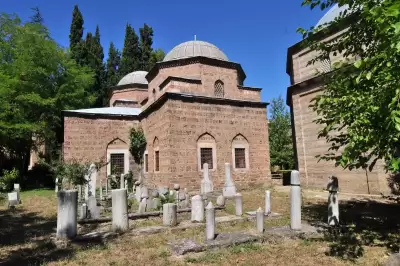
Located within Bursa's Muradiye Complex, this tomb was built in 1479 for Şehzade Mustafa, son of Fatih Sultan Mehmet; Sultan Cem was later also buried here. It is one of the important examples of Ottoman tomb architecture with its 16th-century Iznik tiles and wooden craftsmanship.
The Muradiye Complex in Bursa's Osmangazi district houses dozens of tombs belonging to the Ottoman dynasty. Among these tombs, the Tomb of Şehzade Sultan Mustafa and Sultan Cem holds a special place, both for its architectural features and the historical figures buried within. The tomb was built for Şehzade Mustafa, son of Fatih Sultan Mehmet, who died in 1474. The prince was initially buried in another structure and later transferred to this tomb, completed in 1479. Over time, Sultan Abdullah, Sultan Cem, and Alem Şah were also interred in the same structure.
The interior of the tomb is adorned with 16th-century Iznik tiles and intricate wooden craftsmanship. The octagonal plan reflects the characteristic features of Ottoman tomb architecture. Sultan Cem's story, in particular, is fascinating: Sultan Cem, who lost the struggle for the throne against his brother Bayezid II, remained captive for years in the hands of the Knights of Rhodes and then the Papacy, dying in Italy in 1495. His body was brought to Bursa many years later and buried in this tomb. This dramatic life story elevates the tomb far beyond a mere architectural structure.
Guide's Note

The Tomb of Şehzade Sultan Mustafa and Sultan Cem stands out as a must-visit stop for history enthusiasts visiting Bursa. Visitors note that feeling the profound story of the tomb's Ottoman history in person carries a special weight. The information that Şehzade Mustafa, who died in Konya during the reign of Suleiman the Magnificent, was buried here, and his tomb was built during the reign of Selim II after Suleiman's death, leaves a deep impression on visitors. The fact that the prince's sons also rest in the same tomb further deepens the historical layers of the place.
The tomb is considered a meaningful point of visit for anyone interested in the Ottoman dynasty and the historical fabric of Bursa. The vast majority of visitors leave satisfied; especially those who find the historical context strong describe this visit as an indispensable part of their Bursa itinerary.
- Maintenance and cleanliness: There is criticism that the maintenance work carried out by the municipality is not sufficient.
- Lack of information: It is stated that guiding signs or promotional materials explaining the history and importance of the tomb are insufficient; the absence of posters to inform and encourage visitors is noted.
History and Importance of the Tomb
The Muradiye Complex is where the Ottoman dynasty left its most significant traces in Bursa. Among the tombs within the complex, the Tomb of Şehzade Mustafa and Sultan Cem particularly stands out due to the names it houses. Şehzade Mustafa was the son of Fatih Sultan Mehmet and passed away in 1474. The tomb was completed in 1479; over time, Sultan Abdullah, Sultan Cem, and Alem Şah were also buried here.
The story of Sultan Cem constitutes one of the most striking pages of Ottoman history. After his father's death, Sultan Cem engaged in a struggle for the throne with his brother Bayezid II, was defeated, and was forced to seek refuge with the Knights of Rhodes, then spent years under the guardianship of the Papacy in Europe. Sultan Cem, who died in Italy in 1495, had his body brought to Bursa after a long process and transferred to this tomb.
When to Visit?
It is possible to visit the tomb at any time of the year; however, April-May and September-October are the most ideal periods, both in terms of weather conditions and the appearance of the Muradiye garden. In spring, the trees in the complex's garden blossom, providing a beautiful backdrop for photography.
During the summer months, as the influx of tourists to Bursa increases, visiting in the early morning offers a much calmer experience. Also, keep in mind that there might be crowds around the mosques during Friday prayer times.
How to Get There?
The tomb is located in the Muradiye district of Bursa's Osmangazi district. You can reach Muradiye from Bursa city center by public buses; the Bursa Metropolitan Municipality's app or website will help you with bus routes.
For those arriving by private car, parking is available around the Muradiye Mosque. Taxis and online ride-sharing applications can also be used to reach Muradiye from any point in the city. The complex is close to Bursa's historical center, making it accessible on foot.
Suggested Itinerary: Muradiye Complex Tour
Visiting the Tomb of Şehzade Mustafa and Sultan Cem alone is less efficient than combining it with other structures in the Muradiye Complex. The complex houses more than ten tombs, including the Tomb of Murad II, each reflecting different periods and styles.
After visiting Muradiye, you can also explore the nearby Ottoman-era gravestone museum. For those who wish to complete their day with other historical sites in Bursa, the route including the Grand Mosque, Covered Bazaar, and Green Tomb is a classic yet fulfilling option.
Photo Spots
The best external shots of the tomb are angles that highlight the corner details and roof silhouette of the octagonal structure. The garden of the Muradiye Complex, especially in spring when the trees are in bloom, provides a beautiful frame for the tombs in the background.
Inside, the color and pattern details of the Iznik tiles and the carved craftsmanship of the wooden sarcophagi provide rich material for photography. Pre-noon hours, when natural light enters best, are more suitable for interior shots. Remember to follow the staff's guidance regarding flash usage.
Things to Know Before Visiting
As the tomb is a religious site, a quiet and respectful demeanor is expected during your visit. You may need to remove your shoes when entering the interior; therefore, do not forget to wear socks.
Some tombs in the Muradiye Complex may be closed at certain hours or temporarily closed for restoration. To avoid wasting time, it is advisable to call the Bursa Provincial Directorate of Culture and Tourism to confirm the current status before planning your visit. Parking space around the complex is limited, so choosing public transport during busy periods will be more practical.
What to Eat Nearby?
The Muradiye district and its surroundings are full of small restaurants and cafes offering traditional Bursa delicacies. While Bursa's unique İskender kebab can be found everywhere in the city, established venues in historical districts often offer a more authentic experience.
For Bursa's famous candied chestnuts and various confectionery products, shops around the Covered Bazaar are a good address. For those who want to take a short break in Muradiye, there are also tea gardens and small cafes near the complex.
This content originates from neresigezilir.com.tr and may not be copied without permission.
Tomb of Şehzade Sultan Mustafa and Sultan Cem Videos
Tomb of Şehzade Sultan Mustafa and Sultan Cem videos load when you open this section to keep the page fast.
Show videos
FAQ
Updated: