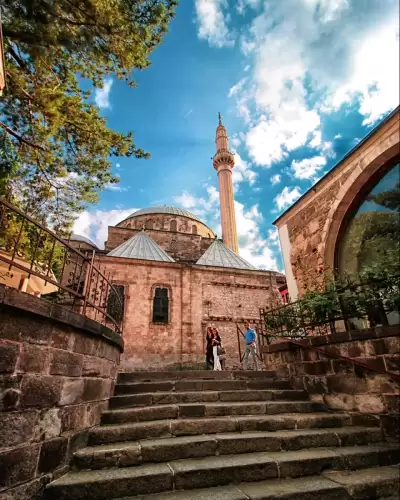
Afyonkarahisar Grand Mosque, built between 1272-1277 during the Anatolian Seljuk period, is one of Turkey's most important wooden-columned mosques with its structure resting on 40 wooden pillars, and it is on the UNESCO Tentative List.
Rising at the foot of Afyonkarahisar's historic castle, the Grand Mosque is one of the most valuable surviving examples of Anatolian Seljuk architecture. Commissioned by Sahipata Nusrediddin Hasan between Hijri 671-676 (Gregorian 1272-1277), the mosque has maintained its status as one of the city's largest places of worship for centuries, with its spacious area of 36x24 meters. The structure, sometimes referred to as Cami-i Kebir or Hocabey Mosque in historical records, is meticulously preserved by the General Directorate of Foundations.
The most striking feature of the mosque is the 40 wooden pillars supporting its interior. These pillars constitute one of the most mature examples of the wooden-columned mosque tradition in Anatolia. The single minaret is built of brick, with green glazed bricks arranged in a diamond pattern on its surface. The wooden decorations, crafted using the kündekari technique, add a distinct depth to the mosque's interior. With all these features, the Grand Mosque has rightfully taken its place on the UNESCO World Cultural Heritage Tentative List.
Guide's Note

Afyonkarahisar Grand Mosque leaves a strong impression on the vast majority of visitors. With a history spanning approximately 830 years, dating back to the 1200s, the mosque continues to serve as an active place of worship, standing out with its Seljuk-era architectural features. The Esmaül-Hüsna (99 Names of Allah) engravings on the ceiling and the uniquely preserved Seljuk symbols make this direct connection with history even more meaningful.
The most striking element for visitors is the predominantly wooden interior design. The carved ceilings, numerous wooden pillars, and the mihrab are frequently highlighted as aspects that distinguish the mosque from other examples. Its location right next to the castle, amidst historic houses, also harmonizes with the surrounding fabric. Those who come for prayer also find the spiritual atmosphere of the place positive.
One point to note is that a visitor mentions that the original wooden pillars are now exhibited in the museum. Keeping in mind that some of what you see in the mosque may have been renovated as part of restoration efforts can help you set your expectations correctly.
When to Visit?
Afyonkarahisar Grand Mosque is open for visits all year round, but spring and autumn months offer the most comfortable visiting periods. During these seasons, temperatures are mild, and lighting conditions are very favorable for clearly photographing the mosque's exterior and minaret.
It is recommended to plan your visit for the period after morning prayer until before noon; during these hours, the congregation density is relatively low, and you will have the opportunity to examine the interior more calmly. Keep in mind that the mosque is busy during Friday prayer times, and tourist visits may be restricted. It should also be noted that during Ramadan, the mosque gains a unique atmosphere and offers a different experience in the evening hours.
How to Get to Afyonkarahisar Grand Mosque?
The mosque is located in Afyonkarahisar city center, right at the foot of Afyonkarahisar Castle, making access quite easy. It is also possible to reach it on foot from accommodation points in the city center.
Minibuses and municipal buses operating from Afyonkarahisar Intercity Bus Terminal to the city center run on routes that pass near the mosque. Taxi access is both practical and affordable. For those arriving by car, there are limited parking spaces around the mosque. For those who wish to combine it with a castle visit, the Grand Mosque is very close to the starting point of the castle slope; therefore, combining both visits into a single route is quite logical.
Photo Spots and Architectural Details
Afyonkarahisar Grand Mosque is an extremely rich place for photography enthusiasts. From the outside, the minaret with its diamond-patterned green glazed bricks is one of the most impressive elements waiting to be framed. In the early morning hours, when the sunlight falls on the minaret, this pattern becomes very distinct.
Inside, the rhythmic column array formed by 40 wooden pillars offers a perfect composition for perspective photography. The kündekari carved decorations on the pillars are another source of inspiration for close-up shots. A wide-angle lens pointed at the mosque's ceiling helps capture the full splendor of the wooden craftsmanship in a single frame. When taking photos, remember to show respect to those praying and ask for permission if necessary.
Route Suggestion: A Historical Journey at the Foot of the Castle
Combining a visit to the Grand Mosque with Afyonkarahisar Castle is the most efficient way to explore the city's historical fabric. You can start from the mosque and climb the castle slope, enjoying panoramic views of the city from the summit.
The old Afyon streets around the mosque also offer an area worth exploring with their historical texture. From here, it is possible to walk to the Afyonkarahisar Archaeology Museum. At lunchtime, tasting Afyon's famous kaymak (clotted cream) and sucuk (spicy sausage) at restaurants in the city center forms a delicious stop on the route. All these points are within walking distance of each other, so a complete historical city tour can be done without using a car.
What to Eat After Your Visit?
Afyonkarahisar is a city with a special place on Turkey's gastronomy map. After visiting the Grand Mosque, you can try breakfast plates made with Afyon sucuk or a hot soup at restaurants in the city center.
The city's most famous delicacy, Afyon kaymak, is especially served with fresh bread or pişi (fried dough) in the morning and is definitely worth tasting. In addition to these, Afyon lokum (Turkish delight) is also among the city's iconic flavors. Small artisan restaurants located in the historical bazaar area around the mosque offer home-cooked meal options at affordable prices.
Things to Know Before Your Visit
Afyonkarahisar Grand Mosque is an active place of worship; therefore, it is both respectful and necessary to adhere to certain rules during your visit. You must remove your shoes when entering the mosque; clean socks are worn inside. Female visitors are expected to cover their heads and choose clothing that covers their shoulders and knees. For male visitors, long trousers are preferred over shorts.
During prayer times, especially Friday prayer, entry to the interior may be restricted or completely closed. Avoiding flash photography and refraining from loud conversations are signs of respect for both those praying and the spiritual atmosphere of the place. As the mosque is under the supervision of the General Directorate of Foundations, access to some sections may be temporarily blocked during maintenance and repair periods.
This content originates from neresigezilir.com.tr and may not be copied without permission.
FAQ
Afyonkarahisar Grand Mosque videos load when you open this section to keep the page fast.
Updated: