
I have prepared a route covering the 6 most important stops that can be visited in one day in the historical Sur district of Diyarbakır. Starting from the Icikal, discover the multi-layered religious and cultural heritage of the city through churches and mosques bearing traces of different faiths and periods. Rest in historic inns and visit the house where Ziya Gokaalp was born.
The ancient Sur district of Diyarbakır is an ideal starting point for experiencing the city's deep history and cultural richness in just one day. On this route, starting from the Icikal and spreading to narrow streets, you will discover six important stops bearing traces of different faiths and periods within walking distance. Listen to the story of the city's basalt stone at every step.
Diyarbakır Archaeology Museum
We start the day with the Diyarbakır Archaeology Museum. Located in the Icikal in the Sur district, the museum has been bringing together thousands of artifacts from the Hittite, Assyrian, Roman, Byzantine, Seljuk and Ottoman periods since 1934. The finds from excavations at this gateway to Mesopotamia show how ancient and rooted a past the region has. The stone works displayed in the museum garden are also worth seeing.
Saint George Church
Right next to the Archaeology Museum, Saint George Church is located within the Icikal Museum Complex. This approximately 1800-year-old structure stands out with its architecture thought to date from the Roman period. Diyarbakır's symbol, black basalt stone, shows itself here as well. The frescoes on the church walls depicting Biblical scenes make this important structure of Christian heritage even more special.
Hazreti Suleyman Mosque
Another important stop in the Inner Citadel is Hazreti Suleyman Mosque. Known as the place where the conquest of the city began during the time of Caliph Umar, this mosque is made of basalt stone. The fact that it hosts 27 companion tombs in its courtyard adds a strong spiritual atmosphere to the place. The structure, also known by different names such as Castle Mosque and Nasiriyya Mosque, sheds light on Diyarbakır's religious history.
Fatih Pasha Mosque (Lead Roof Mosque)
When we step out a bit from the Icikal, we reach the Fatih Pasha Mosque, built between 1516-1520. Known as Diyarbakır's first Ottoman structure, this mosque is also called the Lead Roof Mosque by locals because its domes are covered with lead. The central domed plan type is one of the pioneering examples in Anatolia. The mosque's mihrab and minbar also display fine examples of Ottoman tile art.
Surp Giragos Armenian Church
With a short walk from Fatih Pasha Mosque, we reach the Surp Giragos Armenian Church. One of Turkey's largest Armenian churches, this structure was built between 1515-1518. After the fire in 1880, the church was rebuilt and reopened to visitors in 2011 after restoration. Its five-section architecture, designed in honor of Jesus Christ and the four Gospel writers, makes this place special.
Seyh Mutahhar Mosque and Four-Legged Minaret
The last stop of the day is the Seyh Mutahhar Mosque and Four-Legged Minaret, one of Diyarbakır's most recognized symbols. This mosque, built in 1500 by Akkoyunlu Bey Kasim Bey, has a minaret that rests on four monolithic basalt stone columns. This architectural feature makes it the only example of its kind in Anatolia. The minaret is believed to represent the four Islamic schools of thought, and there is a tradition of circling it seven times. Located in the heart of the historic bazaar, this structure must be seen before bidding farewell to Diyarbakır.
Spending a day in Diyarbakır Sur Ici is enough to understand the city's multi-layered history and cultural richness. Since all these stops are within walking distance, wear comfortable shoes. During the day, you can take a coffee break at Hasan Pasha Inn or try local delicacies.
This content originates from neresigezilir.com.tr and may not be copied without permission.
Places in This Article
Places to visit mentioned in this article

Behram Pasha Mosque
The Behram Pasha Mosque, Diyarbakır's largest and most magnificent Ottoman mosque, was desig…

Deliller Han
Deliller Han, Diyarbakır's largest historical caravanserai, was built in 1527-28 by the Otto…

Diyarbakır Archaeology Museum
Diyarbakır Archaeology Museum, established in 1934 and located in İçkale, is a well-establis…

Diyarbakır Fortress and Hevsel Gardens
The basalt walls, a symbol of Diyarbakır, and the 700-hectare Hevsel Gardens stretching to t…

Fatih Pasha Mosque (Kurşunlu Mosque)
Fatih Pasha Mosque, the first Ottoman work in Diyarbakır, was built between 1516-1520 by Bıy…

Hazreti Suleyman Mosque
Located within the Inner Castle in Diyarbakır's Sur district, Hazreti Suleyman Mosque is one…
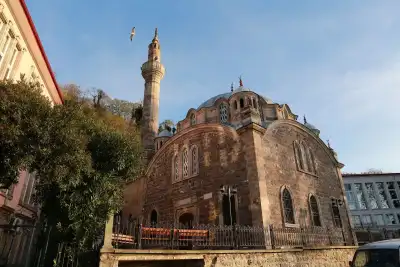
Castle Mosque
A stone mosque standing in the square near the government building, at the foot of Giresun C…

Kurşunlu Mosque
Kurşunlu Mosque, one of Harput's Ottoman-era mosques, was built in 1738-1739 and takes its n…

Melik Ahmet Pasha Mosque
Located in Diyarbakır's Sur district, the Melik Ahmet Pasha Mosque was built between 1587 an…

Mesudiye Madrasa
Located within the same complex as the Grand Mosque in Diyarbakır's Sur district, Mesudiye M…

Paşa Han
An Ottoman caravanserai built in 1752 by Mehmet Pasha, governor of Trabzon and Sivas, locate…

Saint George Church
Located within the İçkale Museum Complex in Diyarbakır's Sur district, Saint George Church i…

Sheikh Mutahhar Mosque and Four-Legged Minaret
Built in 1500 by Akkoyunlu Bey Kasım Bey, the Sheikh Mutahhar Mosque is a unique structure i…

Surp Giragos Armenian Church
Located in Diyarbakır's Sur district, Surp Giragos is one of Turkey's largest Armenian churc…

Ziya Gökalp Museum
The museum, established in a 19th-century basalt stone mansion where Ziya Gökalp, the founde…
Bu yazıyı paylaş