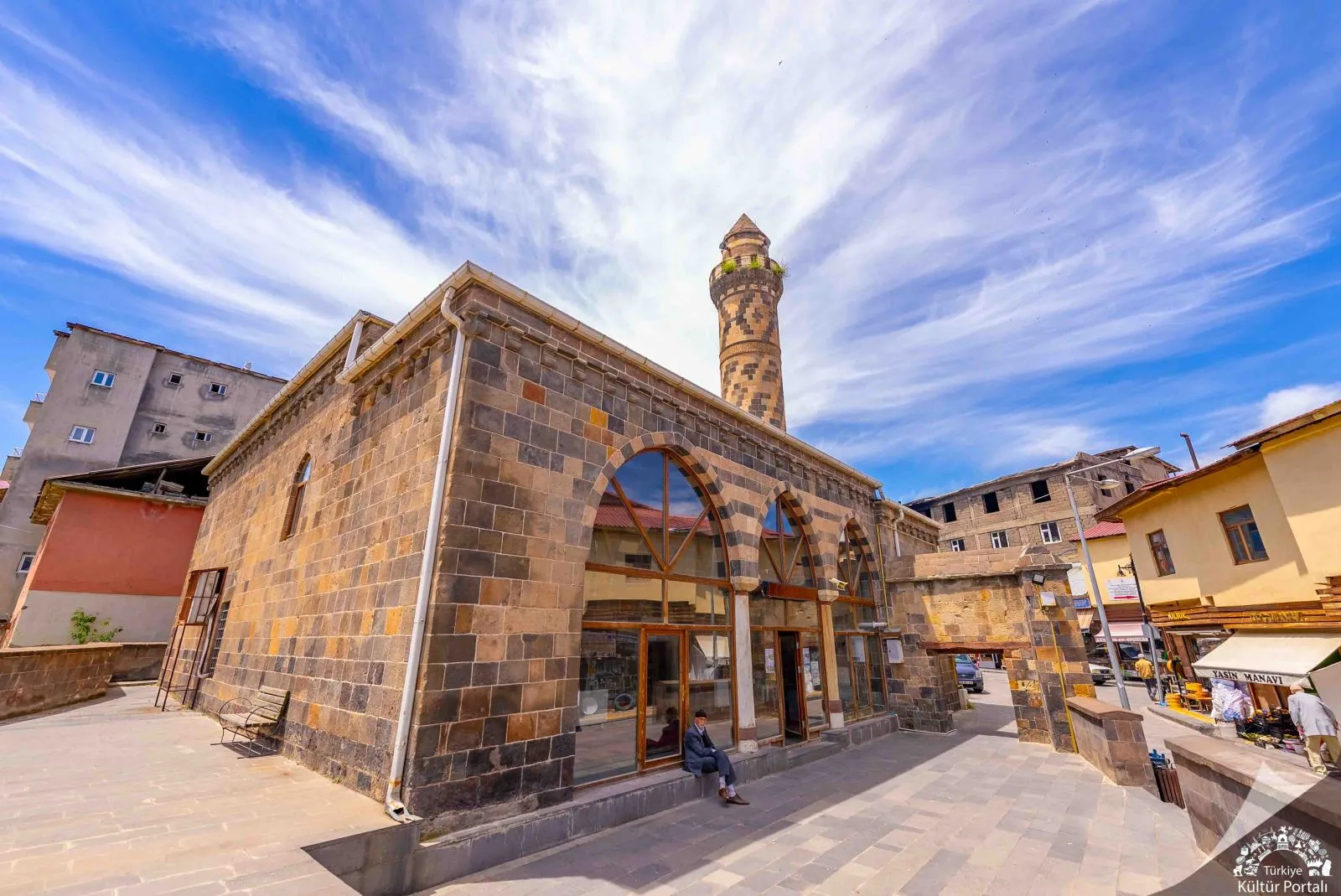
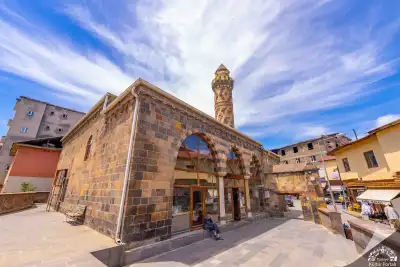
Alaeddin Bey Mosque in Muş, Türkiye, is an 18th-century Ottoman structure built 1746–1748 featuring a square prayer hall with nine naves and a distinctively decorated two-tone stone minaret. Admission is free.
Alaeddin Bey Mosque stands in the old bazaar district surrounding the castle in Muş. According to inscriptions, construction began in 1746–1747 and was completed in 1747–1748. It was commissioned by Alaeddin Bey, son of Kasım Agha, the local governor (mütesellim) of Muş at the time; for this reason, it is known locally both as Alaeddin Bey Mosque and Paşa Mosque.
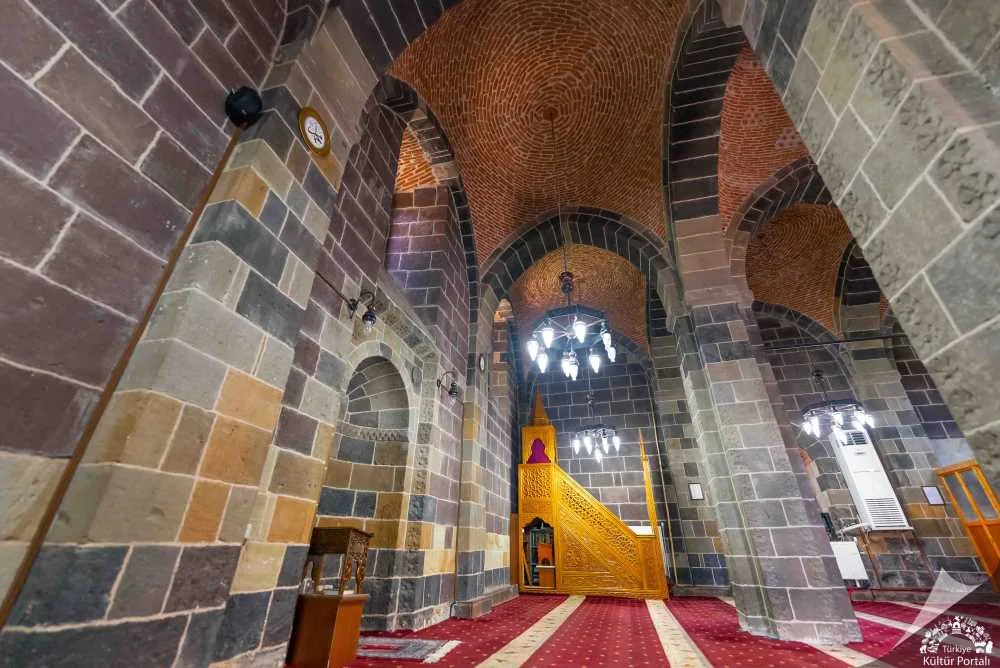
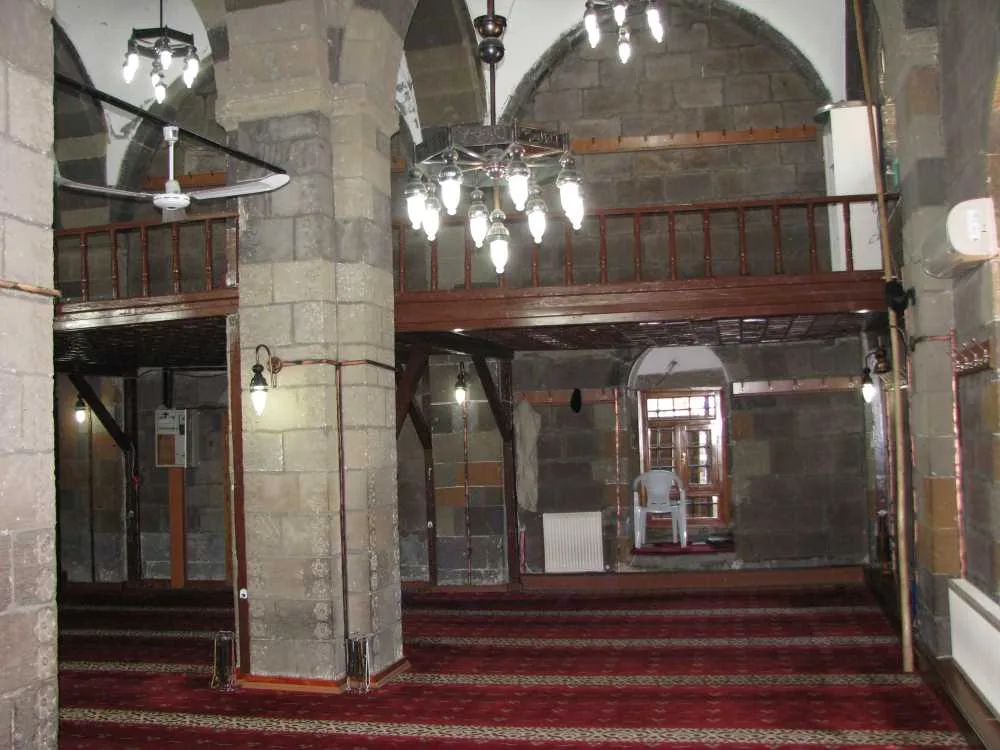
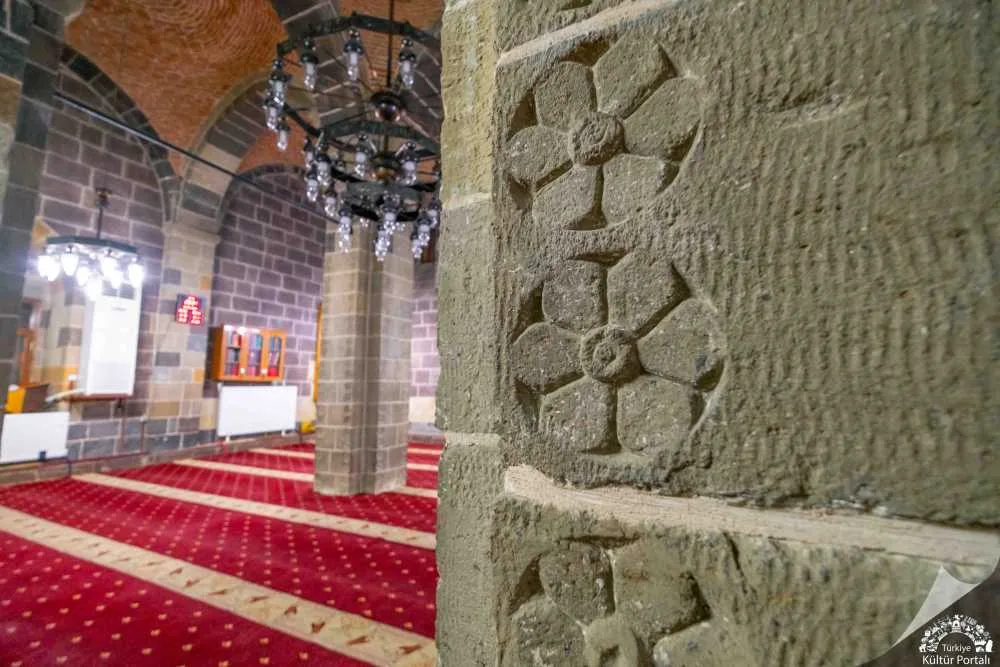
The main prayer hall has a square plan with nine naves. The central nave is covered by a large dome, flanked by smaller domes over the side naves. The mihrab in the central nave is decorated with colonnettes and floral motifs, while relief oil lamp figures adorn both sides of the main portal. The minaret features a square base and a cylindrical shaft constructed from two-tone ashlar stone. Encircling the middle of the shaft is a carved decorative band featuring interwoven plant motifs reminiscent of plane tree branches—a subtle detail well worth a closer look.
The mosque underwent a restoration lasting nearly two years in the mid-2010s and reopened for worship in November 2016. Visitors frequently highlight its simple yet striking stone craftsmanship, particularly the fine minaret decorations. As an active place of worship, entrance is free.
Guide's Note
History and Architecture of the Mosque
The mosque was built by Alaeddin Bey, son of Kasım Agha, the Ottoman governor (mütesellim) of Muş. Inscriptions indicate that construction started in 1746–1747 and concluded in 1747–1748. Hence, it is widely known as Paşa Mosque as well as Alaeddin Bey Mosque.
The main space is designed around a square, nine-nave layout. The large central dome is balanced by smaller surrounding domes. The mihrab features small decorative columns and intricate floral motifs, while prominent relief oil lamp figures flank the main portal. The minaret rises on a square base with a cylindrical shaft crafted from two-tone dressed stone, encircled at its middle by a carved floral band echoing intertwined plane tree branches.
How to Get There
The mosque is located in central Muş's Dere neighborhood, within the old bazaar district near the historic castle. It can easily be reached on foot from the city center. As visitors often note limited parking options in the surrounding narrow streets, walking is the most practical choice.
Best Time to Visit
Since the mosque is an active house of worship, those seeking a quieter experience may prefer to avoid peak congregational prayer times. During other hours, you can comfortably admire the stonework, minaret carvings, and mihrab details. The summer months generally provide warmer, more favorable weather for walking around Muş.
Top Photography Spots
The intricate floral belt around the minaret shaft, reminiscent of intertwined plane branches, is one of the most popular details to capture. The relief oil lamp motifs framing the portal also make for excellent close-up shots. For full facade shots, step back slightly to capture the building from street level.
Other Historic Sites Nearby
Alaeddin Bey Mosque is one of three historic mosques in the town center, along with the Muş Grand Mosque (Ulu Camii) and Hacı Şeref Mosque. Right nearby stands the Alaeddin Bey Bath (Hamam), commissioned during the same period by the same patron and notable for a turtle relief above its doorway. The 18th-century Yıldızlı Han is also just 100 meters away, making it easy to include all three in a single walking route.
Things to Know Before You Go
Because this is an active place of worship, visitors should dress modestly in line with religious customs. During prayer times, please show respect to the congregation. Due to tight parking conditions in the historic neighborhood, approaching on foot is recommended.
This content originates from neresigezilir.com.tr and may not be copied without permission.
FAQ

Updated: