Topkapi Palace Museum, located in Istanbul's Sultanahmet district, is an Ottoman palace built by Mehmed II in 1453; it served as the imperial center until 1856 and is now considered one of the world's largest palace museums, covering an area of over seventy hectares.
Topkapi Palace was built by Fatih Sultan Mehmed between 1460-1478, shortly after the conquest of Istanbul. Subsequent sultans continuously expanded the palace, resulting in a vast complex of courtyards, pavilions, and apartments. Built on four large courtyards, the structure offers a tour route starting from Bbsselm and extending to the Treasury Department and the Holy Relics Section.
The most frequently mentioned point by visitors is the view and the general atmosphere. The courtyards overlooking the Marmara Sea and the Bosphorus are as captivating as the palace interior. The Harem section requires a separate ticket, and most visitors describe it as a distinct experience. On hot days, the Harem tour can be long, so taking water with you will be useful as re-entry is not possible. Another frequently mentioned point in the comments is the crowd: especially at noon, queues form, so going early in the morning makes a difference in this regard.
Hagia Irene Church also stands as a separate structure within the palace boundaries, but some visitors prefer to skip it and focus on the main palace tour. The jewels in the Treasury Department and the Holy Relics section are among the most photographed and talked-about corners of the palace.
Guide's Note
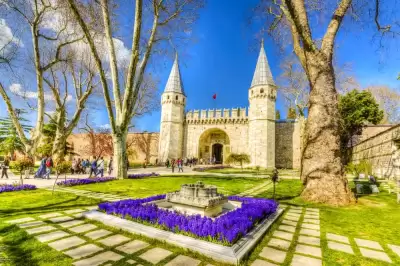
Topkapi Palace Museum is regarded by the vast majority of visitors as a worthwhile place where history can be tangibly felt. Some visitors have been so impressed that they state they have visited the museum multiple times; the general consensus is that the exterior and gardens of the palace leave a strong first impression.
However, there are some points you need to pay attention to regarding the ticketing system and pricing. There are multiple comments indicating that the entrance fee is considered high for foreign visitors. While the option to visit with a Museum Card is positively received by some visitors, an experience has been shared where conflicting information was given at the ticket counter and entrance point regarding whether the card is valid for foreign nationals. It is also emphasized that those who wish to see the Harem section must purchase a separate additional ticket.
- Additional ticket requirement: The Harem section is not included in the main entrance ticket; since it is charged separately, some visitors consider this an unexpected cost.
- Ticket system complexity: Especially foreign visitors report encountering conflicting directions at the ticket counter and entrance point; it is recommended to check official sources before your visit.
- Price expectation: Comments made in several different languages reiterate that the entrance fee is considered high; it may be useful to plan your budget accordingly.
Best Time to Visit
Going close to the morning opening time makes the biggest difference. Most visitors say that queues get longer and courtyards become more crowded later in the day. Spring and autumn months are suitable for avoiding the heat and taking more comfortable photos. In summer, a Harem tour in the midday heat can be tiring; therefore, carrying water is important.
How to Get There
The T1 tram line is the most practical way to reach the palace. From Glhane station, you can reach the Imperial Gate (Bb-ı Hmayun) by walking for about 10 minutes. Sultanahmet station is a similar distance, closer to other stops in the historical peninsula. If you are coming from Taksim, you can take the M2 metro to Vezneciler, then walk to the Laleli-Istanbul University tram stop and take the T1. Coming by taxi is also an option, but traffic around Sultanahmet can be heavy at times.
How Much Time to Allocate
2-3 hours might be enough for the palace itself, but when the Harem and Treasury Department are added, half a day is needed. A frequently mentioned phrase in comments is: it never ends. For those who want to explore without rushing, wandering through each courtyard, a large part of a day can be spent here.
Suggested Itinerary
Entering from Bbsselm and proceeding sequentially through the Divan Square, Treasury Department, Holy Relics Section, and finally the Harem is a logical order. Some visitors skip Hagia Irene Church; if your time is limited, you can leave this section for last or not enter at all. If you plan to enter the Harem, prefer to visit in the first half of the day before the crowds increase.
Things to Pay Attention To
Once you enter the Harem section, it is not possible to exit and re-enter, so it is useful to take cold water with you; cold water is not always available at the buffets inside. Another point: some individuals around the palace may try to approach tourists and cut in line, in such cases, it is useful to alert museum staff. There are also comments stating that entrance fees are high, so plan your budget accordingly.
Photo Spots
The Marble Terrace and pavilions in the Fourth Courtyard, along with the Bosphorus view, are among the most photographed spots. The jewels in the Treasury Department and the entrance to the Holy Relics Section are also among the frequently shared frames by visitors. Taking photos in shaded areas between the courtyards yields more comfortable results, especially in the midday sun.
Things to Know
The palace served as the official residence and administrative center of the Ottoman sultans for 400 years. It is located right next to Glhane Park and is considered one of the most important stops in the historical peninsula. There are many comments stating that the historical artifacts in the museum are well preserved; this makes the palace satisfying not only in terms of architecture but also its collection.
This content originates from neresigezilir.com.tr and may not be copied without permission.
FAQ
Topkapi Palace Museum videos load when you open this section to keep the page fast.

Updated: