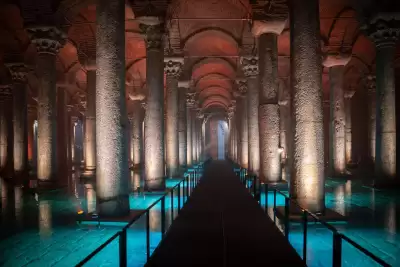
The Theodosius Cistern, located near Sultanahmet in the Fatih district, is a Byzantine-era water reservoir built between 428-443 AD during the reign of Emperor Theodosius I. Supported by 32 columns, the structure is open to visitors for a fee.
The Theodosius Cistern is a Byzantine-era water reservoir hidden just south of the intersection of Divan Yolu and Piyer Loti Street on Istanbul's historical peninsula. It is also known as the Theodosius Cistern because it was built between 428-443 AD, during the reign of Emperor Theodosius I. For many years, the structure was largely unknown to the public, but after being restored and opened to visitors, it has become one of Istanbul's most fascinating underground spaces.
Measuring 40 meters long, 20 meters wide, and 11 meters high, the cistern has a considerable volume and, with its 32 columns, resembles an underground palace. Located south of the ancient Mese road and southeast of the Forum of Constantine, the structure is situated west of the Binbirdirek Cistern and was designed to receive water from the aqueduct line on the Mese. Abandoned in the 15th century, the cistern silently waited for centuries beneath the former municipal conservatory and then the Eminönü Municipality building.
Guide's Note
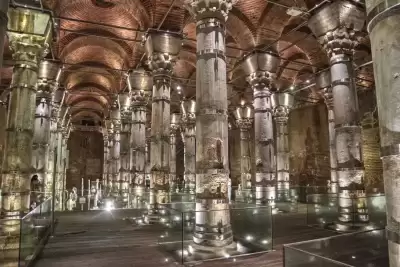
The Theodosius Cistern is an interesting stop for those seeking a calm and cool atmosphere, slightly away from Istanbul's crowded tourist routes. Visitors generally appreciate the cistern's historical architecture and its dim, tranquil ambiance. Especially in summer, its natural coolness is noted as a good escape from the city's heat. Visitors overwhelmed by the crowds at the Basilica Cistern consider this place a calmer alternative.
Currently, contemporary art pieces are exhibited inside the cistern. While some visitors find this adds a different layer to the historical venue, for others, it doesn't align with their expectations. The removal of the light and music show, which was previously offered, has been expressed as a disappointment by multiple visitors; those who remember the show state that they have lowered their ratings for the venue accordingly.
- Entrance fee: Many visitors find the requested fee (330 TL / approximately £16) for a visit of about 20-30 minutes to be high.
- No discount for children: Family visitors complain about the lack of a discounted ticket option for children.
- Small area: The venue is quite small compared to larger cisterns; the visiting time is kept short.
- No toilet: At least one visitor notes that there are no accessible toilets at the venue.
- Lack of signage and information: There are complaints about the absence of signs or guides.
- Light show removed: As of early 2025, the previously offered light and sound show is no longer available.
What is the Theodosius Cistern?
The Theodosius Cistern, built between 428-443 AD during the reign of Byzantine Emperor Theodosius I, is one of the most important underground water reservoirs on Istanbul's historical peninsula. Also known by its Greek name Cisterna Theodosiou, the structure remained off the public radar for a long time, silently waiting in the shadow of the municipality building above it until recently.
Measuring 40 x 20 meters and 11 meters high, the cistern has a vaulted structure supported by 32 columns. Located south of the ancient Mese road and southeast of the Forum of Constantine, this structure was a critical part of Constantinople's water distribution network. Abandoned in the 15th century during the Ottoman period, the cistern remained beneath buildings used for various purposes for centuries. With its restoration and opening to visitors, it has gained the title of Istanbul's third largest open-to-visit cistern.
When to Visit?
The Theodosius Cistern is open to visitors every day of the week. Since it is located underground, it can be comfortably visited in any season, regardless of external weather conditions; it remains cool inside even on hot summer days.
As the summer months coincide with Istanbul's busiest tourist season, like all historical structures in the Sultanahmet area, the Theodosius Cistern can be crowded during this period. For a calmer visit, you might prefer the periods of September-November or March-May. Going in the early morning, close to opening time, will help you avoid the crowds.
How to Get to the Theodosius Cistern?
The cistern is located in one of Istanbul's most central points, within walking distance of Sultanahmet, making it quite easy to reach by public transport.
By Tram: You can get off at the Sultanahmet stop on the T1 line and walk for about 5-7 minutes via Divan Yolu. Once you turn onto Piyer Loti Street, you will easily find the cistern's entrance.
By Marmaray: You can get off at Sirkeci station and transfer to the tram, or walk for about 10-12 minutes.
By Metro: Sirkeci metro station also offers a nearby alternative.
If you come by car, finding parking in the area can be difficult; choosing public transport is both practical and environmentally friendly.
Photo Spots
The Theodosius Cistern serves as a natural studio for photography enthusiasts. The dim underground light, the rhythmic perspective created by the columns, and the reflections on the water surface together create extremely impressive shots.
Column rows: The perspective formed by the 32 columns offers strong compositions that give a sense of depth when shot with a wide-angle lens. Water reflections: Puddles on the ground or reflections on the cistern's base are ideal for symmetrical and captivating shots. Light play: The special lighting of the venue creates dramatic light-shadow contrasts. A lens with a wide aperture or a good night mode makes a big difference in this environment.
What to Eat Nearby?
The Theodosius Cistern is located right in the middle of one of Istanbul's most gastronomically rich areas. Around Sultanahmet and Divan Yolu, there are many options to suit every budget.
You can try classics like meatballs, kebabs, and pides at traditional Turkish cuisine restaurants on Divan Yolu. There are also various cafes and restaurants around the nearby Arasta Bazaar. If you combine your visit with a trip to the Grand Bazaar or Spice Bazaar, you can have lunch at the long-established eateries around these historical bazaars. For those looking for something lighter, cafes around Sultanahmet Square offer options like simit, börek, and Turkish tea.
Suggested Itinerary: Cisterns and the Historical Peninsula
You can combine the Theodosius Cistern with Istanbul's other historical underground structures for a complete Byzantine water architecture tour. All three major cisterns are within walking distance of each other.
Start your day with the Theodosius Cistern, then visit the Binbirdirek Cistern, which is a few minutes' walk away. In the afternoon, head to the Basilica Cistern in Sultanahmet. This triple route will give you a comprehensive understanding of Istanbul's Byzantine-era water engineering. If you also add the Blue Mosque, Hagia Sophia, and Topkapi Palace to your itinerary, you can see the most important points of the historical peninsula in a single day.
Things to Know Before Visiting
Considering a few practical points before entering the cistern will make your visit more enjoyable.
Museum Pass not accepted: The Museum Pass is not accepted at the Theodosius Cistern. You can purchase your ticket online via Passo or at the door. Floor may be slippery: As it is a humid underground environment, the floor may be wet and slippery; we recommend wearing comfortable, non-slip shoes. Low light: The interior is quite dim; if you want to take photos, be prepared to use your phone's or camera's night mode or wide aperture setting. Bags and large items: Moving around with large backpacks might be difficult due to potentially narrow passages.
This content originates from neresigezilir.com.tr and may not be copied without permission.
Theodosius Cistern Videos
Theodosius Cistern videos load when you open this section to keep the page fast.
Show videos
FAQ
Updated: