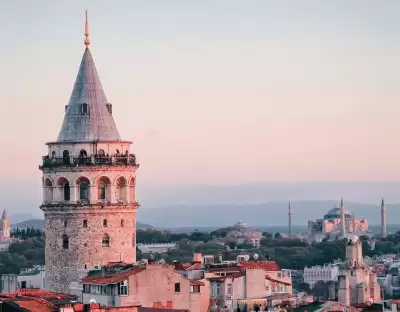
The Galata Tower is a 62.59-meter-high stone structure built by the Genoese in 1348 in Istanbul's Beyoğlu district; it offers a 360-degree Istanbul panorama from its open terrace.
The Galata Tower is perhaps the most recognizable part of Istanbul's skyline. Standing on a hill 35 meters above sea level in the heart of Beyoğlu, this stone structure reaches 62.59 meters with its roof. Although its first foundations were laid during the reign of Byzantine Emperor Justinian in 507-508 AD, the tower standing today was built by the Genoese in 1348-1349 under the name Turris Sancte Crucis (Tower of the Holy Cross). Rising in Romanesque architectural style, the structure has served many different functions over the centuries, such as a fire watchtower, prison, lighthouse, and observatory.
After undergoing extensive restoration in 2020, the tower now welcomes visitors as a museum under the General Directorate of Foundations. The 11-story structure contains two elevators; the open terrace, reached after passing through the exhibition floors, offers a 360-degree panorama embracing both the European and Anatolian sides of Istanbul, the Golden Horn, the Bosphorus, and the Marmara Sea simultaneously. This view transforms into a visual experience, especially at sunset.
Guide's Note
Since the vast majority of existing visitor comments are very brief and general, it is difficult to provide a detailed assessment of these experiences. However, the general tone of the comments is positive; visitors state that they left satisfied with the attentive attitude of the staff and the overall experience.
The most concrete feedback in terms of content draws attention to the view the tower offers both from its top and from the outside. The same comment shares that making a table reservation at the restaurant is a practical solution for those who want to avoid long queues.
Since most of the comments consist of repetitive phrases such as "great experience" or "definitely recommend," we suggest you consider that this summary reflects only a limited number of unique experiences. Reviewing more detailed comments before planning your visit will provide a healthier perspective.
- Queue time: Waiting time for entry can be long; making a reservation at the restaurant is suggested as a way to overcome this problem.
- Comment reliability: A significant portion of existing comments lack detail; this makes it difficult to form clear expectations about the venue.
Best Time to Visit
Galata Tower is open 365 days a year; however, planning your visit well can save you from queues and make the experience much more enjoyable. The first hours between 08:30 AM – 10:00 AM offer a window when the crowds have not yet intensified, and the light is also extremely favorable for photography. At noon, especially on weekends, the entrance queue can get quite long.
Going up to the terrace shortly before sunset, approximately between 05:00 PM – 07:00 PM (varies by season), offers one of Istanbul's most magical views; a fiery sunset over the Bosphorus followed by the city lights is unique. However, keep in mind that these hours are also crowded. The months of spring (April-May) and autumn (September-October) are the most balanced periods in terms of both weather conditions and tourist density. In July-August, the narrow streets around the tower and the terrace can be extremely crowded.
How to Get to Galata Tower?
The tower's location is quite advantageous for transportation; it is possible to reach it from different parts of Istanbul with multiple options.
Metro: Get off at Karaköy station on the M2 (Yenikapı – Hacıosman) line. After exiting the station, you can reach the base of the tower by walking for about 8-10 minutes towards the Galata district. Keep in mind that it is uphill.
Tram: Take the T1 line to Karaköy stop; the walking time from here is almost the same as by metro.
Ferry: After disembarking from ferries docking at Eminönü or Karaköy piers, you can walk across the Galata Bridge or walk from the Karaköy side of the bridge.
From İstiklal Avenue: You can easily reach the tower by walking from Taksim towards Tünel and then down the narrow streets from Tünel Square. This route is also a great opportunity to explore Galata's historical texture.
Photo Spots
Galata Tower offers extremely rich opportunities for both photographing it from the outside and framing Istanbul from within.
Best angles from outside: The small square directly opposite the tower (Galata Tower Square) is ideal for classic and wide-angle photos. A shot taken from Karaköy pier or over the Galata Bridge captures the tower's silhouette along with its surroundings. When viewed from the opposite shore, i.e., from Eminönü and Sirkeci, the tower blends into the Golden Horn view.
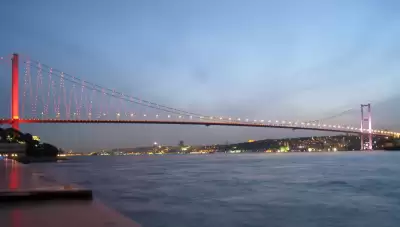
Shots from the terrace: The open terrace on the eighth floor offers a 360-degree panorama. The facade facing the Golden Horn captures the silhouettes of Süleymaniye and Topkapı together. On the side facing the Bosphorus, the Bosphorus bridges and the Anatolian side are visible. To catch the golden hour light, it is recommended to go up to the terrace 30-45 minutes before sunset. Since the terrace is quite narrow, a wide-angle lens provides a great advantage.
What to Eat Nearby?
Galata and Karaköy districts are among Istanbul's most vibrant dining areas. In the narrow streets immediately surrounding the tower, there is a wide range of options, from coffee shops to established fish restaurants and modern bistros.
Breakfast and coffee: In the cobblestone streets of Galata, you can enjoy an Istanbul-style breakfast or a simple Turkish coffee at small cafes, especially open in the mornings. Karaköy, in recent years, has become home to Istanbul's highest quality specialty coffee shops.
Lunch and dinner: As you move towards Karaköy pier, fish restaurants and meyhane-style venues become more frequent. Within Galata, there are more boutique, home-cooked style restaurants. Among street foods, Karaköy güllacı (a type of dessert) and fish sandwiches stand out. If you go up towards Tünel, you will reach Istanbul's classic meyhane streets like Asmalımescit and Nevizade.
Things to Consider Before Visiting
Visitors under 18 can only enter the tower with their parents; this rule also applies when purchasing entrance tickets.
The terrace area is quite narrow and can be crowded during peak times. This should be considered for visitors who are uncomfortable with crowds or have a fear of heights. Since an elevator is available, visitors with mobility limitations can also easily enter the tower; however, maneuvering space on the outdoor terrace is limited.
The streets around the tower are quite steep and have narrow sidewalks; navigating these streets with a stroller or wheelchair can be difficult. Purchasing entrance tickets online in advance, if possible, prevents long queues, especially during high season. Museum Pass holders can benefit from privileged entry.
History and Architecture
The story of Galata Tower virtually summarizes Istanbul's layered history. The first structure was built during the Byzantine period in 507-508 AD; however, the tower standing today was rebuilt by the Genoese, who used Galata as a trading post, in 1348-1349. The Latin name, Turris Sancte Crucis, meaning Tower of the Holy Cross, served for observation and defense as part of the Genoese colony's walls.
During the Ottoman period, the tower took on different functions: it was used as a lighthouse, prison, and fire watchtower; in the 17th century, the legend of Hezarfen Ahmet Çelebi flying from here to Üsküdar made this structure even more legendary. The tower underwent various repairs in 1453, 1510, 1794, 1832, and 1875; it was extensively restored by architect Köksal Anadol in 1965-1967. With the latest restoration works carried out in 2020 and 2023, the tower was converted into a museum and opened to visitors under the General Directorate of Foundations. Built in Romanesque style, the structure consists of 11 floors; its inner diameter is 8.95 meters, and its outer diameter is 16.45 meters.
This content originates from neresigezilir.com.tr and may not be copied without permission.
FAQ

Updated: