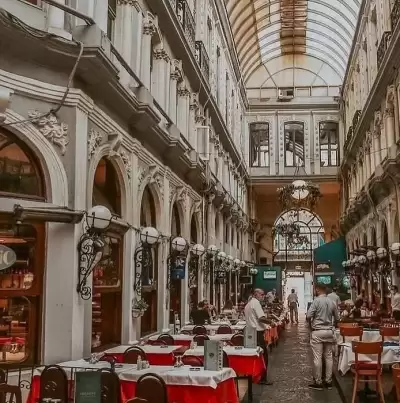
Çiçek Pasajı is a historic passage located on Istiklal Avenue in Beyoğlu, Istanbul, operating since 1876. Designed by Greek architect Cleanthy Zanno, the structure was a mixed-use building with bazaar shops on the lower floors and residences on the upper floors; since the 1930s, it has hosted taverns and beer halls.
Çiçek Pasajı is a historic 19th-century passage located on Istiklal Avenue in Beyoğlu, Istanbul. Formerly known as Cité de Péra, the building was constructed on the site of the Naum Theatre, which was destroyed in the Great Beyoğlu Fire of 1870. The land was purchased by Hristaki Zografos Efendi, one of the wealthiest figures of the period, and transformed into a unique structure combining a bazaar and apartments, based on the project drawn by Greek architect Cleanthy Zanno; the building opened its doors in 1876.
During the Armistice years, the structure earned its current name thanks to the florists lined up inside the passage. From the 1930s onwards, it began to host taverns, and by the end of the 1950s, it had fully adopted the identity of a tavern and beer hall. Referred to as Beyoğlu's most ornate building, the passage extends between Grand Rue de Pera and Sahne Street, and with its three-story reinforced concrete structure, crystal chandeliers, and historical atmosphere, it continues to enchant visitors today.
Guide's Note
Recent visitors have generally evaluated Çiçek Pasajı positively. Comments emphasize that the venue offers a pleasant atmosphere and is worthy of Istanbul. The well-equipped structure of the passage is also highlighted as another notable point.
However, given the limited number of comments available, it is difficult to say that these impressions reflect the entire visitor experience. If you wish to obtain more detailed information about the venue, it may be beneficial to follow current reviews before your visit.
History of Çiçek Pasajı
The story of Çiçek Pasajı dates back to the Great Beyoğlu Fire of 1870. After the Naum Theatre was destroyed in the fire, Hristaki Zografos Efendi, one of the prominent figures of the period, purchased the land and decided to build a new structure. The building, designed by Greek architect Cleanthy Zanno, opened in 1876 as a mixed-use structure housing bazaar shops on the lower floors and residences on the upper floors.
During the Armistice years, the structure was named Çiçek Pasajı (Flower Passage) due to the florists lined up inside. From the 1930s onwards, taverns began to occupy space in the passage; by the end of the 1950s, the vast majority of shops had transformed into taverns and beer halls. The passage, which holds the title of Beyoğlu's most ornate building, maintains this identity today.
When to Visit?
You can visit Çiçek Pasajı in any season; however, the most enjoyable time is undoubtedly the evening hours. After sunset, the taverns fill up, musicians take the stage, and the historical atmosphere of the passage takes on a completely different dimension.
If you come on a weekday afternoon, you will find a quieter environment, away from the crowds, giving you the opportunity to examine the architecture. On weekend evenings, you can feel all the vibrancy of Beyoğlu inside the passage. Early mornings during the busy summer months are also ideal for photography.
How to Get There?
The most practical way to reach Çiçek Pasajı is to walk approximately 10 minutes along Istiklal Avenue from Taksim Square. The nostalgic tram also drops you directly in front of the passage. If you are coming by metro, Şişhane station is also about a 10-minute walk away.
For those who wish to come by bus, various lines serving Beyoğlu are available, including 129T. If you come by private car, keep in mind that Istiklal Avenue is closed to vehicle traffic and you can use paid parking lots in the surrounding streets.
Photo Spots
Çiçek Pasajı is like an open-air studio for photography enthusiasts. The crystal chandeliers and high ceilings, combined with the natural light filtering in during the day, create impressive shots. The monumental entrance of the passage opening to Istiklal Avenue offers a classic frame.
Inside, the colorful signs of the taverns, the historic paving stones, and decorative elements reflecting old Istanbul are also interesting details. In the evening, the reflections of the chandelier lights and the yellow light hitting the tavern windows allow you to take unforgettable photos in warm tones. A wide-angle lens is very useful for capturing the entire depth of the passage in a single shot.
What to Eat and Drink?
Çiçek Pasajı is one of Istanbul's most well-known tavern and meze venues. Cold and hot mezes served with rakı in the historic taverns inside the passage are an integral part of the experience. Stuffed mussels, Arnavut ciğeri (Albanian liver), haydari, tarama, and various seafood meze platters are among the most preferred.
For beer enthusiasts, there are also beer hall options within the passage. Those who only want to soak up the atmosphere without eating can sit with a glass of drink. In the Balık Pazarı (Fish Market) street right next to the passage, you will find stalls selling fresh fish and seafood, as well as small restaurants.
Things to Know Before Visiting
Entry to the passage is completely free; you only need to pay if you sit and consume in the taverns inside. During busy periods, especially on weekend evenings, it can be difficult to find a table, so making a reservation in advance is recommended.
The passage's floor is made of historic stone paving; wearing high heels may cause discomfort. Wheelchair or stroller use is quite difficult due to the architectural features of the structure. Remember to be respectful to guests sitting inside the taverns when taking photos.
Suggested Itinerary Around Çiçek Pasajı
Çiçek Pasajı is an excellent starting point for exploring the historical fabric of Beyoğlu. You can start your visit with a walk along Istiklal Avenue, and after passing the passage, visit the Balık Pazarı (Fish Market) right next to it. From here, you can walk to Galatasaray Square to see the historic building of Galatasaray High School.
If you are planning a wider route, you can go down towards Tünel to visit Galata Tower, and then take a coffee break in Karaköy. Returning to the passage before sunset to have dinner at one of its historic taverns is a great option to complete the route.
This content originates from neresigezilir.com.tr and may not be copied without permission.
Çiçek Pasajı (Flower Passage) Videos
Çiçek Pasajı (Flower Passage) videos load when you open this section to keep the page fast.
Show videos
FAQ

Updated: