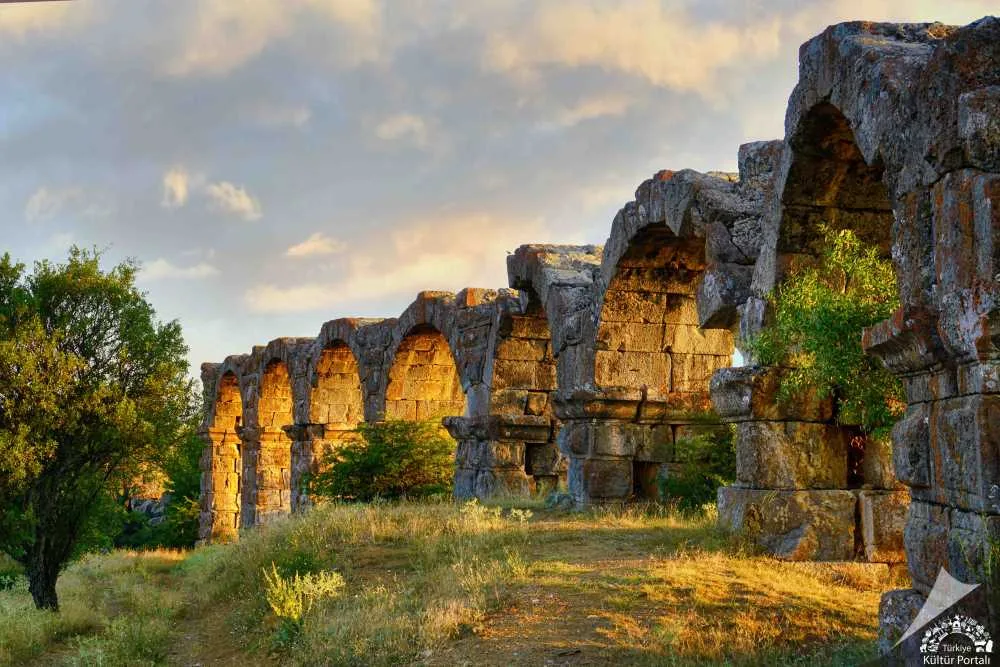
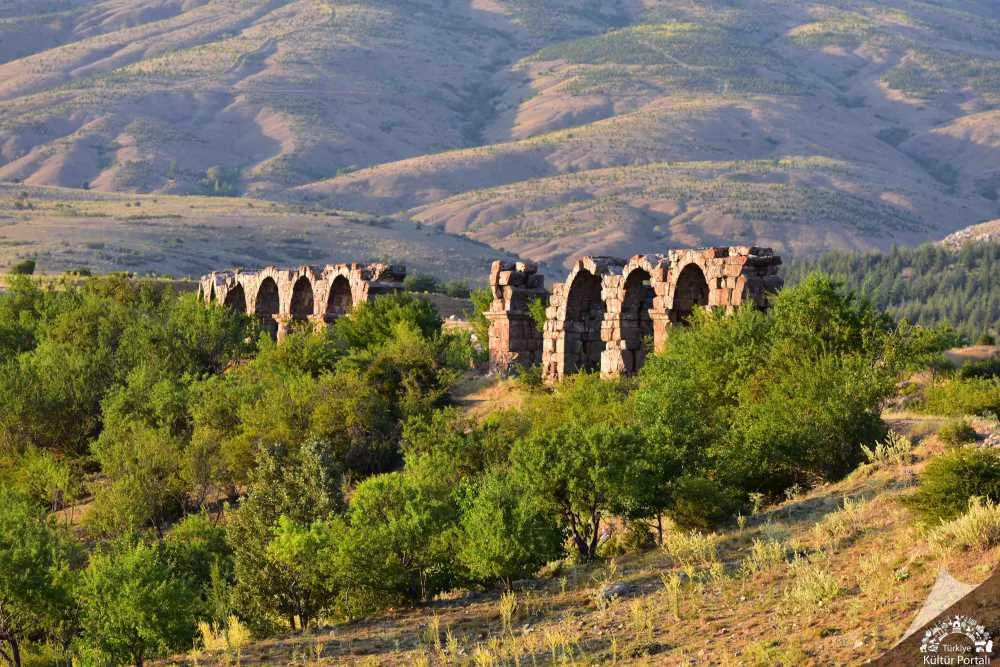
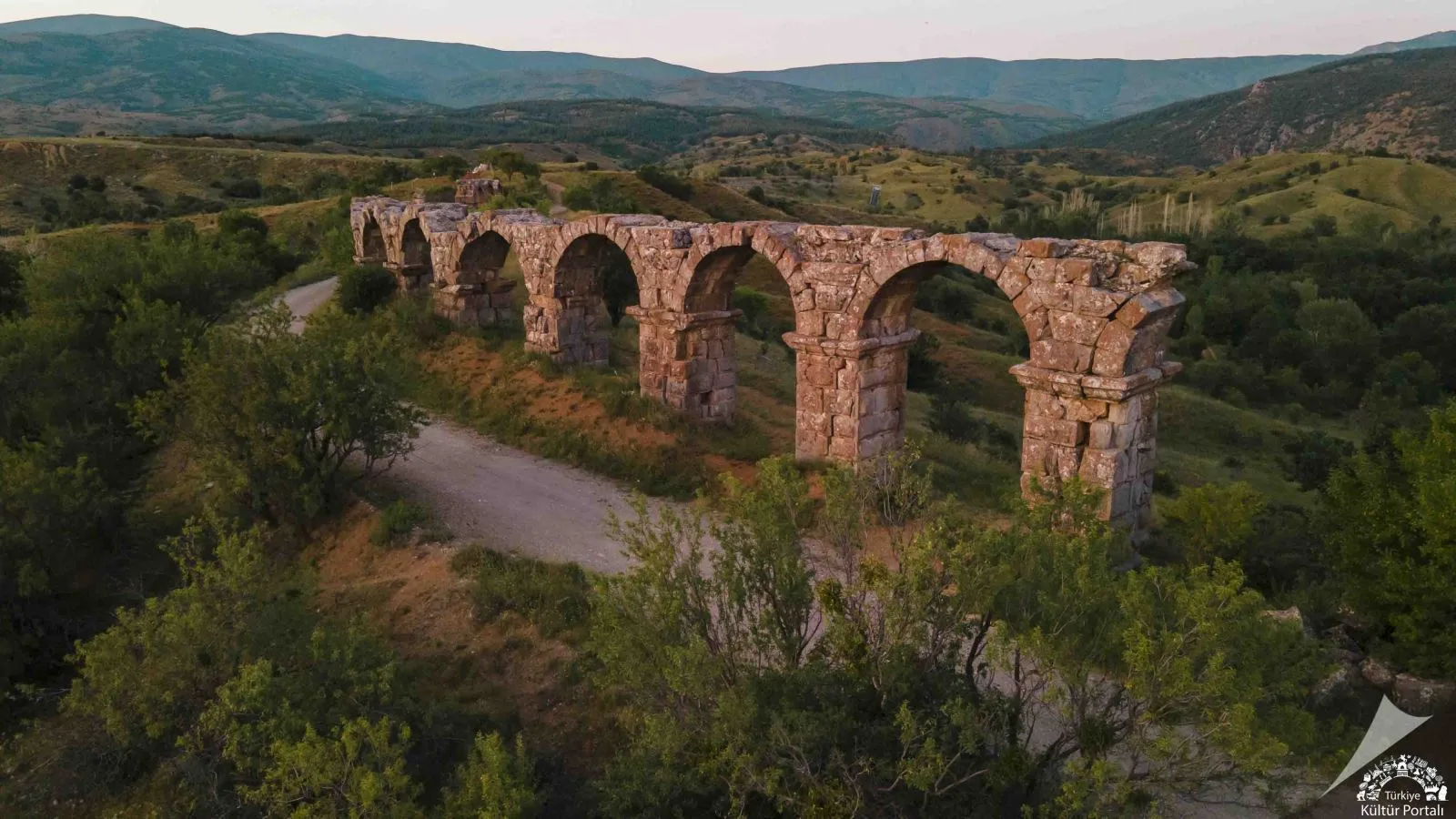
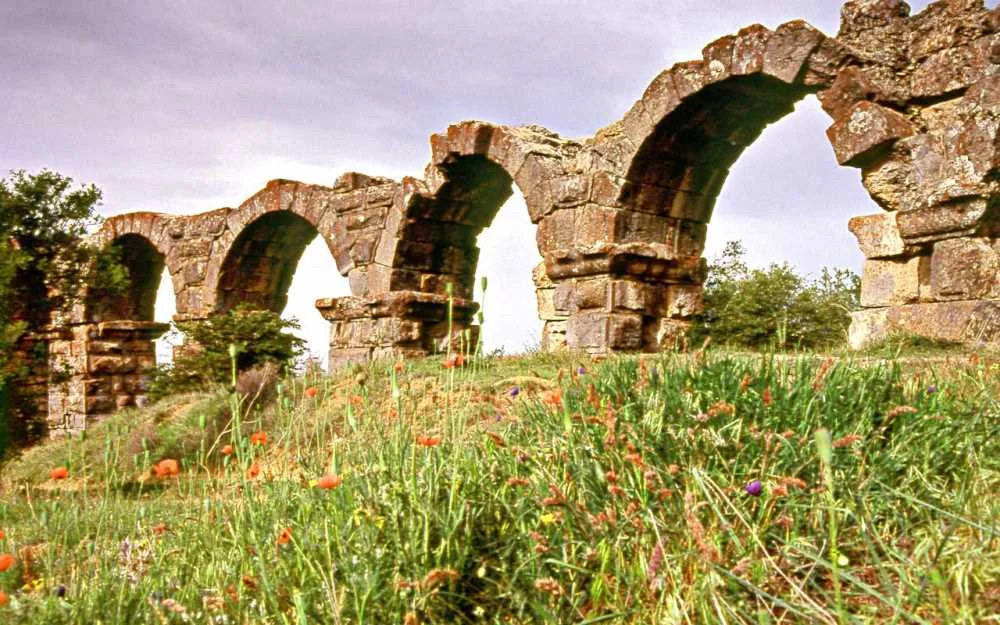
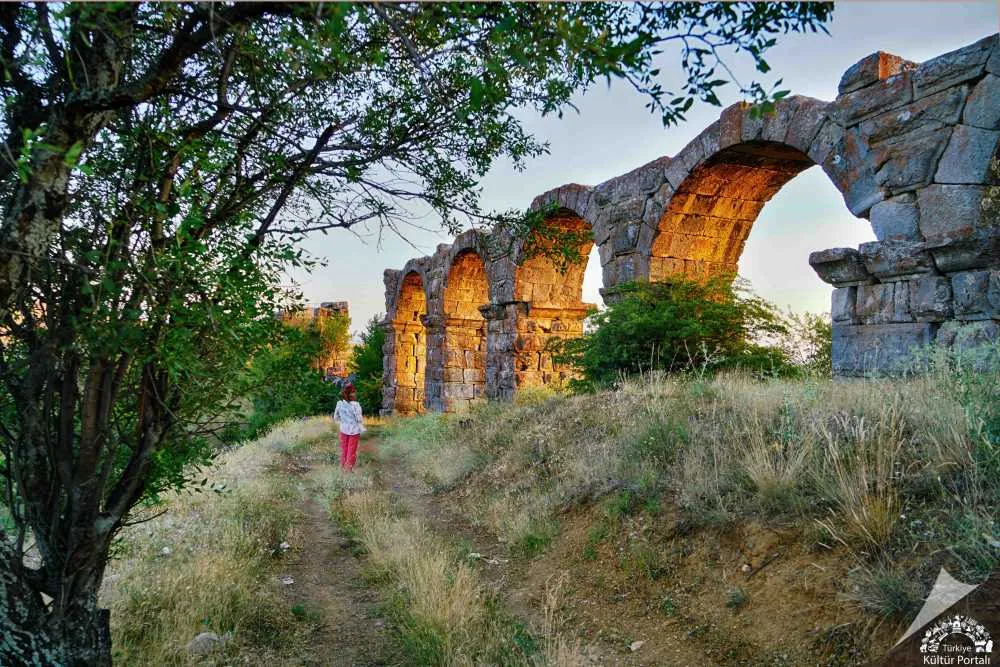
Pisidia Antiokheia Su Kemerleri, Isparta'nın Yalvaç ilçesindeki antik kentte yer alan, MS 1. Yüzyıldan kalan Roma dönemi yapısıdır; 10 kilometrelik su yolunun 250 metrelik bölümü harç kullanılmadan örülmüş kesme taşlardan 5-7 metre yükseklikte ayakta durmaktadır.
As Pisidia Antiokheia grew, it faced water shortages, and the Romans produced an engineering solution: a water system extending approximately 10 kilometers from a source called Su Cikti to the city. This conduit, shaped according to the terrain's gradient, ends at the Nympheum, a monumental fountain structure. It alone supplied two-thirds of the city's water needs.
The arches were built without mortar, with rectangular stone blocks stacked on top of each other. The pillars were 2.1 meters wide and 4 meters high. The span between two pillars varied between 3.8 and 4.7 meters depending on the location. Today, only a 250-meter section remains from the original 10-kilometer system, with the standing arches measuring between 5 and 7 meters in height. The superstructure, the water channel (canalis), has been damaged; from the fragments found, it is understood that the channel was about 30 centimeters in diameter.
The main entrance of the ancient city is to the west, but the water aqueducts are on the north side, partially visible to the northeast of the city. In the same area are the remains of the Nympheum, bathhouse, and palestra. So when you visit here, you're not just seeing a single structure but the entire water infrastructure of the city.
Guide's Note
Why were the water aqueducts built?
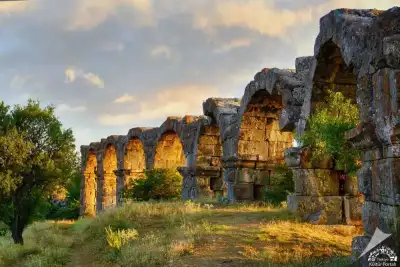
As Pisidia Antiokheia grew during the Roman period, existing water sources became insufficient. As a solution, an approximately 10-kilometer water system was built from a source called Su Cikti to the city. Designed according to the terrain's gradient, this system had the capacity to supply two-thirds of the city's water needs and ended at a monumental fountain structure called the Nympheum.
When to visit
The Yalvac Plain can be hot in summer, and moreover, shade is scarce at the ancient site. Spring or autumn months are more comfortable for both walking and photography. In winter, the region can experience cold and occasionally rainy weather, which can make walking on the dirt ground difficult.
How to get there
From Isparta center to Yalvac by private vehicle takes approximately 1.5 hours. There is about 1 kilometer distance from Yalvac center to the ancient city; the aqueducts are located on the north side of the ancient city, slightly beyond the main entrance gate. If you're traveling by public transportation, there are regular bus services from Isparta to Yalvac, and it's a short taxi ride from Yalvac center to the ancient city.
How much time should you allow
30-45 minutes is sufficient to tour the water aqueducts alone. However, if you plan to see the entire ancient city, including the theatre, Augustus Temple area, bathhouse, and palestra together, it makes more sense to allow 2-3 hours. Since you've come to Yalvac, it's worth spending the time to see the entire city rather than visiting just one structure and leaving.
Suggested route
Enter the ancient city from the west gate and follow the south-north main street. After seeing the theatre and Augustus Temple area, head north. The water aqueducts, Nympheum, bathhouse, and palestra remains are all clustered in this area. The northern route allows you to see the city's entire water infrastructure together.
Photography spots
The 250-meter standing arch section is where the stone texture is most clearly visible. In afternoon side lighting, the lines of the cut stones become more prominent. The Sultan Mountains landscape behind the aqueducts is also a detail that enriches the frame.
Things to keep in mind
The ground is uneven and sometimes rocky; sturdy shoes are essential. The area is wide and open with almost no shade; carry water during summer months. It's difficult to tour with a baby carriage or wheelchair as the terrain is not suitable for them.
This content originates from neresigezilir.com.tr and may not be copied without permission.
Pisidia Antiokheia Water Aqueducts Videos
Pisidia Antiokheia Water Aqueducts videos load when you open this section to keep the page fast.
Show videos
FAQ
Updated: