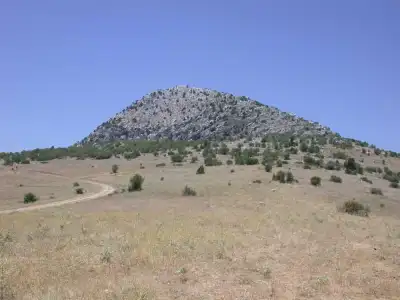
Pisidian Antioch is an ancient Roman-era city located at the foothills of the Sultan Mountains in Yalvaç, Isparta. It houses the remains of the Temple of Augustus, a theater, and aqueducts; it is known as the place where St. Paul delivered one of his first sermons.
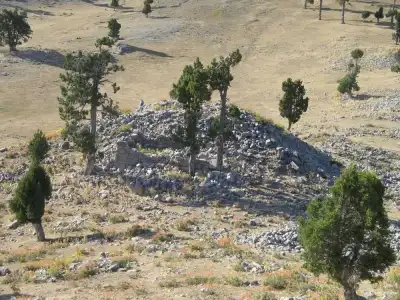
Pisidian Antioch is located approximately 1 kilometer north of Yalvaç town center, on a sloping and partially rocky terrain on the southern slopes of the Sultan Mountains. The main entrance gate of the city is to the west. To the north stand the remains of aqueducts, a nymphaeum, baths, and a palaestra; in the center, the theater, Tiberius Square, Propylon, and the Temple of Augustus area are lined up. Near Tiberius Square, there is a Byzantine church, and on the western side, the remains of a basilica.
The city's history dates back to 281-261 BC, to the Seleucid dynasty. Antioch maintained its importance during the Roman period and also holds a place in Christian history. St. Paul is believed to have delivered one of his first sermons in the Jewish synagogue here, which is why the city is mentioned in faith tourism routes. Excavations carried out by American teams between 1914-1924 and research in 1982-1983 fully revealed the traces of the city walls. After the 1980s, excavations continued under the coordination of the Museum Directorate and the Ministry of Culture and Tourism.
Visitors note that the ruins are spread over a wide area and some sections are scattered, yet they consider it among the ancient cities worth seeing. The view of the Sultan Mountains and the silence are among the prominent features. There is almost no shade in summer; it is recommended not to go without a hat.
Guide's Note

When to Visit
There is almost no shade in the area; the ruins are in open terrain. In mid-summer, midday hours can lead to sunstroke. One visitor wrote that they do not recommend going in hot weather, as they suffered from sun exposure. Spring and autumn months are more comfortable in terms of both temperature and light. Going early in the morning is also advantageous for photography, as the shadows of the ruins appear more distinct.
How to Get There
The ancient city is located approximately 1-2 kilometers from Yalvaç town center, accessible via Namazgah Street. Going by your own car is the most practical way; a short taxi ride from the town center is also sufficient. From Isparta city center to Yalvaç, it takes about 1.5 hours by car, with views of the Sultan Mountains along the way.
Visit Duration
The area is large, and the ruins are somewhat spread out. Exploring the theater, the Temple of Augustus, the aqueducts, and the church ruins takes 1.5-2.5 hours. Those who want to take photos and enjoy the view can extend their visit a bit longer.
Suggested Route
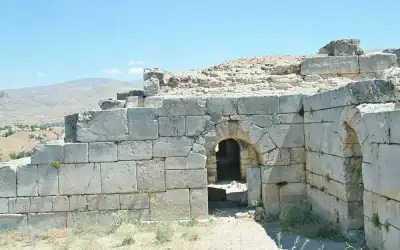
It makes sense to enter through the main entrance gate in the west and proceed towards the center. First, the theater and Tiberius Square, then through the Propylon to the Temple of Augustus area. The remains of the Byzantine church near Tiberius Square and the basilica remains to the west should also be included in the route. Finally, the visit can be completed by walking to the partially standing aqueducts in the northeast direction.
Things to Note
As some visitors have noted, the ruins are scattered over a wide area. Do not expect a structured museum visit; it requires exploring on foot across the terrain. Comfortable shoes are essential as the ground is stony and sloped. Some areas may be temporarily closed during maintenance work (such as grass cutting), and do not forget to bring a hat.
Photo Spots
The remaining columns of the Temple of Augustus with the Sultan Mountains in the background are among the most preferred angles. The partially standing section of the aqueducts is also appealing both historically and scenically. The general view taken from the theater steps reflects the scale of the city.
Importance for Faith Tourism
The ancient city is also mentioned in terms of Christian history. St. Paul is believed to have delivered one of his first sermons in the synagogue here. For this reason, the archaeological site is included in faith tourism routes, as well as for history enthusiasts. The synagogue remains are marked as a separate section in the area.
This content originates from neresigezilir.com.tr and may not be copied without permission.
Ancient City of Pisidian Antioch Videos
Ancient City of Pisidian Antioch videos load when you open this section to keep the page fast.
Show videos
FAQ
Updated: