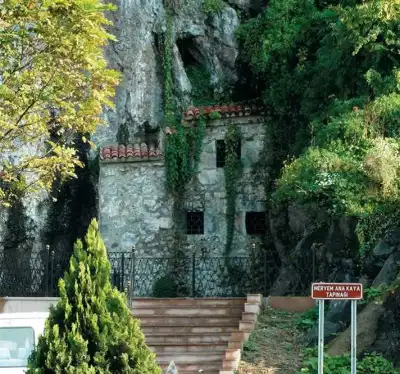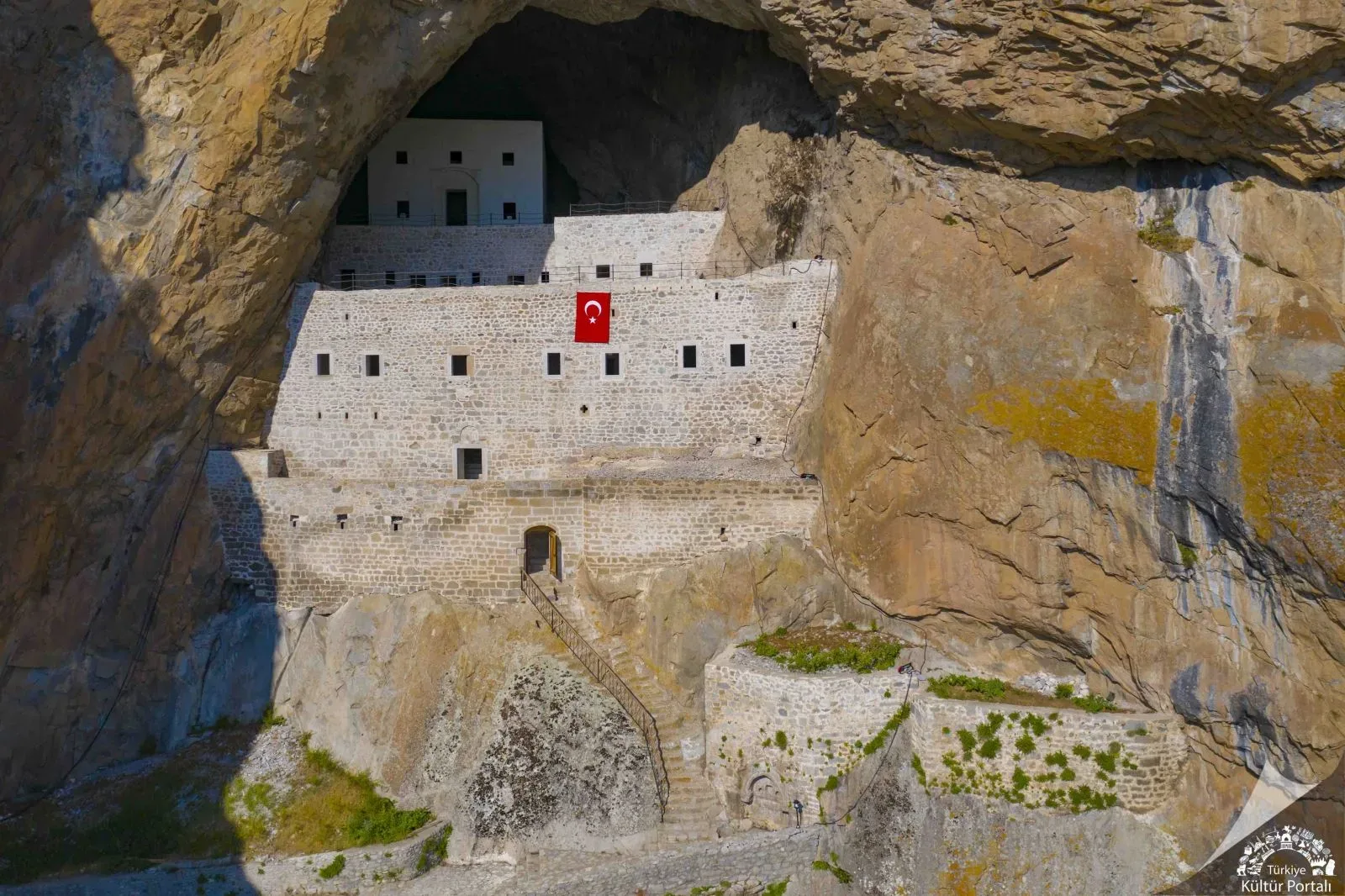
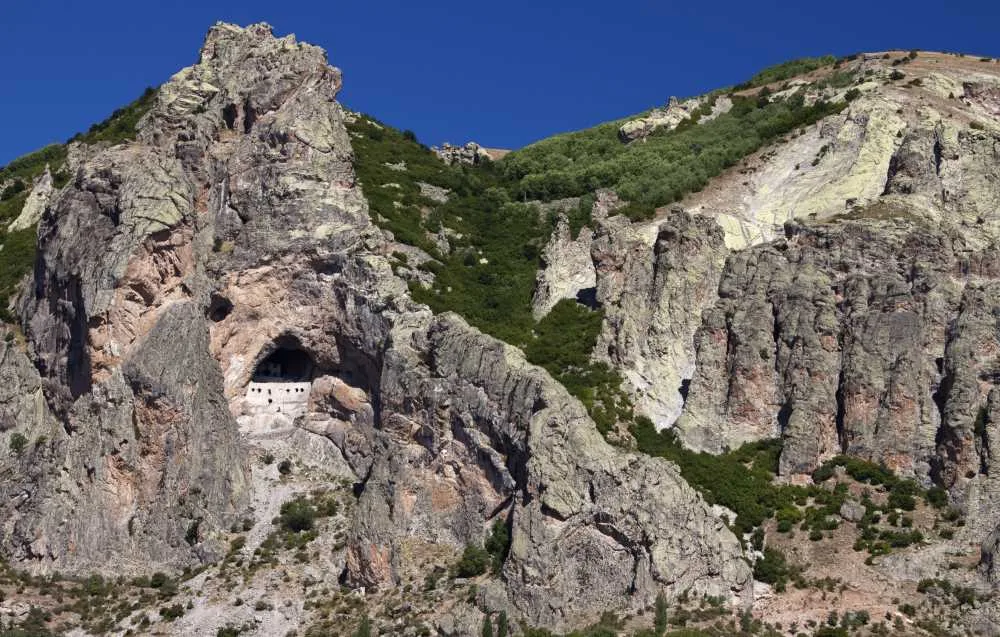
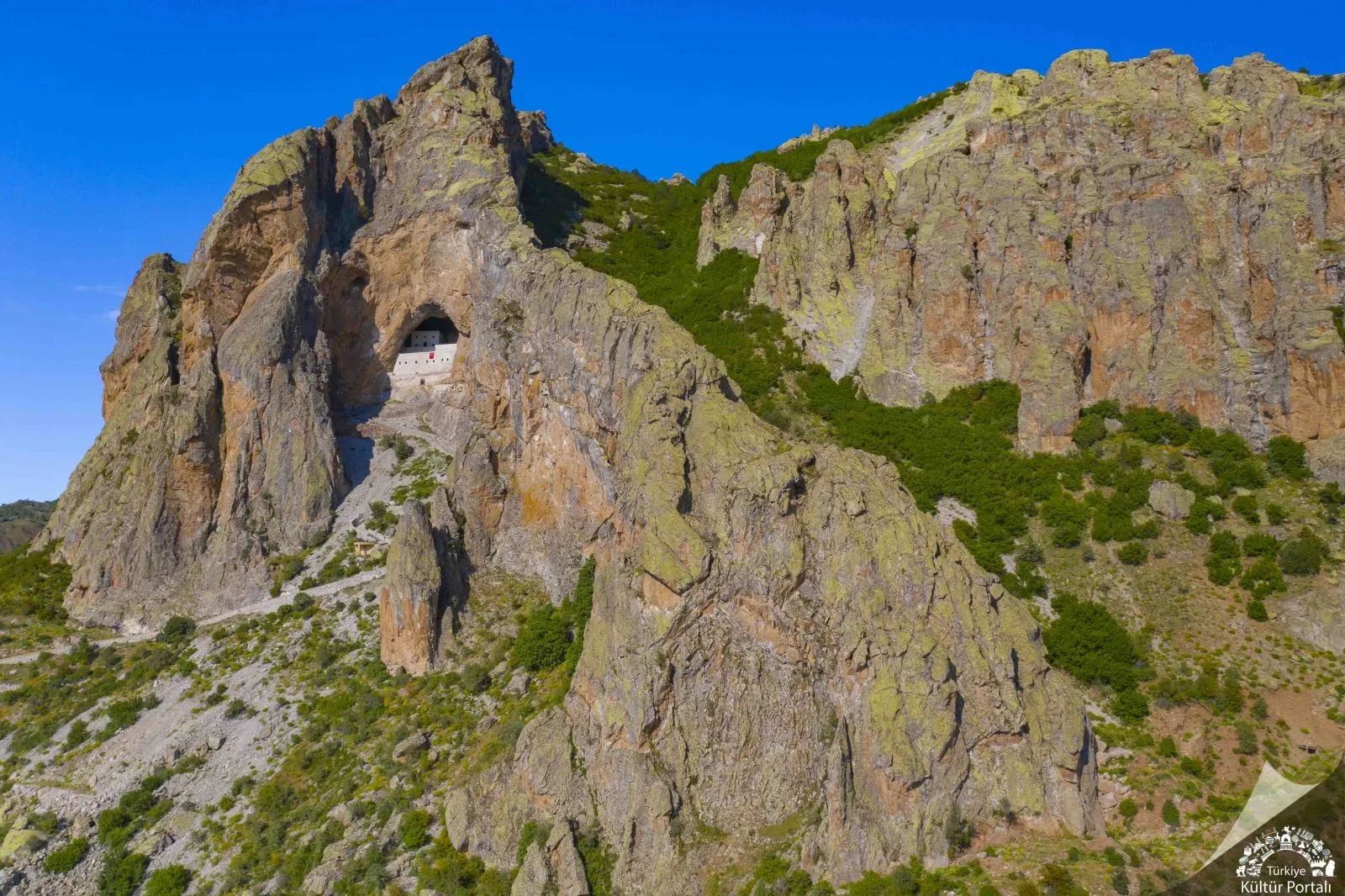
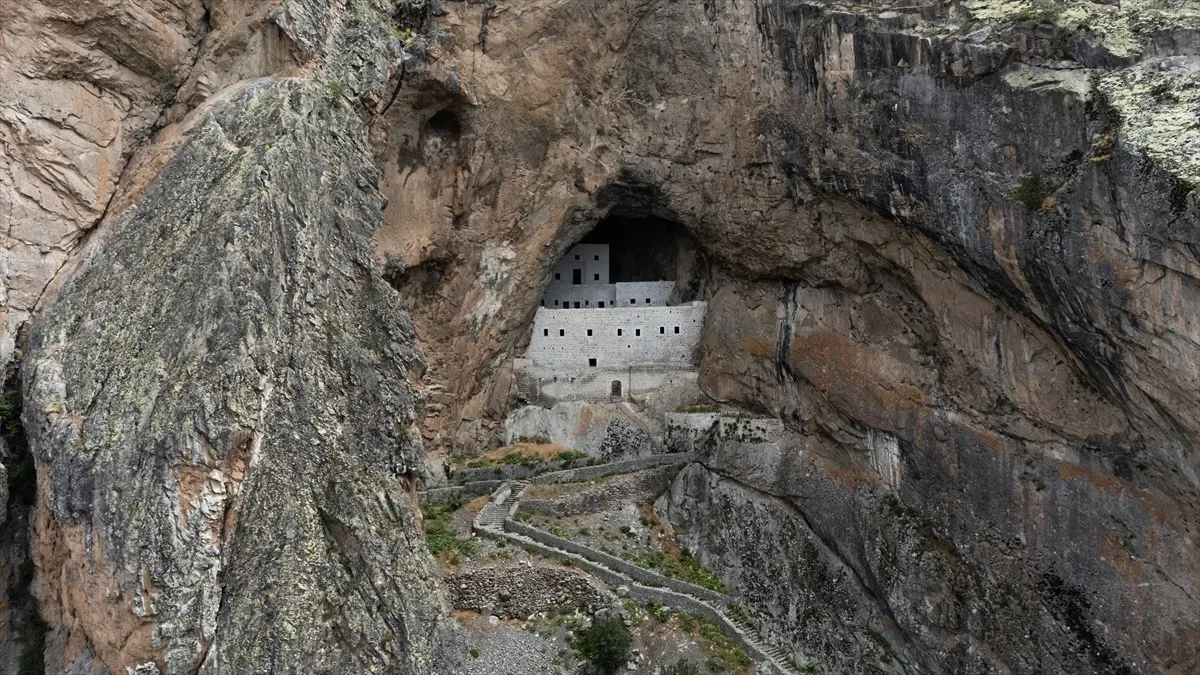
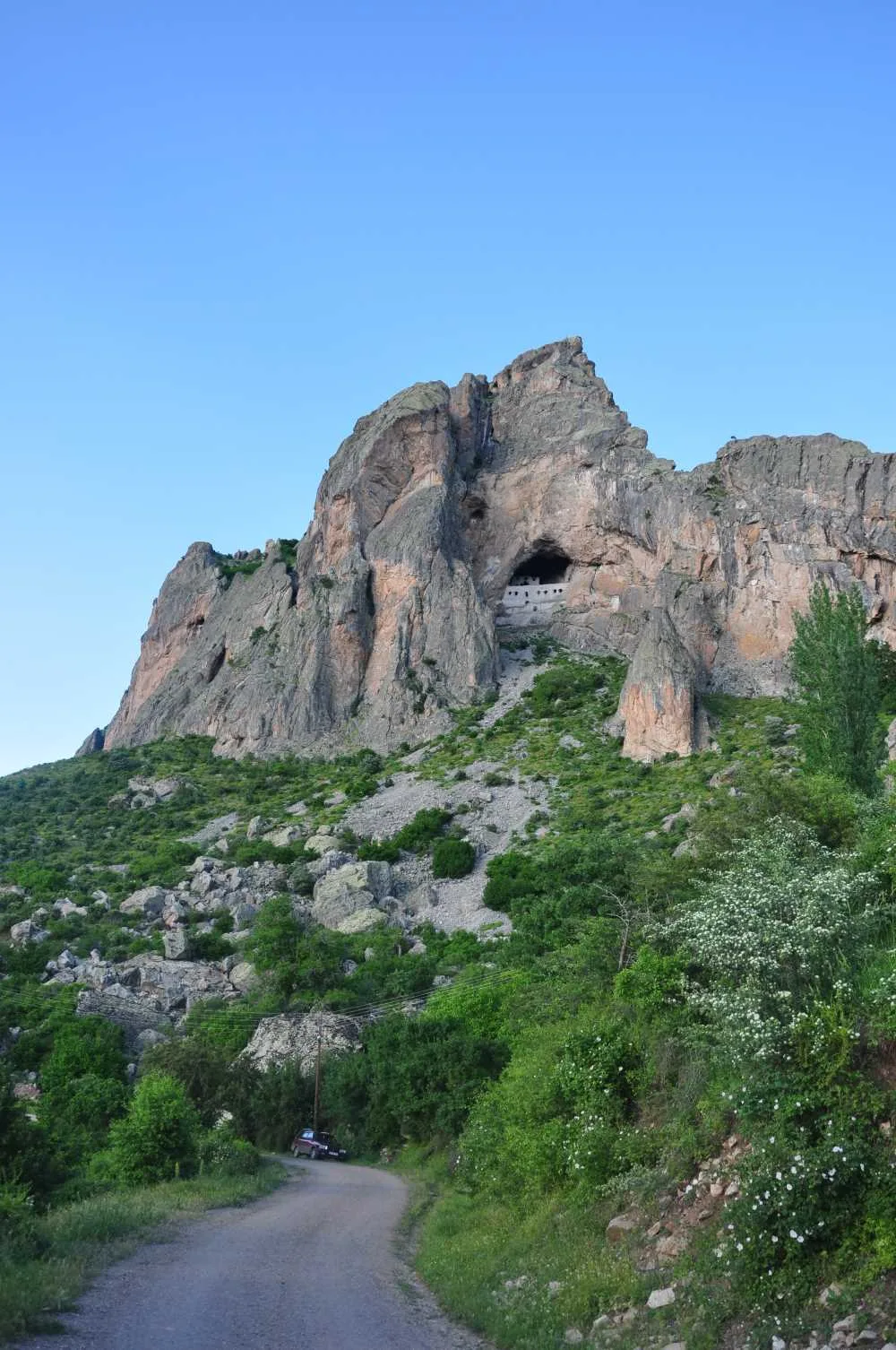
Meryem Ana Monastery is a four-story Byzantine-era monastery carved into a single rock in Sarıyer Village, Şebinkarahisar, Giresun, and is considered the second largest rock-carved monastery after Sümela Monastery.
Meryem Ana Monastery stands carved into a steep rock face to the east of Kayadibi Neighborhood, Sarıyer Village, which is part of the Şebinkarahisar district of Giresun. Sources date its initial establishment to the Middle Ages, between 481-490 AD. It suffered severe damage in a major fire in the 19th century, and the sections standing today are largely from its reconstruction during that period. Its resemblance to the Sümela Monastery in Trabzon is no coincidence; it is believed to have been built under its influence and is referred to as the second largest rock-carved monastery after Sümela.
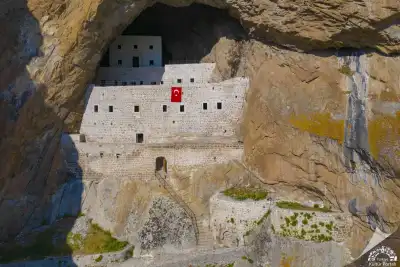
The structure consists of four levels. On the entrance floor, reached by a 26-step staircase, there are traces of a bathroom, toilet, and laundry room. The second floor houses a kitchen with a hearth and oven, a dining hall, and an administrator's room. The third floor contains cells where monks retreated for solitude, and the fourth and uppermost floor features a basilica-plan church with three apses and simple decorations. A total of 32 rooms have been counted. In front of the monastery, there is a water cistern on the left and a cut-stone fountain on the right. Until the 1940s, Greek communities in the region would come here annually for a three-day worship between August 26-28.
It was restored by the Giresun Governorship and the Ministry of Culture and Tourism in 2013-2014 and opened to visitors as an archaeological site. A common theme in visitor reviews is that the climb is genuinely tiring; a steep walk of 20-45 minutes is required after the car park, which can be challenging for those with blood pressure or heart conditions. Some reviews also criticize the restoration for altering the original texture too much, with the use of plaster and stucco. Conversely, there are many comments highlighting the view and the atmosphere of the structure, describing it as "like a fantastic scene."
Guide's Note
Best Time to Visit
Late spring to early autumn is the most comfortable period. In summer, the climb is more strenuous in the heat, so it's wise to start early in the morning. In winter, the road and steps can become icy; the already steep climb becomes extra risky during this period. Also, keep in mind that the dirt road can become slippery immediately after rain.
How to Get There
Sarıyer Village (Kayadibi Neighborhood) is 11-15 km from Şebinkarahisar district center. You can reach the village by your own vehicle or a taxi hired from the district. There is no vehicle access to the monastery after the village; you need to walk and climb from the parking area. Public transport is very limited on this route; if you don't have your own car, you might consider renting one in Şebinkarahisar.
How Much Time to Allocate
The climb alone can take 20-45 minutes, varying by fitness level. Exploring the interior of the monastery takes another 30-45 minutes. The descent also takes roughly as much time as the climb. Allocating a total window of 2-3 hours is realistic. For those who want to add a nearby point like Şebinkarahisar Castle to the same day, the day can be planned to start with the monastery visit in the morning and continue in the afternoon.
Things to Pay Attention To
The most frequently repeated warning in visitor reviews is that the climb is physically demanding. If you have a chronic condition such as high blood pressure, heart disease, or diabetes, it is advisable to take this seriously before ascending. Rest stops and toilets may not always be open, and there may not always be staff present within the archaeological site. Bringing sturdy, non-slip shoes and sufficient water will make your visit easier. Some comments mention that the original texture was overly interfered with during restoration; you can keep this in mind as an observation and form your own impression.
Good Spots for Photography
The best shot to see the entire rock-carved facade of the monastery is from below, from the angle taken before starting the climb. After ascending, the view overlooking the Kelkit Valley from the terrace and church floor is also a preferred spot. For lighting, the hours before noon highlight the texture of the rock more clearly.
History of the Monastery
Sources date the monastery's initial establishment to the Middle Ages, between 481-490 AD. A fire in the 19th century caused extensive damage, and the structure was rebuilt during that period; a large part of what we see today belongs to this renovation. Until the 1940s, Greek communities living around Giresun, Ordu, and Trabzon would come here annually for a three-day worship between August 26-28. The monastery is a first-degree natural and archaeological site; after its restoration in 2013-2014, it was declared an archaeological site and opened to visitors in 2014.
This content originates from neresigezilir.com.tr and may not be copied without permission.
Meryem Ana Monastery Videos
Meryem Ana Monastery videos load when you open this section to keep the page fast.
Show videos
FAQ
Updated: