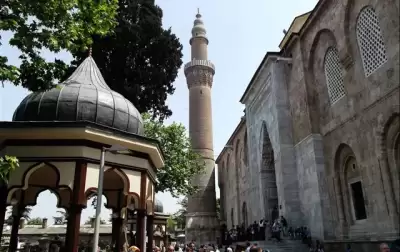
Orhan Gazi Mosque is an early Ottoman architectural example with an inverted T-plan scheme, built by Orhan Gazi in 1339 in the city center of Bursa. It contains calligraphic works written in thirteen different styles and is open for worship.
Orhan Gazi Mosque is located at the center of the complex consisting of a mosque, madrasah, imaret, and caravanserai, built by Orhan Gazi, who conquered Bursa, between 1339-1340. This structure is the first example of inverted T-plan (zawiya) mosques in Bursa; there is a small dome above the entrance iwan, and vaulted ceilings over the side rooms. Above the main prayer hall are two domes resting on an octagonal drum, and smaller domes over the iwans.
In front of the last congregation area, six cut stone pillars are connected by pointed brick arches. The use of spolia Byzantine column capitals on the side facades is a concrete trace of material usage in the early Ottoman period. Visitors note that the decorations in the mihrab and on the ceiling are meticulous, and the mosque feels spacious and airy. Some comments criticize the faded color of the carpets and the lack of a sign explaining the architecture inside.
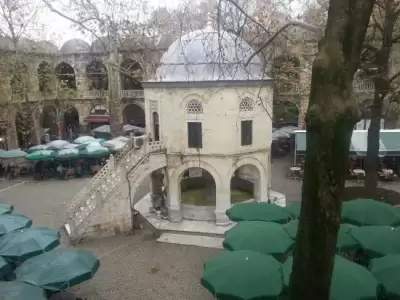
The mosque also hosts a popular legend related to Karagöz and Hacivat. According to the legend, these two were executed because they entertained the workers during the mosque's construction with their wit, delaying the work. It is also stated that the city's first charity stone and first sundial are located here. In the garden, there are historical monumental trees and a fountain; Ulu Mosque and Koza Han are within walking distance.
Guide's Note

Orhan Gazi Mosque is a historical structure located in the center of Orhangazi, standing out as one of the early examples of Ottoman architecture. Visitors find the calligraphic arts, tile decorations, and meticulous lighting in the mosque's interior striking. It is stated that thanks to its spacious interior, worship can be performed comfortably even during crowded times. The building's historical past dating back to 1339, its inverted T-plan zawiya architecture, and elements such as the first Ottoman sundial and charity stone within it, make the place interesting not only for worship but also for history and architecture enthusiasts.
Overall, visitors leave satisfied with the mosque's calm and peaceful atmosphere. The courtyard and ablution areas are well-maintained, and the staff are reported to be helpful and friendly. Those who visit during quiet weekdays do not encounter crowds. Its central location facilitates access; parking options are also available nearby.
- Cleanliness and maintenance: One visitor expressed that they expected a historical structure of such intense interest to be preserved more meticulously; it was felt that cleanliness standards were not always at the same level.
- Information sign at the entrance: It was noted that the explanatory text at the mosque's entrance was placed on a transparent background, making it difficult to read, and that moving it to a plain white background would be more functional.
When to visit
Since the mosque is a place of worship, visits are somewhat restricted during prayer times. You will find a calmer environment after noon prayer or between afternoon and evening prayers. On Fridays, especially at noon, the congregation is dense. In the evening hours, the exterior lighting offers a different view, suitable for those who want to take night photos.
How to get there
The mosque is located in Bursa city center, on Uzunçarşı Street, right next to the Bursa Metropolitan Municipality building. The most practical way to get there from anywhere in the city is to take municipal buses to the Heykel-Tophane area and walk. If you are going by your own car, finding parking in the surrounding historical bazaar streets can take time; it's easier to park a little further away and walk.
Nearby stops
Ulu Mosque and Koza Han are within walking distance of Orhan Gazi Mosque. Osman Gazi and Orhan Gazi Tombs, and Tophane Clock Tower can also be added to the same itinerary. Bursa's historical bazaar area (Uzunçarşı, Covered Bazaar) is intertwined with the mosque; these stops can be combined into a single route in a travel plan.
How long does the visit take
20-30 minutes is enough to visit the mosque. But if you add the surrounding Ulu Mosque, Koza Han, and tombs to the same day, you can explore Bursa's historical center in half a day.
Things to consider when visiting
Since it is a place of worship, modest clothing is required; it is useful for women to have a headscarf. During prayer times, be careful to remain silent and not disturb the congregation. For those who wish to perform ablution, there is a fountain in the mosque's garden, and paid toilets are nearby. Since there is no sign or information panel explaining the architecture inside, reading up on its history beforehand makes the visit more meaningful.
Good spots for photos
The six pillars and pointed brick arches in the last congregation area stand out in photos taken from the exterior. The spolia Byzantine column capitals on the side facades provide an interesting shot for detail photography. When the evening lighting is turned on, the exterior facade gains a different atmosphere, suitable for night shots.
Historical details to know
Orhan Gazi Mosque is part of the first large complex established by the Ottomans after conquering Bursa. It is stated that the city's first charity stone and first sundial are found in this mosque. According to a popular legend, Karagöz and Hacivat were workers during the mosque's construction; it is said that they were executed for distracting other workers with their wit and delaying the work. This story also recalls Bursa's connection to shadow play.
This content originates from neresigezilir.com.tr and may not be copied without permission.
FAQ
Updated: