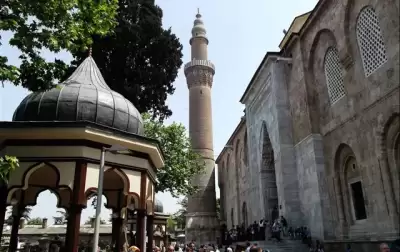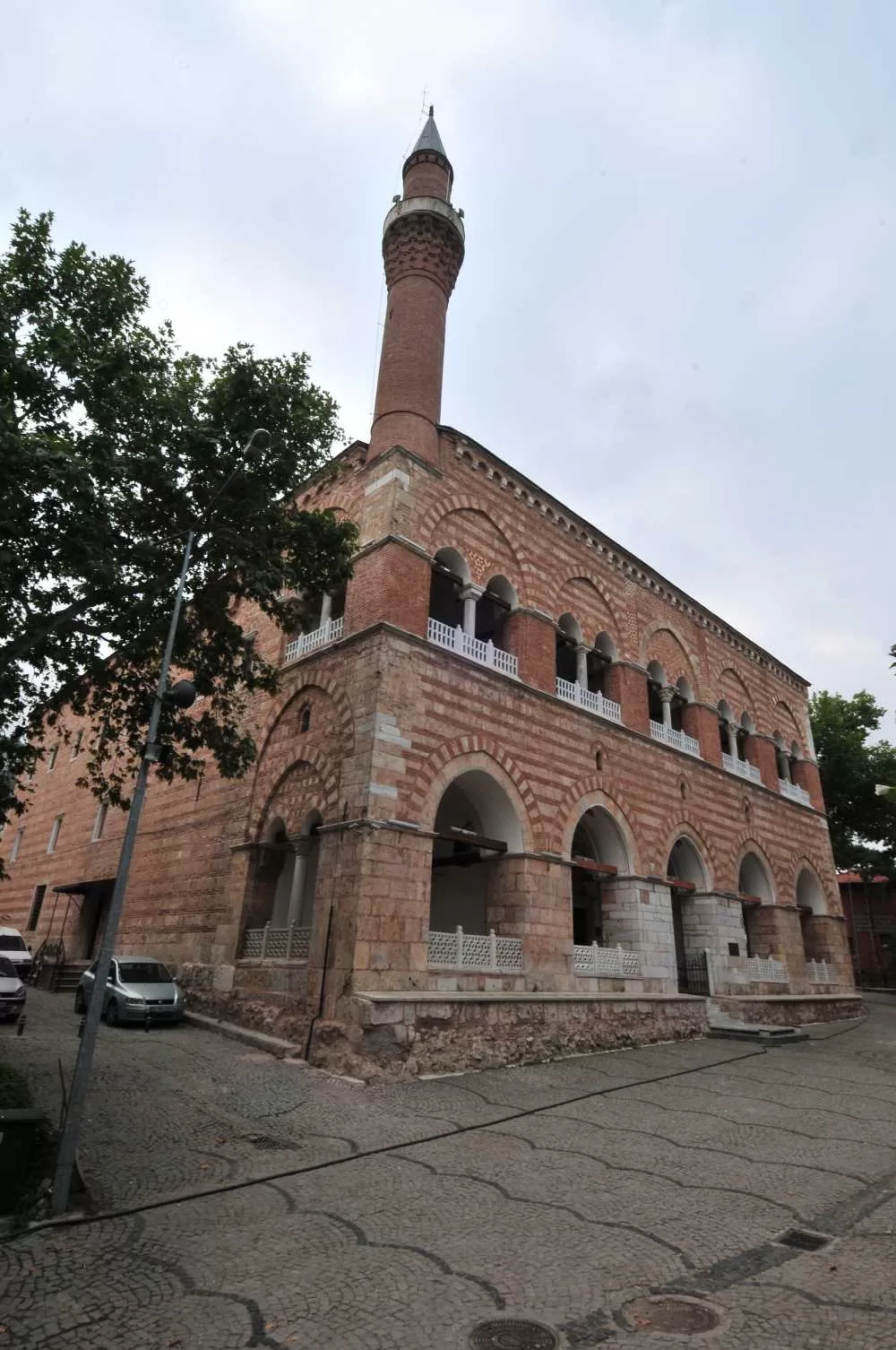
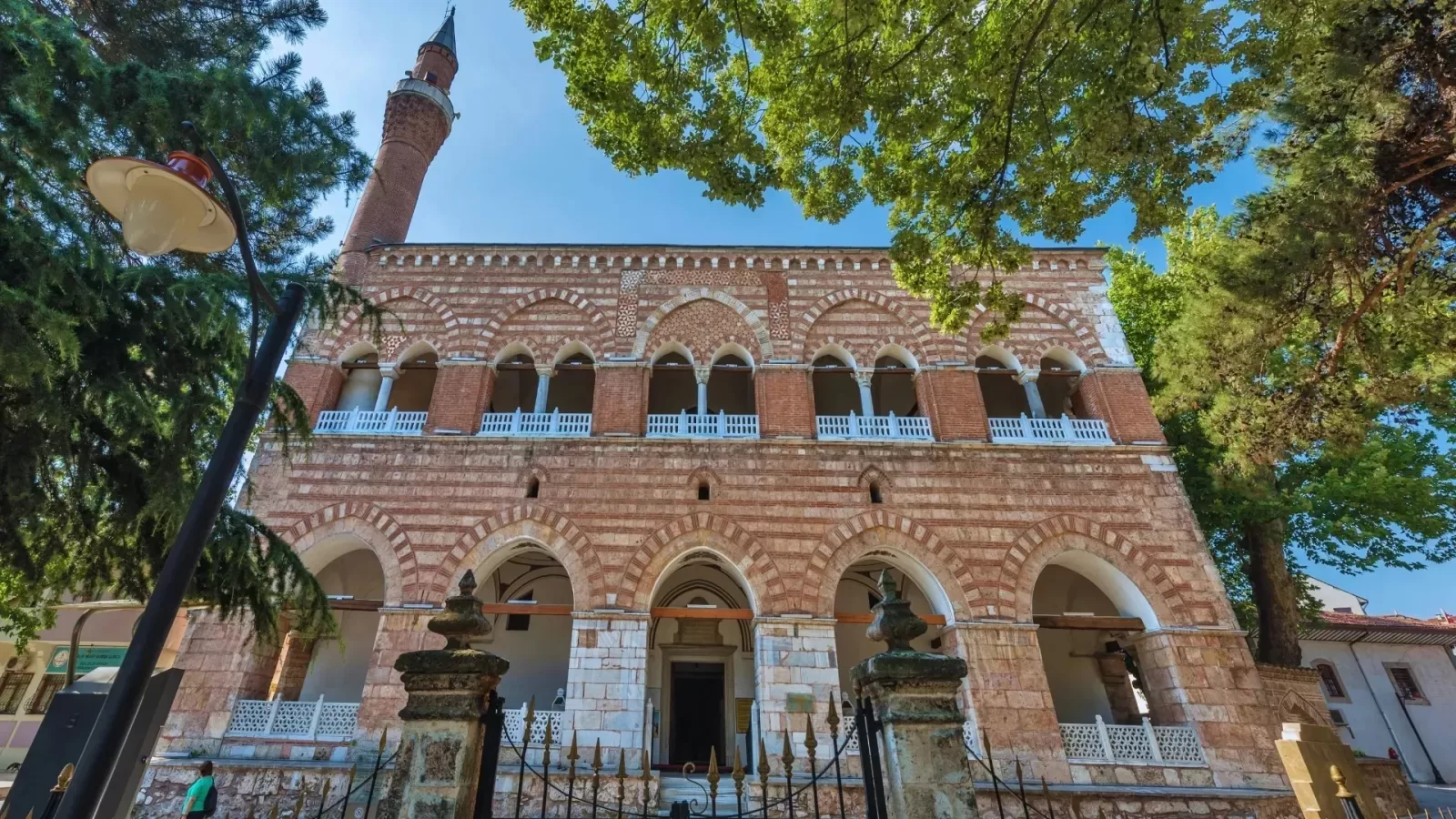
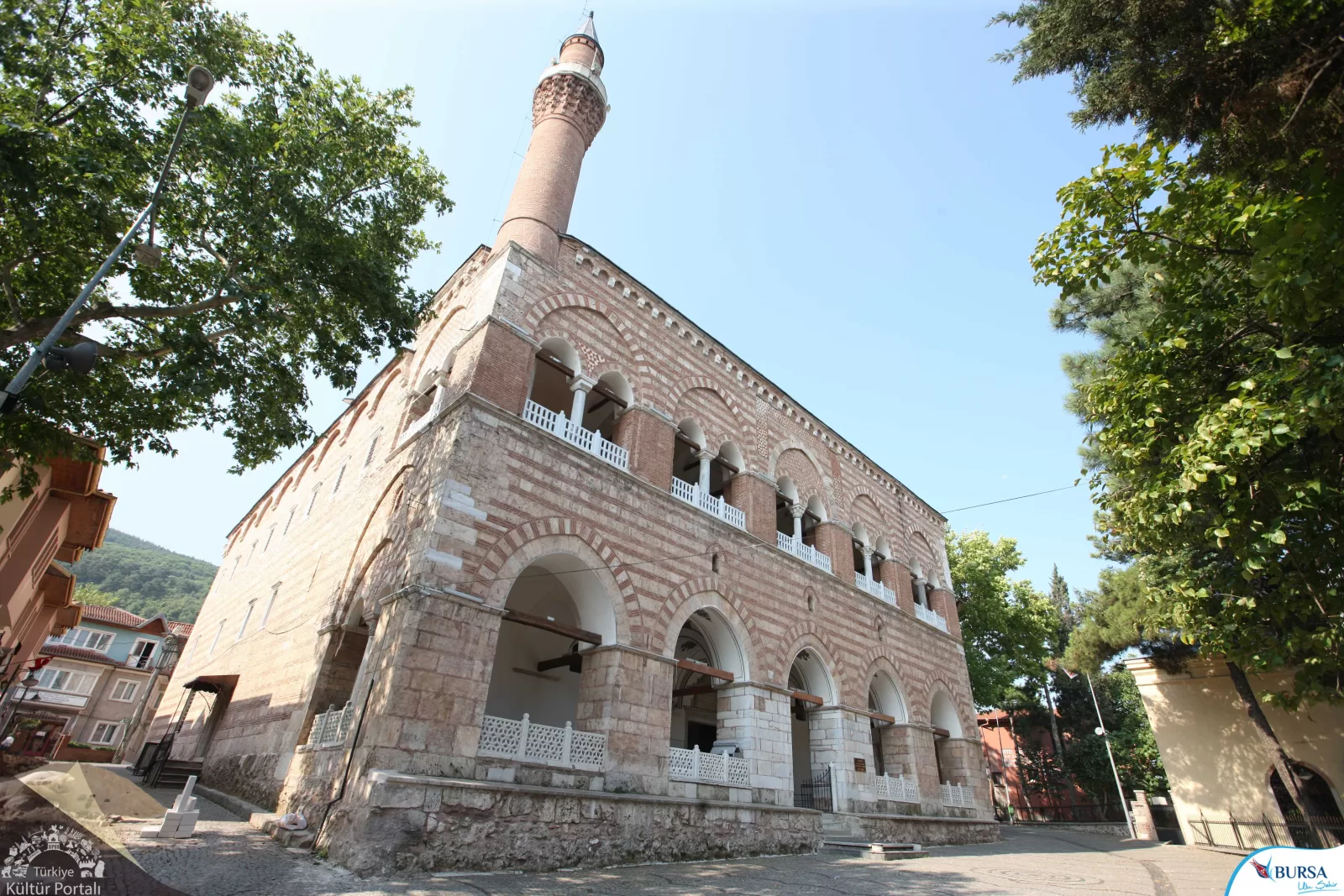
The Murad I Hüdavendigâr Mosque, built between 1363-1366 in Bursa's Çekirge district, is the only example in Ottoman architecture designed with the lower floor as a mosque and the upper floor as a madrasah; admission is free.
Located on a hill overlooking the west of Bursa, the Murad I Hüdavendigâr Mosque was built by Ottoman Sultan Murad I between 1363 and 1366. Named after Sultan Murad I, known by the epithet Hüdavendigâr, this structure is at the center of a large complex (külliye) that includes a mosque, madrasah, tomb, imaret (soup kitchen), hammam (bath), and fountain. The construction of the entire complex took approximately 19 years.
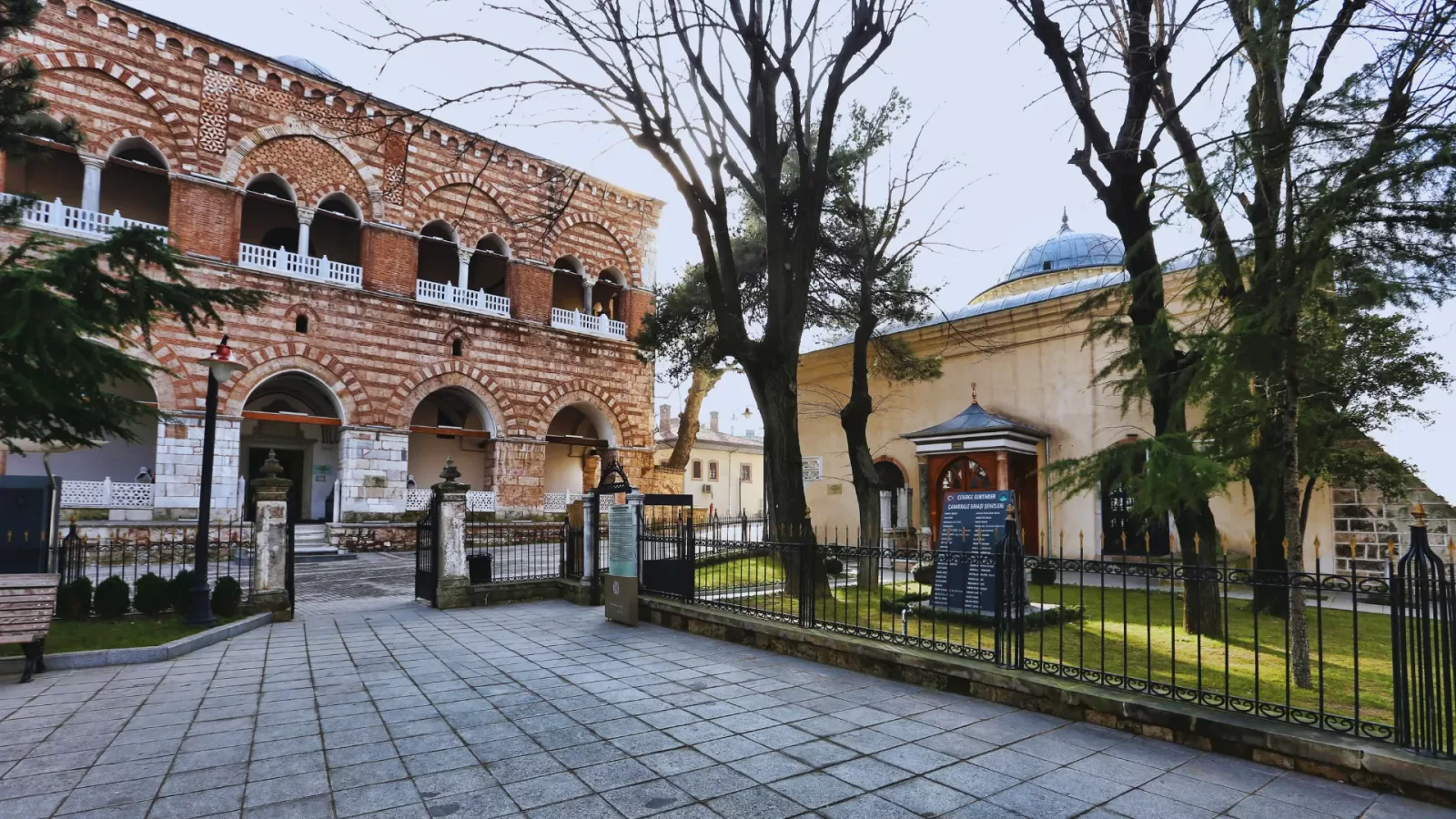
The most striking feature of the building is that it is the only example in Ottoman architecture where the lower floor was used as a mosque and the upper floor as a madrasah. The madrasah on the upper floor consists of 18 rooms. The central dome of the mosque, covered by twenty domes on twelve pillars, was originally left open; it was later covered with glass. The structure, which uses both stone and brick, carries the architectural understanding of the early Ottoman period to the present day. Next to the mosque is the tomb of Sultan Murad I; the sultan's grave is also here.
Guide's Note
Located in a high position in the Çekirge district, the Murad I Hüdavendigâr Mosque leaves visitors with a deep sense of history and tranquility. Dating back to 1365-1366, the structure stands out with its two-story architecture; there is an 18-room madrasah section on the upper floor. The interior and exterior of the mosque, along with the adjacent tomb and its garden opening to Bursa, give the impression of a complete historical complex.
Visitors particularly mention the building's location and the city view. The architectural integrity and atmosphere offered by the mosque, madrasah, and tomb together are among the factors that make one consider visiting multiple times. The Murad I tomb located opposite is also frequently mentioned as a recommended stop to add to the visit list.
- Upper floor only open for Friday prayers: The upper floor where the madrasah is located is not accessible during weekday visits; it is recommended to plan your visit accordingly.
- Guided visit recommended: At least one visitor suggests coming with someone knowledgeable about the subject to fully grasp the place.
Why is the Hüdavendigâr Mosque Special?
Hundreds of mosques were built in Ottoman architecture; however, the Murad I Hüdavendigâr Mosque truly stands apart among them. Its feature of being the only Ottoman structure designed with the lower floor as a mosque and the upper floor as a madrasah elevates it far beyond an ordinary place of worship. The 18 rooms on the upper floor offered both accommodation and education opportunities to students of the period. This architectural solution, vertically stacking these two functions, clearly demonstrates how creative 14th-century Ottoman thought was.
The location of the structure is also not accidental. A hill overlooking the Bursa Plain was chosen; the complex both encouraged the city's westward expansion and was designed as a visual symbol of power. The fact that Sultan Murad I's tomb is also located within the same complex makes the place even more significant as a historical monument.
When to Visit?
For the mosque, which is open to visitors all year round, April-June and September-November are the most comfortable options. During these months, Bursa's mild weather allows you to comfortably stroll through the complex courtyard and its surroundings. Since Bursa can be quite hot and humid in July-August, choosing early morning hours will make the visit much more enjoyable.
The mosque is heavily used during Friday prayers and religious holidays. It may be difficult to tour inside during these hours; it is advisable to plan your visit time considering prayer times.
How to Get There?
The mosque is located in Bursa's Çekirge district. It can be reached by municipal buses and minibuses going towards Çekirge from Osmangazi or Nilüfer. Bursa's metro and tram lines extend to Çekirge; from there, you can reach the mosque with a short walk or a taxi.
If you are coming by private car, there is parking available around the complex. Since it is approximately 4-5 km from Bursa city center, a taxi or car rental can also be a practical choice. Çekirge is also Bursa's thermal hotel region, so if you choose to stay here, you can walk to the mosque.
Photo Spots
The most impressive external view of the mosque is the facade with its alternating use of stone and brick, and the entirety of the two-story structure. Wide-angle photos taken from the complex courtyard best reflect the building's unique silhouette. Especially in the morning light, the east facade receives beautiful illumination.
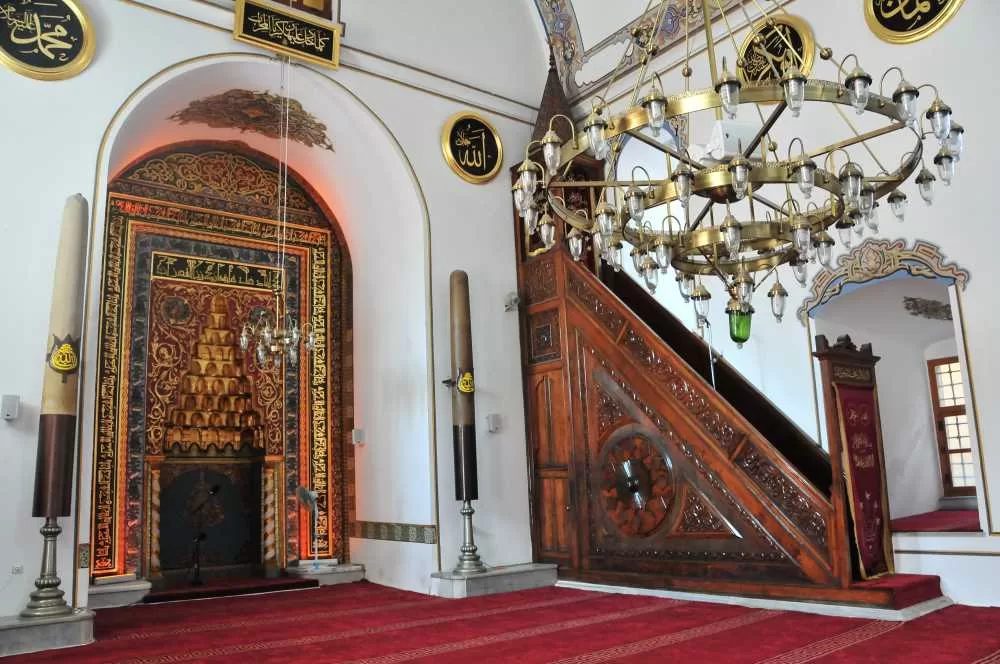
Inside, photos taken looking up from under the twenty-domed ceiling and the large central dome highlight the architectural details. If it is possible to go up to the upper floor, the view of the Bursa Plain from the madrasah corridors and windows also offers a strong photographic opportunity.
What to Eat Nearby?
The Çekirge district is Bursa's established thermal hotel area, so there are various restaurants and cafes in the vicinity. For Bursa's unique İskender kebab and Bursa pide, one needs to go to the city center or around Heykel Square; however, there are also places in Çekirge that offer local delicacies.
Combining a visit to the mosque with lunch at one of the thermal facilities in Çekirge is a great way to experience history and gastronomy on the same day. Bursa's famous candied chestnuts and İnegöl meatballs are also among the flavors you must try in the city.
Suggested Itinerary: Bursa's Historical Heritage
An itinerary that combines the Murad I Hüdavendigâr Mosque with other Ottoman-era structures in Bursa will allow you to grasp the city's history much more comprehensively. You can start your morning with this complex in Çekirge, then proceed to the Muradiye Complex. In the afternoon, you can visit Bursa's symbol, the Grand Mosque (Ulu Cami), and the area around the Covered Bazaar.
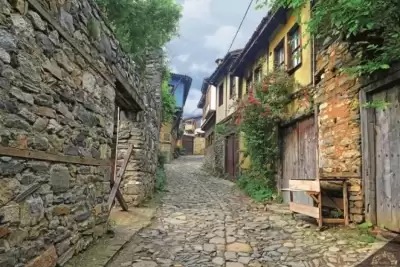
All these points are part of Bursa's UNESCO World Heritage site, "Bursa and Cumalıkızık: The Birth of the Ottoman Empire." This route is not just a city tour, but a comprehensive journey into the founding period of the Ottoman Empire.
Things to Note Before Visiting
As it is an active place of worship, it is important to behave quietly and respectfully during your visit. You will need to remove your shoes when entering; wearing non-slip socks provides comfort. Female visitors are expected to cover their heads; coverings can be provided at the entrance.
Since the structure is a historical monument, photography is generally permitted; however, refraining from taking photos during prayer is a sign of respect. The complex garden and tomb area are also open to visitors; those wishing to see Sultan Murad I's grave should also visit the tomb.
This content originates from neresigezilir.com.tr and may not be copied without permission.
Murad I Hüdavendigâr Mosque Videos
Murad I Hüdavendigâr Mosque videos load when you open this section to keep the page fast.
Show videos
FAQ

Updated: