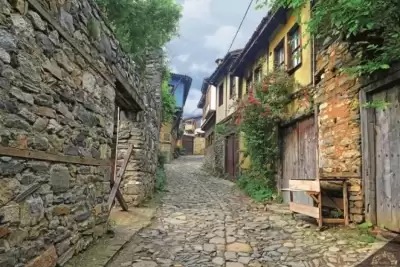
The Iznik Nilüfer Hatun Imaret Turkish Islamic Arts Museum is a paid museum in Bursa, housed in a 1388 Ottoman building, exhibiting Byzantine and Islamic era artifacts.
Located in the heart of Iznik's historic walled fabric, the Nilüfer Hatun Imaret was built in 1388 by Ottoman Sultan Murad I in memory of his mother Nilüfer Hatun. The structure was designed with the characteristic inverted T-plan of the early Ottoman period and also functioned as an imaret and dervish lodge. The colorful stone and brick layered masonry technique, adopted from Byzantine tradition on its facade, gives the building a unique visual identity.
Currently serving as the Turkish Islamic Arts Museum, the building exhibits column capitals, sarcophagi, reliefs, ambons, steles, inscriptions, gargoyles, and Islamic tombstones. The collection presents findings from the Byzantine and Ottoman periods gathered from Iznik and its surroundings; in this respect, it is a valuable resource for those who wish to understand the region's historical layers. The museum is an indispensable stop for any visit to Iznik, both for its architecture and the artifacts it displays.
Guide's Note

Visitors to Iznik generally have a positive impression of this small museum. A common point highlighted in comments is that the venue is a good stop to understand the history and important structures of Iznik (ancient Nicaea). The building itself is also interesting, independent of the exhibited artifacts, as it preserves its historical atmosphere.
The museum's central location makes it easy to add to visits to other historical sites. Visitors also mention that the Museum Pass is accepted, which is practical information for those looking for free or discounted entry.
- Reduced number of sarcophagi in the garden: One visitor noticed that some of the sarcophagi previously in the garden are no longer there. Those wishing to see the open-air collection might be disappointed.
- Limited number of reviews: Existing feedback is quite brief and general; sufficient data has not yet accumulated for those seeking detailed information about the museum's content, exhibition layout, or guided services.
Best Time to Visit
The most suitable period to visit the museum is April-May and September-October. During these periods, Iznik's climate is mild; you can comfortably visit the city walls, Hagia Sophia Mosque, and ancient theater on the same day. In summer months, visitor density from the Marmara coast significantly increases; going early in the morning offers a much calmer experience. While the museum is open in winter, some surrounding areas might be closed for maintenance.
How to Get to Iznik and the Museum
From Bursa: Regular bus services depart from Bursa Intercity Bus Terminal to Iznik. The journey takes approximately 1.5–2 hours. For those traveling by car, the Bursa–Iznik highway is convenient.
From Istanbul: Taking a ferry or fast ferry (IDO/BUDO) to Yalova and then continuing by road to Iznik is both a comfortable and scenic option. The museum is located on Müze Sokak in Iznik's historical center; you can easily find it by walking or a short taxi ride within the city.
History and Architectural Features of the Structure
The Nilüfer Hatun Imaret was built in 1388 (Hijri 790) by Sultan Murad I in the name of his mother Nilüfer Hatun. Nilüfer Hatun, daughter of a Byzantine princess, holds an important place in Ottoman history. The building was designed with the inverted T (zaviye) plan scheme, frequently encountered in early Ottoman architecture; this plan includes a central space with side rooms opening to both sides and an iwan-fronted entrance.
The facade arrangement utilized the colorful stone and brick layered masonry technique, characteristic of Byzantine tradition. This detail indicates that Ottoman architects collaborated with Byzantine masters or adopted their techniques during the period of construction. The building was designed as an imaret and zaviye; meaning it functioned both as a charity institution distributing food to the poor and a place for dervishes to stay.
What to Eat and Where to Eat in Iznik
Although Iznik is overshadowed by Istanbul and Bursa, it has its own unique food and drink culture. In restaurants along the lake, freshwater fish from Lake Iznik are served; carp and sea bass are among the main choices. Influences from Bursa cuisine are also felt; variations of Iskender kebab and İnegöl meatballs can be found in many restaurants. Small cafes and restaurants in the bazaar street near the museum offer practical options for lunch.
Photo Spots
The museum's crown gate, with its colorful stone-brick masonry, offers extremely impressive views in the morning light. The sarcophagi and column capitals in the courtyard contain rich details for close-up shots. After visiting the museum, you can reach the Iznik city walls and Istanbul Gate with a few minutes' walk, providing an excellent backdrop for wide-angle photos. The play of light on the walls in the hours before sunset is very photogenic.
One-Day Itinerary Suggestion for Iznik
Iznik has enough historical sites to visit in a single day. Enter the city early in the morning through the Istanbul Gate and take a short walk along the city walls. Then visit the Hagia Sophia Mosque (former Byzantine church). Before noon, explore the Nilüfer Hatun Imaret Museum and its collection. After having lunch at a lakeside restaurant, you can visit the ruins of the ancient theater and the traces of the Roman aqueduct. On the way back, visiting one of the Iznik tile workshops is a great opportunity to get acquainted with the city's other important heritage, the tile tradition.
This content originates from neresigezilir.com.tr and may not be copied without permission.
FAQ

Updated: