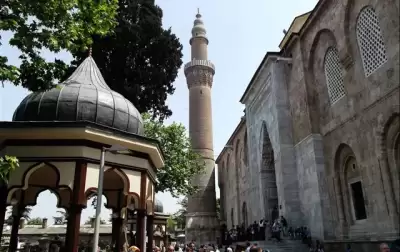
Hacı Özbek Mosque, located in the Iznik district of Bursa, is the first Ottoman mosque whose 1333 inscription has survived to the present day, and it is the earliest documented example in the history of Ottoman architecture.
Hacı Özbek Mosque, located in Eşrefzade Neighborhood of Iznik district in Bursa, holds a very special place in the history of Ottoman architecture. The structure is considered to be the first Ottoman mosque whose inscription has survived intact to the present day. Its three-line inscription reveals that the mosque was built in 1333, thus earning it the title of the oldest known Ottoman work. This feature transforms it from a mere place of worship into a living historical document.
Architecturally, the mosque consists of a square-plan prayer hall covered by a dome. On the south wall, there is a rectangular mihrab niche with an inward projection and molded corners along the axis. Architectural elements belonging to the structure are also noteworthy on the north and east sides. The last congregation area, known to have three arches, was demolished in 1959. The section standing today reflects the simple and functional architectural understanding of the early Ottoman period. Since the structure is located close to the Hagia Sophia Museum in Iznik, it can be easily visited during a city tour.
Guide's Note

Hacı Özbek Mosque, built by Hacı Özbek Bin Muhammed in 1333-1334, is described by the vast majority of visitors as one of the oldest domed masjids from the Ottoman period. The mosque, which stands out with its square base and single dome structure, forms an important part of Iznik's historical fabric with its original architecture that lacks a minaret. The Ehlibeyt inscriptions inside are made with tile work, and visitors find this detail particularly noteworthy.
Located in the city center, the mosque is actively used for worship; visitors can perform congregational prayers here. The structure, which appears to have been restored, stands out as a recommended stop during a visit to Iznik with its 700-year history. The construction process, dating back to the reign of Orhan Bey, gives the mosque a distinct historical weight.
However, there is a small but notable practical issue:
- Toilet facilities: It is stated that the toilets are incompatible with the general atmosphere of the place, and especially the section reserved for women is inadequate and poorly maintained. It is emphasized that an improvement is needed in this regard.
Why Is It So Important?
The importance of Hacı Özbek Mosque stems not from its magnificent architecture, but from the historical document it carries. While the construction dates of many structures from the founding period of the Ottoman Empire are controversial or uncertain, the date on this mosque's inscription is extremely clear: 1333. This allows us to consider the structure as the starting point of Ottoman architectural history. The three lines of the inscription are also valuable for researchers in terms of the writing tradition and linguistic features of the period.
The structure is not a converted church, as some circles suggest, but an original mosque built entirely with the understanding of Turkish-Islamic architecture. This fact is concretely proven by the existence of the inscription.
When to Visit?
The most suitable periods to visit Iznik are April-June and September-October. During these seasons, the weather is neither too hot nor too cold; walking among Iznik's city walls, ancient ruins, and historical structures is quite enjoyable. In mid-summer, the city can become crowded and the heat can be overwhelming.
Since Hacı Özbek Mosque is an active place of worship, it is more appropriate to avoid planning a visit during Friday prayer times or daily prayer times. Visiting the mosque in the early morning or afternoon offers a calmer environment and provides better lighting conditions for photography.
How to Get to Iznik and the Mosque?
The most practical way to reach Iznik from Bursa is by bus. Regular services run from various bus terminals in Bursa to Iznik; the journey takes approximately 1.5-2 hours. For those arriving by private car, the highway between Bursa and Iznik offers a very pleasant drive; the route along the shore of Lake Iznik is also visually satisfying.
After reaching Iznik bus station or the city center, Hacı Özbek Mosque can be reached on foot. The mosque is located within the Iznik city walls, close to the Hagia Sophia Museum. Taxi or bicycle rental options are also available within the city.
Suggested Itinerary in Iznik
It is much more efficient to visit Hacı Özbek Mosque not alone, but as part of an itinerary with other historical sites in Iznik. A suggested route can be set up as follows: Start with a short walk on the Iznik city walls in the early morning, then visit the Iznik Hagia Sophia. From there, walk to Hacı Özbek Mosque. In the afternoon, you can also add Eşrefzade Mosque and Green Mosque to your route. Ending the day on the shore of Lake Iznik will allow you to experience the city's natural beauty as well.
Iznik is a city that can be explored in a single day at a brisk pace; for those who want to examine it in more detail, an overnight stay can also be considered.
Things to Consider When Taking Photos
Hacı Özbek Mosque is a structure that attracts photographers not with its magnificent facade, but with its simple and authentic texture. Close-up shots of the inscription are a detail that must be included in your frame due to its historical importance. Morning light gives softer results for framing the mosque's exterior and dome.
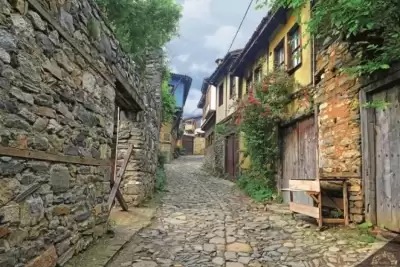
When taking photos inside the mosque, if there are people praying, it is necessary to act respectfully. Avoiding flash use and remaining silent creates a more peaceful environment for both visitors and the congregation. The narrow streets and historical texture around the structure also offer interesting shots.
What to Eat in Iznik?
Iznik is a district known for its olive and olive oil production. In the small restaurants in the city, dishes with olive oil and home-cooked meals stand out. Just as noteworthy as the workshops where Iznik tiles are made are the fresh products sold in the local market.
It is also possible to eat freshwater fish at the small restaurants along the shore of Lake Iznik. For lunch, you can stop at restaurants in the city center, and in the evening, you can have a tea break by the lake. The city is dominated by small family-run establishments rather than large chain restaurants.
Things to Know Before Visiting
Hacı Özbek Mosque is still an active place of worship. Appropriate attire is expected during the visit; female visitors should cover their heads, and both genders should not wear clothes that expose shoulders and above the knees. Shoes must be removed when entering the mosque.
Since the structure is a small and modest place, it may be difficult for large groups to enter at the same time. It should be kept in mind that the last congregation area was demolished in 1959 and the exterior appearance of the mosque is quite simple. Its historical importance is much greater than the splendor of its architecture; a visit becomes much more meaningful when approached with this understanding.
This content originates from neresigezilir.com.tr and may not be copied without permission.
Hacı Özbek Mosque Videos
Hacı Özbek Mosque videos load when you open this section to keep the page fast.
Show videos
FAQ

Updated: