The Weeping Plane Tree, located on the shore of Lake Uluabat in Bursa's Nilüfer district, is an approximately 750-year-old plane tree with water flowing from its trunk, holding international monumental tree status.
This colossal plane tree, which you encounter just before stepping into Gölyazı, was determined to be 725 years old in 1998; meaning today it has an approximate lifespan of 750 years. The tree, notable for its leaning trunk, gives the impression of truly weeping with water seeping from a large hollow in its trunk. This appearance earned it the popular name "Weeping Plane Tree" and made it the undisputed symbol of Gölyazı.
According to legend, during the Population Exchange period, a Greek girl named Eleni and a Turkish young man named Mehmet fell in love; however, the migration and separation left this love unfulfilled. It is said that Eleni's tears of sorrow from separation seeped into the plane tree, and the tree has been weeping ever since. Around the tree, there are fish restaurants and tea gardens; the vast majority of visitors also add a Gölyazı boat tour and tasting of 'pişi' (fried dough) to their stop here.
Guide's Note
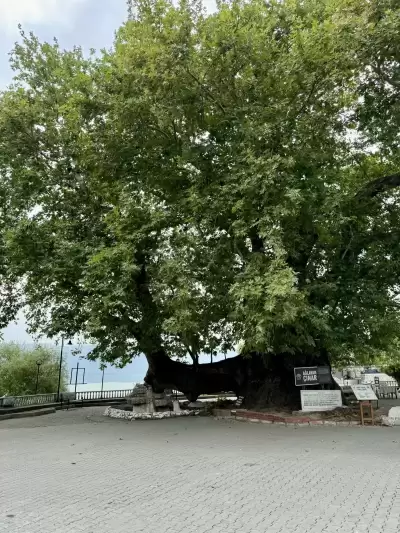
The Weeping Plane Tree, located in Gölyazı (Apolyont) village, is one of the prominent natural heritage sites in the region with its age of over 750 years. The vast majority of visitors found the stance and visual impact of this ancient tree quite striking; they stated that it is worth stopping by even for a short break accompanied by the lake view. It is also reported to have a suitable atmosphere for family visits.
It has been shared that the place is quiet when visited on weekdays at noon, and it is possible to cross to the island by car. There is also a boat tour option nearby. Since it is on the road route, it can also be considered as a short stop on a long journey.
- Lack of maintenance: At least one visitor emphasized that the area is not well-maintained enough and that merely establishing food and beverage facilities is insufficient.
- Expectation management: One visitor expressed disappointment, stating that the tree "does not weep" contrary to its name; it is recommended that those who visit the place based on its name do some research beforehand.
What is the Weeping Plane Tree?
This plane tree, standing at the entrance of the Gölyazı neighborhood peninsula, is one of the rare examples that has been granted international monumental tree status. Its leaning trunk and the water seeping from the hollow in its trunk give the tree a lively expression. Officially determined to be 725 years old in 1998, the tree has now lived for approximately 750 years.
The small square formed around the plane tree, with its fish restaurants and tea gardens, serves as the social hub of Gölyazı. Visitors usually take a tea break here before delving into the narrow stone streets of the village.
When to Visit?
You can visit the Weeping Plane Tree at any time of the year; however, spring and autumn months are the most beautiful periods in terms of both weather conditions and the color of Lake Uluabat. In spring, the greenery around the lake and migratory birds add a special atmosphere to the region.
During the summer months, especially on weekends, Gölyazı gets quite crowded. If you want a quiet visit, prefer weekdays. In winter, the number of visitors decreases, and the village becomes deserted; this can be an advantage for those looking for a different experience.
How to Get There?
Gölyazı is approximately 25-30 km away from Bursa city center. If you are going by private car, simply follow the Gölyazı sign at the 39th kilometer of the Bursa-Mustafakemalpaşa highway. Parking is available at the village entrance.
To reach by public transport, you can take Gölyazı minibuses from Bursa Intercity Bus Terminal or from stops in the Nilüfer district. There are regular services throughout the day; we recommend checking the return times in advance.
What to Eat, Where to Eat?
The most famous delicacy of Gölyazı is pişi; you can find this fried dough pastry, cooked outdoors by village women, at the stalls right next to the plane tree. It's truly delicious when hot and fresh.
Fish restaurants by Lake Uluabat stand out with their freshwater fish. Carp and pike are among the main choices. Sitting in the tea gardens and watching the lake is also an integral part of the Gölyazı experience.
Photo Spots
The most striking shot of the Weeping Plane Tree is a close-up capturing both the leaning trunk and the water seeping from it. In the morning, the light falls better on the tree; in the afternoon, the tree remains in its own shadow.
For wide-angle shots, you can step back a few paces and include Lake Uluabat in the background. Gölyazı's narrow stone streets and wooden houses also offer rich material for photography.
Suggested Itinerary
When you arrive in Gölyazı, the first stop is naturally the Weeping Plane Tree; it's right at the entrance of the peninsula. From here, you can walk into the village to explore the historic stone houses and narrow streets. Afterwards, we recommend taking a short boat tour on Lake Uluabat; the boats depart from the village pier.
After having lunch at one of the fish restaurants by the lake, you can conclude your day by picking up some pişi on your way back. Half to a full day is sufficient for this entire program.
Things to Know
Since the Weeping Plane Tree has monumental tree status, it is a legal requirement not to harm the tree, write on its trunk, or break branches. Visitors need to be careful in this regard.
The Gölyazı peninsula is a very small area; entering by car is both difficult and harms the village's texture. Using the parking area at the village entrance and proceeding on foot offers both a practical and much more enjoyable experience.
This content originates from neresigezilir.com.tr and may not be copied without permission.
FAQ
Weeping Plane Tree videos load when you open this section to keep the page fast.

Updated: