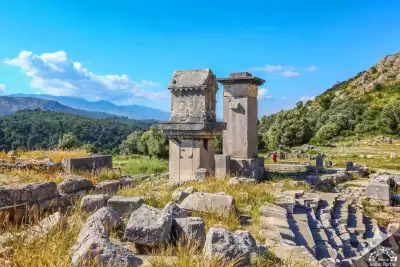
The Museum of Lycian Civilizations, located in Demre, Antalya, is built on the ruins of the ancient port of Andriake and houses artifacts from Lycian cities such as Myra, Patara, and Xanthos. Thematic collections are displayed in indoor exhibitions, while ancient structural remains can be seen in the open-air section; simulation technology offers an ancient port experience.
Located in the heart of the ancient port area of Andriake, also known as Çayağzı, southwest of Demre town center, the Museum of Lycian Civilizations conveys the history of the region through both physical remains and modern exhibition techniques. The museum is situated in Andriake, the gateway to the sea for Myra, one of the six most powerful cities of the Lycian League. Therefore, it is not enough to describe this place merely as an exhibition area: it is also a living archaeological site.
In the indoor sections, artifacts collected from Myra, Patara, Xanthos, and other Lycian cities are displayed in thematic halls. The seventh hall, the Simulation Section, offers visitors the opportunity to experience the ancient port city with a virtual boat tour. In the open-air section, you can wander among the ruins of Andriake itself. With a visitor reception center and well-organized walking paths, the area is designed for a comfortable visit.
Guide's Note

The Museum of Lycian Civilizations was brought to life in 2015 with the restoration of the Granarium (Ancient Granary), one of the best-preserved structures of the ancient port of Andriake, and its conversion into a museum. The venue, which presents archaeological finds from the ancient Lycian geography and artifacts obtained from the Myra-Andriake excavations, offers visitors a comprehensive experience with both its indoor exhibition area and open-air section. In the open area, it is possible to see ancient port structures and monumental ruins such as cisterns on site.
Visitors state that the exhibition content has been enriched with the recent addition of new artifacts to the collection, and that there has been such a change that even those who have visited before would be recommended to come again. If you are traveling to Demre or along the Antalya-Kaş coastal road, you might consider including this museum along with the Myra-Andriake archaeological site in your itinerary.
However, it is recommended to confirm whether the museum is open before planning your visit. Some points visitors should pay attention to:
- Risk of temporary closure: The museum may be temporarily closed for maintenance, repair, and landscaping projects; some visitors have reported being unable to enter because it was closed.
- Advance inquiry: Confirming the museum's current opening status through official channels before going can prevent a wasted trip.
A Museum in the Middle of Andriake
The Museum of Lycian Civilizations is one of the rare examples in Turkey: the museum building stands directly on the history it exhibits. Andriake was one of the bustling port cities of the Mediterranean in ancient times and served as the outer gate of Myra. Today, many structures of this port, especially the granary, are still standing and form the open-air section of the museum.
In the indoor exhibition area, artifacts collected from the leading cities of the Lycian League are presented in a chronological and thematic order. Through coin collections, sculpture fragments, daily life objects, and inscriptions, it is possible to grasp the political, commercial, and cultural dimensions of the Lycian civilization. In the simulation hall, a technology-supported experience draws you into the ancient port city.
Best Time to Visit
Although the museum is open year-round, the harsh summer heat of the Mediterranean climate can be challenging for those who want to explore the open-air section. Entering as soon as the doors open at 08:30 in July and August is the most practical way to avoid the oppressive heat of midday.
April, May, September, and October are much more comfortable in terms of both climate and visitor density. During these periods, the surrounding Çayağzı coastline also offers a beautiful backdrop with its greenery. While the museum is open in winter, using a private vehicle for transportation to the region might be more practical.
How to Get to the Museum?
From Antalya city center to Demre, there is approximately a 140 km journey via the D400 highway. Regular bus services operate from Antalya Bus Terminal to Demre. After arriving at Demre town center, you need to go about 3–4 km further in the direction of Çayağzı; you can easily cover this distance by taxi or rental car.
Parking facilities are available at the museum for those traveling by car. Demre is close to Lycian coastal towns such as Kaş, Finike, and Fethiye, offering a central location for those planning a regional tour. St. Nicholas Church and the Ancient City of Myra are also located in the same district, making it possible to visit multiple historical sites in one day.
A One-Day Itinerary in Demre
For those who want to make the most of Demre, the following order is recommended: Arrive at the Museum of Lycian Civilizations and the Andriake archaeological site early in the morning; exploring the open-air area while it's cool is much more enjoyable. Complete the museum's indoor halls before noon.
For lunch, you can consider the restaurants on the Çayağzı coast; the region is known for fresh fish and seafood. In the afternoon, visit St. Nicholas Church in Demre town center and the Lycian rock tombs carved into the rock face of the Ancient City of Myra nearby. Don't forget to take photos in front of the Myra theater before sunset.
Best Spots for Photography
Andriake's granary structure is one of the museum's most impressive open-air elements. The massive walls of this Roman-era warehouse offer a strong photographic opportunity, especially in the morning light. The narrow passages and column fragments among the ruins in the open-air section also create interesting shots.
Along the walking paths extending from the museum entrance, there are angles overlooking the Andriake canal; shots where water and ancient structures are seen together yield very successful results here. The interior of the simulation hall is an interesting option for photography enthusiasts looking for a different atmosphere.
What to Eat Nearby?
There are several fish restaurants along the Çayağzı coastline, right next to the museum. The region is known for fresh Mediterranean fish such as sea bass, sea bream, and mullet. The meze culture is also strong here: artichokes with olive oil, tarator, and fresh herb salads add color to the table.
More options are available in Demre town center. In addition to traditional restaurants serving pide and kebabs, you can also find pastry shops and bakeries for a light lunch. Since the region is surrounded by citrus groves, be sure to try fresh orange and tangerine juice.
Things to Know Before Visiting
Since the museum consists of both indoor and a large open-air area, it is important to choose comfortable walking shoes. In summer, bring a hat, sunscreen, and a water bottle; shaded areas in the open-air section may be limited.
Museum Card holders can benefit from advantageous conditions at the entrance; it would be useful to confirm current fees and Museum Card validity through official channels before visiting. Photography with a camera is generally allowed, but you may need to obtain prior permission for tripods and professional equipment.
This content originates from neresigezilir.com.tr and may not be copied without permission.
FAQ

Updated: