The Küçük Ağa Complex is an Ottoman complex located in Amasya's Şamlar neighborhood, built in 1495 by Ayas Ağa, the Chief Gatekeeper of Bayezid II, consisting of a mosque, madrasah, primary school, and cemetery; entry is free.
Standing in a quiet corner of Amasya's historic Şamlar neighborhood, the Küçük Ağa Complex dates back to H. 900 / M. 1495. This complex, commissioned by Ayas Ağa, who served as the Chief Gatekeeper (Kapı Ağası) in the palace of Bayezid II, is a modest yet integrated group of structures comprising a mosque, madrasah, primary school, and cemetery. Also known as the Ayas Ağa Complex or Şamlar Complex, the structure maintains its characteristic as one of the early Ottoman-era works in Amasya.
The mosque of the complex is also known as Şamlar Mosque, named after its neighborhood. Although not as grand as larger complexes, this group of structures is historically very valuable for reflecting the waqf (endowment) understanding and charitable institution tradition of its era. Its location, slightly away from Amasya's main tourist routes, gives the complex a calm and authentic atmosphere.
Guide's Note
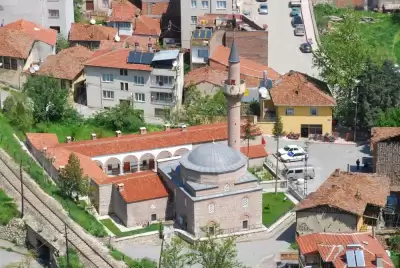
The Küçük Ağa Complex is described by visitors as a calm and peaceful place reflecting Amasya's deep-rooted historical fabric. The weight of history carried by the structure stands out as the most prominent feature that attracts visitors' attention.
According to information shared in comments, the complex was established in the 1120s by Melik Gazi, one of the Danishmend Beys, as a group of structures consisting of a mosque, madrasah, and school; it underwent extensive renovation in 1495 by Hüseyin Ağa, the chief gatekeeper of Bayezid II. Visitors also report that the tombs of Gülnuş Banu and her daughter Ayşe Gazi are located above the mosque, beyond the railway line. The place is emphasized as being among Amasya's first Turkish-Islamic works.
While the vast majority of comments are positive, a significant portion of the feedback is quite short and general. Therefore, it is difficult to obtain sufficient details about the current status of the place, ease of access, or visiting conditions.
- Most visitors have not detailed their experiences; comments remain limited for those seeking in-depth information about the place.
- There are no comments on practical matters such as the surroundings of the structure, its maintenance status, or visiting hours; it is recommended to research this information separately before going.
History and Significance of the Complex
The Küçük Ağa Complex was brought to Amasya in 1495 by Ayas Ağa, who held the important position of Chief Gatekeeper (Kapı Ağalığı) in the Ottoman Empire's palace bureaucracy. Ayas Ağa, a close figure to the Sultan Bayezid II of the time, realized both a religious and social service concept with this modest complex in Amasya.
The complex consists of a mosque, a madrasah, a primary school, and a cemetery. This structural composition brings together the fundamental elements of the Ottoman complex tradition: places of worship, education, and burial areas meet under one roof. Its simpler scale compared to larger Ottoman complexes influenced the naming of the structure as the Küçük Ağa Complex (Little Ağa Complex). It is also referred to as the Şamlar Complex, named after its neighborhood.
Amasya, being an important center where princes served as governors (sancak beyliği) during the Ottoman period, means that the historical structures here are directly connected to both the palace environment and the political climate of the era. In this historical context, the complex forms a modest but original part of Amasya's rich architectural heritage.
When to Visit?
Amasya offers different experiences to visitors in all four seasons; however, the most enjoyable period for the complex is the spring and autumn months. Mild weather between April-May and September-October makes walking through the narrow streets of Şamlar neighborhood and exploring historical structures much more comfortable.
The number of visitors to Amasya increases during the summer months; however, the Küçük Ağa Complex, being slightly off the city's main tourist route, offers a relatively calm atmosphere even during busy periods. A visit in the early morning hours allows you to capture beautiful photographic shots with good light and observe the neighborhood waking up to daily life.
It is advisable to adjust your visit time considering that the mosque may be crowded during Friday prayer times.
How to Get There?
The complex is located in the Şamlar neighborhood of Amasya city center. It is possible to reach it by walking from Amasya's historical bazaar area and the Yeşilırmak riverbank; although the distance is short, the narrow streets within the neighborhood are not entirely suitable for vehicle traffic.
City minibuses connect different districts of Amasya; you can get off at stops on the Şamlar neighborhood route and walk to the complex. It can also be easily reached by taxi. After arriving at Amasya bus terminal and reaching the city center, it is a practical option to get to the complex by walking or a short taxi ride.
While visiting the complex, you can also include other historical structures in the vicinity in your itinerary; Şamlar neighborhood and its surroundings are very rich in historical texture.
Suggested Route: Amasya Historic Center Tour
You can make the Küçük Ağa Complex part of a walking route covering Amasya's historic center. You can start your walk in the morning from the Yeşilırmak riverbank, then cross to the Şamlar neighborhood to visit the complex.
From there, you can proceed to Amasya Bedesteni, and then towards Amasya's iconic Ottoman period waterfront houses (yalıboyu evleri). The Rock Tombs and Amasya Museum are also important stops that can be visited on the same day. Completing this entire route on foot is both possible and much more enjoyable for being immersed in the historical fabric.
Allocating approximately 30-45 minutes for your visit to the complex is sufficient; you can extend this time a bit by exploring the surrounding neighborhood.
Photo Spots
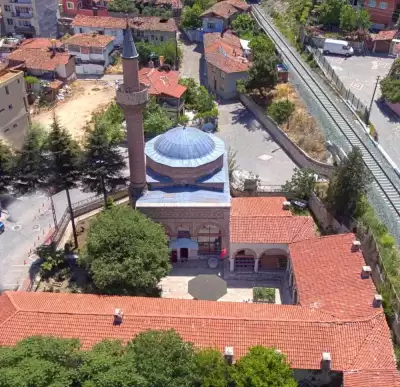
Although the Küçük Ağa Complex cannot compete with large and magnificent structures, it offers beautiful shots for photography enthusiasts with its unique historical texture and the atmosphere of the neighborhood. The facade of the mosque and the courtyard entrance provide impressive views, especially in the morning light.
The historical gravestones in the cemetery section contain details reflecting Ottoman-era stone craftsmanship and are interesting elements for close-up photography. The silhouette of the complex, combined with the narrow streets of Şamlar neighborhood and traditional Amasya houses, also creates a frame-worthy image.
Since the facade lighting changes throughout the day depending on the sun's position, early morning hours or late afternoon hours offer the best lighting conditions.
Things to Know Before Visiting
The mosque of the complex is an actively used place of worship. It is important to be mindful of prayer times during your visit and to show respect to those who are praying. When entering the mosque, you must remove your shoes, and women are required to cover their heads.
The structure does not have a organized visitor infrastructure like large-scale historical sites; therefore, we recommend not coming with expectations of information panels or guided tours. Doing a brief research on Amasya's Ottoman-era history beforehand will enrich your visit and help you better understand the complex.
Since the surrounding streets can be narrow and sidewalks uneven, it is advisable to wear comfortable walking shoes. Wheelchair or stroller use may be difficult due to the structure of the neighborhood.
This content originates from neresigezilir.com.tr and may not be copied without permission.
Küçük Ağa Complex (Şamlar-Ayas Ağa Complex) Videos
Küçük Ağa Complex (Şamlar-Ayas Ağa Complex) videos load when you open this section to keep the page fast.
Show videos
FAQ
Updated: