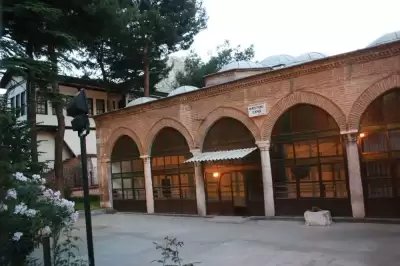
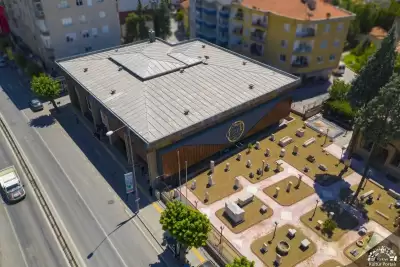
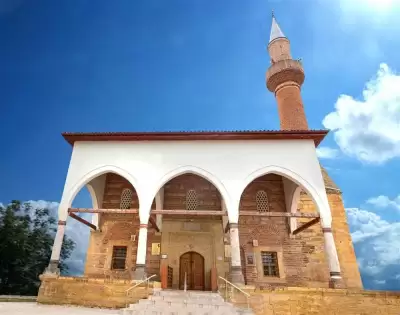
The Halifet Gazi Tomb is a Seljuk-era tomb located in Amasya's Şamice Quarter, adjacent to Gökmedrese, built around 1210. Its octagonal plan is covered with a dome on the inside and a pyramidal cone on the outside.
Rising in Amasya's Şamice Quarter, on Torumtay Street, adjacent to Gökmedrese, the Halifet Gazi Tomb is one of the unique architectural examples of the Anatolian Seljuk period. Estimated to have been built around 1210, the structure was commissioned in the name of Halifet Gazi, who continued his political life after the disappearance of the Danishmend Principality under Seljuk rule and became the governor of Amasya in 1222. It is known that a Roman-era tomb is located beneath the tomb, which adds a layered historical depth to the structure.
Guide's Note

The Halifet Gazi Tomb holds a significant historical position as the only structure from the Danishmend period to survive in Amasya. Dating back to the 13th century, the tomb presents a unique example of Seljuk kümbets (tomb towers) architecture with its square base, octagonal body, and pyramidal cone. Visitors find the ornamented door on the south facade, the muqarnas niche, and the ram's head reliefs on the marble sarcophagus in the lower floor particularly striking. The small hazire (graveyard) next to the structure and the arch remains belonging to the adjacent madrasa are also among the noteworthy elements.
The tomb is frequently preferred by visitors interested in history and culture, as well as those coming for prayer and spiritual visits. Its location near the Yeşilırmak river makes it easily accessible within the city; being on the main road also facilitates access for those arriving by public transport.
However, several visitors point out some important issues:
- Neglect: Visits at different times indicate that the tomb appears neglected, its surroundings are not kept clean, and the structure does not receive the necessary attention.
- Traffic and environment: Buses passing in front of the tomb and its location within a dense neighborhood fabric can negatively affect the visitor experience.
- Need for restoration: A few visitors have emphasized that the current state of such a deeply rooted historical structure should be addressed by the authorities.
About Halifet Gazi Tomb
The Halifet Gazi Tomb holds a special place in Amasya's deep-rooted history. The structure was built in the name of Halifet Gazi, who integrated into the new political order after the Danishmend Principality came under Seljuk rule and was appointed governor of Amasya in 1222. Dating back to approximately 1210, the tomb is considered one of the unique examples of the Seljuk tomb tradition in Anatolia.
One of the striking features of the structure is the presence of a Roman-era tomb beneath it. This serves as concrete evidence of the region's continuous settlement history, extending from ancient times to the Seljuk period. The tomb, together with Gökmedrese, forms a complex of structures and significantly contributes to the historical silhouette of the Şamice Quarter.
When to Visit?
Thanks to Amasya's mild climate, the Halifet Gazi Tomb is suitable for visits for most of the year. However, the months of April-June and September-October stand out as the most enjoyable periods, both in terms of weather conditions and the general atmosphere of the city. During these seasons, the banks of the Yeşilırmak and the historical neighborhoods are also at their most beautiful.
Since temperatures can rise during midday in the summer months, visiting the tomb in the early morning or late afternoon offers a more comfortable experience. Visitor density decreases in winter; this period can also be preferred by those who want a quiet exploration experience.
How to Get There?
The Halifet Gazi Tomb is located approximately 2 km from Amasya city center, in the Şamice Quarter on Torumtay Street. It can be easily reached by walking or by car via Mehmet Paşa Street.
If you are touring Amasya's historical center, it is quite easy to include the tomb in your walking route, as it is located in the same area as Gökmedrese. City dolmuşes and minibuses also serve this area. For those coming by car, it is possible to find parking in the vicinity, but it is advisable to be careful on the narrow streets.
Photo Spots
The Halifet Gazi Tomb, with its octagonal body and pyramidal cone, is a structure that attracts photography enthusiasts. To capture the complex of structures formed by the tomb and Gökmedrese in a single frame, it is sufficient to step back a little.
The light obtained in the early morning hours or in the afternoon when the sun begins to set highlights the texture and architectural details on the stone surfaces. Framing the pointed silhouette of the cone against the sky is a good starting point for creating impressive compositions.
Suggested Route
Instead of planning the Halifet Gazi Tomb as a standalone stop, incorporating it into a half-day walking route with the surrounding historical structures offers a much more efficient visiting experience. An itinerary starting with Gökmedrese and also including Kadılar Tomb and Şadgeldi Tomb provides an opportunity to see Amasya's architectural heritage from the Seljuk and Beyliks periods together.
From there, walking down to the Yeşilırmak river to visit the Yalıboyu Houses, and spending the second half of the day at the Amasya Museum creates a good balance. The city center is quite suitable for walking.
Things to Know Before Visiting
Since the Halifet Gazi Tomb is a religious and historical site, a respectful attitude is expected during the visit. It is important to avoid noise when entering the tomb and not to disturb other visitors when taking photographs.
The streets around the structure are quite narrow and paved with stone; therefore, it is recommended to wear comfortable walking shoes. Since opening hours and entry conditions may vary depending on the season or public holidays, it is advisable to get up-to-date information from the local tourism office or official sources of the Amasya Governorship before your visit.
What to Eat Nearby?
The Şamice Quarter and its surroundings, where the Halifet Gazi Tomb is located, are convenient for discovering Amasya's traditional flavors. Within a short walking distance from the city's historical center, there are small restaurants and patisseries offering Amasya's unique çörek, fresh apple products, and local home-cooked meals.
Taking a tea break at the venues along the Yeşilırmak river with a river view turns into a very pleasant experience after a historical visit. Amasya apple is one of the most well-known delicacies of this region; if it's in season, it is definitely recommended to taste it.
This content originates from neresigezilir.com.tr and may not be copied without permission.
Halifet Gazi Tomb Videos
Halifet Gazi Tomb videos load when you open this section to keep the page fast.
Show videos
FAQ

Updated: