The Ferhat Water Canal is an ancient engineering structure located 3 km outside Amasya, built by carving rocks during the Late Hellenistic and Early Roman periods, carrying water from the Çekerek Stream to the city for approximately 20-25 km, and it is free to visit.
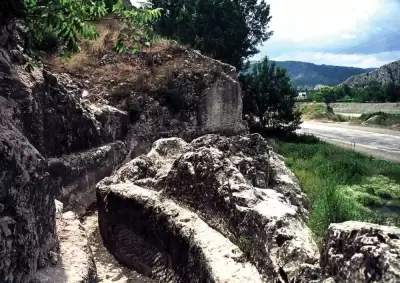
Bearing the traces of Ferhat and Şirin, one of the first legends that come to mind when Amasya is mentioned, the Ferhat Water Canal is located approximately 3 km from the city center, within the borders of Helvacı Neighborhood. Built during the Late Hellenistic and Early Roman periods, this canal was created by carving rocks and opening tunnels to meet the water needs of the ancient city of Amasya (Amasia). Estimated to be approximately 20-25 km long, the structure is one of the rare examples that showcase the engineering understanding of its era.
It is known that the canal carried water from the Çekerek Stream to the city of Amasya for about a thousand years. Today, even though it is in ruins, the surviving sections offer visitors the opportunity to closely examine ancient stonework and water engineering. The Ferhat and Şirin Lovers Museum, located right next to the canal, completes the visit route as a stop that concretizes the romantic atmosphere of the legend.
Guide's Note
From Legend to Reality: The Story of Ferhat Water Canal
The legend of Ferhat and Şirin is one of the most powerful love stories that has been processed for centuries in Turkish and Iranian literature. According to the legend, Ferhat carves mountains and brings water to be reunited with his beloved Şirin. The geographical trace of this romantic narrative is concretized precisely in Amasya, in the structure known today as the Ferhat Water Canal.
In reality, the canal was built during the Late Hellenistic and Early Roman periods to meet the water needs of the ancient city of Amasya (Amasia). This structure, which carried water from the Çekerek Stream to the city, was created by carving rocks and opening tunnels; it functioned for approximately a thousand years. Although a large part of it is in ruins today, the surviving sections clearly demonstrate the engineering mastery of the period.
An Ancient Engineering Work
The canal, with its approximate length of 20-25 km, is considered one of the most impressive infrastructure structures of the ancient world. This waterway, obtained by carving the rocks themselves, showcases the construction technology and urban planning understanding of the period. Amasia was a deeply rooted city that also served as the capital of the Kingdom of Pontus; therefore, it is not surprising that a vital infrastructure such as water supply was designed on such a large scale.
It is known that the canal extended along the Yeşilırmak River towards the city of Amasya and that different engineering solutions were produced at various points. During the visit, it is possible to closely examine the carving marks on the rock surfaces and the tunnel entrances.
Best Time to Visit
Since the Ferhat Water Canal is an open area, the choice of season directly affects the visit experience. In April-May, the surroundings are covered with greenery, and the weather is very suitable for walking. September and October are especially preferred for photography as the heat subsides and autumn colors begin to appear.
In the summer months, especially at noon, the sun can be quite harsh; therefore, choosing the early morning hours or late afternoon will provide an advantage in terms of both comfort and light quality. In winter months, rainy and cold weather conditions can make the visit difficult.
How to Get There?
The Ferhat Water Canal begins at the 3rd kilometer of the Amasya-Tokat highway. You can reach it by car from the city center in 5-10 minutes. If you don't have your own car, you can use city minibuses going in the direction of Tokat; it will be practical to get support from local people or your hotel staff for stop and route information.
Taxi is also a quite affordable alternative; you can reach the starting point of the canal with a short journey from the center. For those who love to explore Amasya on foot, the route from the city center to the area where the canal is located can turn into a pleasant walk by following the Yeşilırmak riverbank.
Suggested Itinerary: A Day Trip to History in Amasya
You can spend a full day by combining the Ferhat Water Canal with other historical sites in Amasya. Visit the canal and the adjacent Ferhat and Şirin Lovers Museum in the early morning. Then return to the city center to explore the Pontus rock tombs and Amasya Castle.
In the afternoon, strolling through the historical waterfront houses along the Yeşilırmak, and in the evening, sitting at a cafe by the river completes the Amasya experience. 1-2 hours is sufficient for the canal visit; this way, you can dedicate the rest of the day to the city's other beauties.
Photo Spots
The Ferhat Water Canal, with its preserved natural structure, offers an interesting area for photography enthusiasts. The carving marks on the rock surfaces and the tunnel entrances contain strong details for close-up shots. In the morning light, the shadows cast on the stone texture of the canal create an inspiring atmosphere for black and white photography as well.
The statues of Ferhat and Şirin located right next to the canal are a frequently preferred spot for both souvenir photos and portrait shots. The surrounding natural greenery and rocky structure provide an impressive background for wide-angle shots. The reflection of light on the rock surface during sunrise and sunset, known as the golden hour, yields visually rich results.
Things to Know Before Visiting
Since the Ferhat Water Canal is an open archaeological site, the ground can be uneven and rocky. It is important to choose comfortable and sturdy shoes during your visit; especially in rainy weather, stone surfaces can become slippery.
The area can be visited free of charge and there are no entrance time restrictions. Carrying water and sun protection with you will increase comfort, especially in summer months. It is very important to be careful when touching rock surfaces to avoid damaging the historical structure and to preserve the natural state of the area.
This content originates from neresigezilir.com.tr and may not be copied without permission.
Ferhat Water Canal Videos
Ferhat Water Canal videos load when you open this section to keep the page fast.
Show videos
FAQ

Updated: