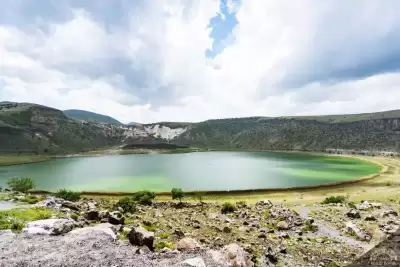
Salt Lake is Turkey's second-largest lake, located on the border of Ankara, Aksaray, and Konya provinces. Known for its saline structure, which is a significant source of the country's salt production, the lake is famous for its flamingos and its transformation into a dazzling white salt desert in summer. Entry is free.
Suddenly appearing in the middle of Central Anatolia, on a flat and vast steppe, Salt Lake is one of Turkey's most unique natural wonders. This massive basin, where the borders of Ankara, Aksaray, and Konya provinces meet, holds the title of the country's second-largest lake with a surface area of approximately 1,500 square kilometers. Due to its shallow and saline nature, the lake largely dries up in the summer months, transforming into a dazzling white salt desert, appearing as if it has sprung from another planet.
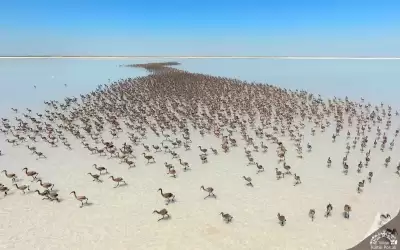
One of the lake's most striking features is its critical role in Turkey's salt production; a significant portion of the country's salt needs is met from here. In addition, the lake and its surroundings are an indispensable breeding and feeding ground for many water birds, especially flamingos. Seeing flocks of pink flamingos in late spring is reason enough to visit this place.
Guide's Note
Best Time to Visit
Visiting Salt Lake at different times of the year offers distinct experiences. May and June are the golden period for those who want to see flamingo flocks. During these months, thousands of flamingos nest in the lake, adding another dimension to the lake's surface with their pink hues. In addition to flamingos, many other water birds are also seen in large numbers in the region during this period.
In July and August, the lake largely dries up and its surface is covered with a dazzling white salt layer. The most suitable time for those famous mirror effect photos is this period, when a thin layer of water covers the salt surface after rain. Coming in the early morning or at sunset will make it easier to capture those magical shots where the sky is reflected on the salt surface. In winter, the lake may partially hold water; it can also offer an interesting experience for those seeking a cold and desolate atmosphere.
How to Get to Salt Lake?
The easiest and most comfortable way to reach Salt Lake is by private car. Those departing from Ankara follow the Ankara-Aksaray highway and reach the Şereflikoçhisar district after approximately 150 km; from there, it is sufficient to follow the signs directing to the visitor area. From Aksaray city center, the journey is about 50 km.
Those preferring public transport can take regular buses from Ankara or Aksaray bus terminals to Şereflikoçhisar. From Şereflikoçhisar, it is necessary to take a taxi or local transport to reach the lake. The majority of travelers on the Cappadocia route prefer to visit this lake en route; in this respect, Salt Lake is a stop that can be easily added to the itinerary.
Photo Spots and Mirror Effect
Salt Lake has become known in recent years for its mirror effect photos, which have gained worldwide attention on social media. To capture this effect, it is necessary to come during moments when a thin layer of water covers the salt surface after rain, preferably at sunrise or sunset. That short period when the orange, pink, and purple tones of the sky are reflected on the salt surface is extremely valuable for photography enthusiasts.
When taking photos, a wide-angle lens provides a great advantage; the vast flatness and sense of infinity can only be framed this way. Visitors coming during flamingo season should consider bringing a telephoto lens for long-distance shots to document the scene created by the pink flocks on the lake surface. Sunglasses and a hat can also be considered essential to prevent glare from the bright salt surface.
Things to Know Before Visiting
Keeping a few practical points in mind before stepping onto Salt Lake will make your visit much more enjoyable. The salt surface can be quite sharp; walking in thin-soled sandals or barefoot can be both uncomfortable and dangerous. Opt for closed-toe, waterproof, or easily washable shoes. Foot-washing facilities are available in the visitor area; it is recommended to wash your feet thoroughly after leaving the lake.
In summer, sun protection is vital; due to the salt surface reflecting sunlight, the UV dose exposed can be quite high. It is strongly recommended to bring plenty of water, wear a wide-brimmed hat, and use high SPF sunscreen. If you are observing flamingos, it is very important not to approach the birds and to remain silent to avoid startling them.
What to Eat, Where to Eat Nearby?
There are no extensive dining options immediately around Salt Lake. Although there are small facilities in the visitor area that can meet basic needs, if you plan to stay there for a long time, bringing your own food and drinks is a safer option. Especially in summer, carrying plenty of water is essential for both health and comfort.
For a more comprehensive dining experience, Şereflikoçhisar town center is the closest option. Those going to Aksaray city center will find many eateries and restaurants offering fine examples of Central Anatolian cuisine. Aksaray's famous traditional dishes such as tirit and keşkek can be considered as culinary stops that complete the regional visit.
Where to Stay?
Accommodation options directly on the shores of Salt Lake are quite limited. While some visitors prefer to camp around the lake, it is advisable to research local regulations in advance; it is recommended to get information from the relevant authorities before setting up camp.
The closest accommodation options are in Şereflikoçhisar town center or in Aksaray city center, which is about 50 km away. A day trip from Ankara is also entirely possible; the distance of approximately 150 km is suitable for visiting the lake early in the morning and returning the same day. Those who wish to include Cappadocia in their itinerary can take advantage of accommodation options in Nevşehir or Ürgüp.
Suggested Itinerary: Salt Lake and Surroundings
Due to its geographical location, Salt Lake is a stop that can be easily integrated into multiple routes. The majority of those traveling from Ankara to Cappadocia visit this lake en route; a break of approximately 2-3 hours is sufficient to explore the lake. On the same route, creating an itinerary like Salt Lake - Aksaray - Ihlara Valley - Cappadocia allows you to experience the natural and historical beauties of Central Anatolia in one go.
For those planning a trip centered in Aksaray, Salt Lake can be visited in the early morning; there will be enough time in the afternoon to explore Aksaray's historical texture and the Ihlara Valley. Prioritizing Salt Lake during flamingo season (May-June) and then moving on to Cappadocia creates a highly satisfying Central Anatolian route.
This content originates from neresigezilir.com.tr and may not be copied without permission.
Salt Lake Videos
Salt Lake videos load when you open this section to keep the page fast.
Show videos
FAQ

Updated: