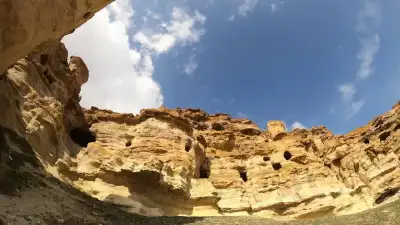
Meteor Crater is a cylindrical depression, 60 meters deep and 35 meters in diameter, located within Mount Ağrı National Park, 35 kilometers east of Doğubayazıt; it is known as the trace of a meteorite that fell in 1892 and can be visited for free.
Meteor Crater is located within the borders of Mount Ağrı National Park, approximately 35 kilometers east of Doğubayazıt district center. It is about 2 kilometers close to the Gürbulak Border Gate, at a point between Sarıçavuş (Gülveren) village and the border. It formed within fractured basalts covering Tertiary limestones, resembling a cylindrical well: its depth is approximately 60 meters, and its diameter is around 35 meters. Locals believe that a large meteorite that fell in 1892 created this crater.
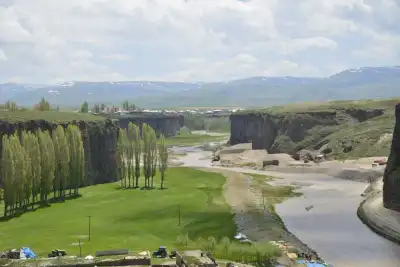
It is said to be the world's second-largest meteor crater after the one in Alaska. However, its geological origin is a controversial topic; some sources also describe the crater as a karstic depression. Visitors note that a long and winding climb at high altitude is required to reach the site. What is offered in return is a landscape where there are no settlements around, and silence prevails. If the weather is clear, a bird's-eye view of the Iğdır plain accompanies the journey during ascent and descent.
Due to its proximity to the border region, the area may occasionally be closed to visitors. It is advisable to confirm the current access status from local sources before going. There are comments about a small amount of litter left around, but the general impression is of a desolate and pristine area.
Guide's Note

When to Visit
Since it is a high-altitude region, winter months are risky in terms of roads. It is most comfortable to go in the summer months, between June and September. Morning hours are preferred both to escape the heat and for the light to show the view more clearly. Standing on the edge of the crater can be a bit difficult on windy days, so it's good to check the weather forecast.
How to Get There
From Doğubayazıt center, drive towards the Gürbulak Border Gate. Approximately 2 kilometers before the gate, turn left onto a rough road that follows the border wall. According to one visitor, the road climbs to a very high altitude and is winding; but it is generally passable by car. There is no public transport, you need your own vehicle or to arrange with a local driver.
Border Region Warning
Meteor Crater is located approximately 2 kilometers from the Iranian border, close to a military zone. Access to the area may be completely closed at certain times; one source also mentions being turned back from a military checkpoint. Before going, it would be helpful to inquire about the current situation from the local tourism office in Doğubayazıt or a guide.
How Much Time to Allocate
The time to spend at the crater itself is short, half an hour is enough. But due to the round trip and the distance from Doğubayazıt center, you may need to allocate half a day in total. It makes sense to combine it with other stops in the center, such as Ishak Pasha Palace, on the same day.
Good Spots for Photos
Shots looking down from the edge of the crater are interesting, with a strong sense of depth. Along the way, especially on the ascent and descent, the bird's-eye view of the Iğdır plain also offers a good opportunity for photography. In clear weather, the light is clearer, and silhouettes are more distinct.
Things to Know
There is no clear scientific consensus on the formation of the crater; some sources explain it by a meteorite impact, while others by a karstic depression. The local narrative highlights the year 1892. There are minor complaints about environmental pollution around, so it's good to take your own trash back. There is no shade or water source in the area, so sunscreen and water are necessary.
This content originates from neresigezilir.com.tr and may not be copied without permission.
Meteor Crater Videos
Meteor Crater videos load when you open this section to keep the page fast.
Show videos
FAQ
Updated: