Located on the left bank of the Seine River in Paris, the Musée d'Orsay is an art museum housed in the architecture of a former train station, containing the largest collection of Impressionist and Post-Impressionist art from 1848-1915.
The Musée d'Orsay is one of Paris's most beloved art museums and is known as the Louvre's complement, focusing on Impressionist works. The building itself is a work of art: constructed as a train station in 1900, it was later converted into a museum. With approximately 4,000 artworks on display, you can also enjoy wandering among the sculptures in the grand halls and staircases, rather than just the paintings on the walls.
The museum's collection includes Van Gogh's "Self-Portrait", Monet's "Water Lilies" series, Renoir's "Bal du moulin de la Galette", works by Manet, and many other master signatures. Visitors can examine artworks more closely in a more relaxed environment compared to the Louvre and also enjoy the museum's architectural features.
The museum is closed on Tuesdays; it is open to visitors on other days. It offers a planned travel experience with its easily accessible location by metro (near Solférino station) and various tours and audio guide options.
Related discoveries: Places to visit in Paris, Historical Places, Paris historical places, Saint-Étienne-du-Mont Church.
Guide's Note
Musée d'Orsay: The Heart of Impressionism
The Musée d'Orsay, located on the left bank of the Seine River, is one of Paris's most captivating art venues. Housing the largest collection of Impressionist and Post-Impressionist artworks from 1848-1915, this museum makes you feel as if it lives within the magnificent architecture of a former train station. Among approximately four thousand artworks, you can encounter Van Gogh's Starry Night, Monet's Water Lilies Series, and Renoir's paintings.
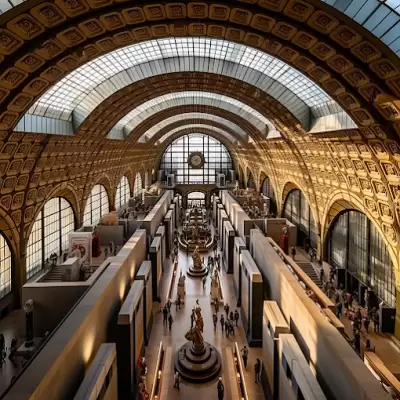
Unlike the Louvre, Orsay is ideal for those who want to delve deeply into a specific period of art history. Instead of crowded halls, there is a relatively relaxed opportunity to wander among the works. The museum itself is an architectural masterpiece; its grand clock towers, art deco design, and galleries utilizing natural light enchant visitors.
Best Time to Visit
To explore Orsay most comfortably, prefer visiting in the middle of the week (Tuesday-Wednesday). Weekends and holidays can be quite crowded. Going early in the morning, right after opening hours, will provide a calmer and more productive visit experience. Since the museum is open until 21:45 on Thursday evenings, it can be a suitable option for those who want to dedicate their daytime to other activities.
During the summer months (June-August), tourist numbers peak; if you want to avoid crowds, choose between September and May. You can expect to spend 2-3 hours in the museum; if you want to delve deeply into art history and make observations with a guide, this period may be longer. It is recommended to check the official website for current opening hours and special closures.
Transportation and Access
Metro is the most practical way to get there. Take line 12 and get off at Solférino Station; from there, it's about a five-minute walk to the museum. Alternatively, the RER C train goes directly to the Musée d'Orsay station, and the museum entrance is right next to the station. If you are coming from the Eiffel Tower, Versailles, or other Seine routes, this option will be very convenient.
The museum is located on the left bank of the Seine, at 1 Rue de la Légion d'Honneur. For those who prefer walking, it's a comfortable distance from central Paris. Accessibility is provided for visitors with physical disabilities; you can get information at the entrance. If you are using a bicycle, Paris's bike paths (Vélib) are available around the museum.
Activities to Do Nearby
When visiting Orsay, don't forget to stroll along the left bank of the Seine. There are picturesque cafes and bookstores very close to the museum. The Latin Quarter (Quartier Latin) is within walking distance; its narrow streets, small restaurants, and academic atmosphere make you feel the true spirit of Paris. The Pantheon, Sorbonne University, and Cluny Museum are also in the same area.
Across from the museum are the Tuileries Garden and the Louvre Museum; visiting both museums on the same day is possible but might be a futile effort. Instead, I recommend relaxing a bit and sitting by the Seine to watch the evening Paris view. The Eiffel Tower and Invalides are also within walking distance.
Time Planning
If you only want to see the famous works, 2 hours might be enough. However, if you want to explore the museum's architecture and lesser-known works, and delve a bit into art history, it is recommended to spend 3-4 hours. Guided tours (including in Turkish) usually last 1.5-2 hours and comprehensively explain the highlights of the collection.
If you are staying in Paris for more than one day, you can visit Orsay after the Louvre. Visiting two museums back-to-back can be mentally and physically tiring. A better idea is to go on two different days; this way, you can maintain the necessary concentration for each museum. If you have a Museum Pass, you can benefit from fast-track entry.
Suggested Tour Route Inside the Museum
Start from the entrance floor, then go down to the lower floor (0th floor). Here you will encounter sculptures. Then head towards the majestic central clock tower; this room itself is a work of art. Afterwards, go up to the upper floors to view the masterpieces of Van Gogh, Monet, and Renoir. The Van Gogh Room and Monet's Water Lilies Series collection are especially unmissable.
The lower floors, not considered the ground floor (rez-de-chaussée), house less-visited but very valuable works. After seeing the iconic paintings, wandering among the old announcements showing train times to destinations outside Paris and the station furniture is important for understanding the museum. You can buy a museum guide or proceed by carefully reading the explanation panels.
Accommodation Options
Boutique hotels and apartments are available very close to Orsay in the 7th arrondissement (district). You can find comfortable accommodation options within a five-minute walk from the museum, on the left bank of the Seine. This area, known as the Left Bank, is one of Paris's most atmospheric places; it has been preferred by artists, writers, and intellectuals for centuries.
If you have budget constraints, you might consider staying in the 5th arrondissement (Latin Quarter); this area is slightly more affordable and a five-minute metro ride from the museum. Hotels are also available near train stations (Gare Montparnasse), but these are more crowded and tourist-oriented. If it's your first time in Paris, staying around Orsay will help you experience the city's art and culture hub.
Food and Drink
There are cafes and restaurants inside the museum. Café du Musée and Café Campagne have a classic ambiance, much like the museum itself; they offer coffee and light lunches. However, these areas can be crowded and prices are high. You can have a better experience at the neighborhood cafes nearby after leaving the museum.
The narrow streets in the vicinity, such as Rue de Buci and Rue de l'Ancienne Comédie, are full of bistros and brasseries. Picnicking by the Seine is also popular; spending time by the river with cheese, bread, and wine bought from a market after leaving the museum is a classic part of the Paris experience. If you head towards the Latin Quarter, you will find more affordable yet still quality restaurant and cafe options.
Museum Shop and Proximity
There is a large shop at the museum exit; books, art reproductions, museum catalogs, and souvenirs are sold. Posters of famous artists like Van Gogh and Monet, various prints, and official museum guides are available. Prices are at standard museum shop levels; you will find it difficult to find such a selection in other tourist areas of Paris.
Near the museum, there are antique shops, bookstores, and small design stores on Rue de Beaune and its surroundings. Bouquinistes (second-hand book sellers) with their libraries line the banks of the Seine. Art books, especially original sources written about Impressionism in France, can be found here. For luxury brands, you would need to head towards the Champs-Élysées; however, this would take you away from the sacred atmosphere of Orsay.
Budget Estimate
The museum entrance ticket (check official source for current price) is mid-range, like standard Paris museums. Students, seniors, and certain age groups may qualify for discounts. An audio guide is available for an additional fee; it is available in English, French, and other languages. If you have a Paris Museum Pass, entry is free, and this can save you money if you plan to visit several museums.
If you want to buy a book or poster from the museum shop, budget between 10-30 Euros. Food, if you use the cafe inside the museum, can be 15-25 Euros, and in bistros outside, 12-20 Euros. The cost of a guided tour may also need to be considered; group tours or private guide selections will significantly affect the visit's budget. Generally, if you view the Orsay visit as a slightly luxurious activity driven by a love of art, you can make extra expenditures.
Photo Spots
The most iconic image of the museum is the central hall with the old clock towers. This is where the architecture of the train station is most impressive, and most visitors take photos of this area. The clocks look breathtaking when viewed from above. The view of the Seine and the Paris skyline through the windows also yields attractive results. The best light can be captured between 14:00-16:00.
Van Gogh's Self-Portrait, Monet's Water Lily Ponds, Renoir's Luncheon of the Boating Party, and Lautrec's Moulin Rouge posters are also popular for photography. However, professional photography in the museum, meaning tripods and commercial use, may be restricted. Hand a museum brochure to your guide; using this, you can identify photo areas and the best angles.
Important Information and Tips
It's wise to check the availability of the clock towers before coming to the museum; they may be closed for maintenance on some days. Flash photography is prohibited; however, shooting in normal light without a tripod is allowed. The museum, in addition to its monumental size, features steps and high-ceilinged areas; uncomfortable shoes can be problematic. If you are coming with children, you will notice that the museum itself moves like a theater stage; it will be a more dynamic experience than a calm visit.
The upper floors may frequently undergo changes for arrangements and temporary exhibitions; some works may not be present on certain dates. Before your visit, check the website to find out which sections are open and what types of exhibitions are offered. Due to museum preservation and crowds, sitting too close to valuable works may be prohibited. A disciplined and respectful visit will make the entire process enjoyable.
Musée d'Orsay Videos
Musée d'Orsay videos load when you open this section to keep the page fast.
Show videos
FAQ

Updated: