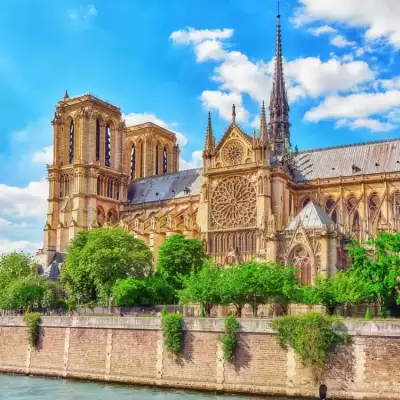
Notre Dame Cathedral, located on the Île de la Cité in the middle of the Seine River in Paris, is a masterpiece of Gothic architecture built since the 12th century. Known for its stained-glass windows, sculptures, and gargoyles, climbing the towers is subject to an additional fee.
Rising in the heart of Paris, the capital of France, in the middle of the Seine River, Notre Dame Cathedral is an architectural marvel whose construction began in 1163 and was completed approximately two centuries later. Dedicated to the Virgin Mary, this cathedral hosts not only people of faith but also millions of tourists and art lovers.
One of the most beautiful examples of Gothic style, the structure captivates with its immense stained-glass windows, sculptures, and artworks in its interior, as well as its music-like acoustics. You can climb the 387 steps to the towers and admire the panoramic view of Paris alongside the famous gargoyles. The cathedral also inspired Victor Hugo's famous novel "The Hunchback of Notre Dame."
Reconstruction efforts after the 2019 fire were carried out using modern techniques while preserving the historical value of the cathedral. You can explore the exterior through guided tours or independent visits. Easily accessible by metro from the Cité Station, this place is one of the must-see spots for those visiting Paris.
Guide's Note
About Notre Dame Cathedral
Rising on the Île de la Cité in the middle of the Seine River, Notre Dame is one of the most iconic examples of Gothic architecture. Construction of the cathedral began in the 12th century and took approximately two centuries to complete, bringing together features from different architectural periods during this long time. This masterpiece, dedicated to the Virgin Mary, also gained worldwide recognition thanks to Victor Hugo's famous novel.
The cathedral's architecture is a lesson in itself. Its massive interior, colorful stained-glass windows, high arches, and meticulously crafted details take visitors on an artistic journey. The famous gargoyle sculptures and towers make their presence felt in the Parisian atmosphere when viewed from the outside.
Best Time to Visit
If you're planning to visit Paris, Notre Dame offers a valuable experience in any season. In spring, the beauty of the Île de la Cité surroundings with blooming flowers adds an extra charm. In summer, you can take advantage of the long daylight hours to better observe the cathedral's exterior architecture.
Going early in the morning or late in the afternoon is a smart way to avoid crowds. It should be noted that it can be very busy on weekends and during high season. It is recommended to check official sources for current opening hours and accessibility before your visit.
Transportation and Directions
Using public transport is the most practical option in Paris. When you get off at Cité station on Metro Line 4, Notre Dame is just a few minutes' walk away. Alternatively, you can also reach the cathedral by boat tours on the Seine River, and at the same time, you'll have the chance to see the beautiful river views.
If you prefer to walk, you can proceed along Rue Valette and Boulevard Saint-Michel and cross the Seine via Pont Saint-Michel bridge to reach the island. Being in the center of Paris, it's also possible to walk to the cathedral from a wider area. Every route offers an opportunity to explore the surrounding historic streets and architecture.
Other Nearby Places
The Île de la Cité and Île Saint-Louis around Notre Dame are among the most atmospheric areas of Paris. Sainte-Chapelle Cathedral, with its magnificent stained-glass windows, is just a few hundred meters away. Exploring the narrow, cobbled streets, small cafes, and antique shops of the islands is a personal matter; there are discoveries and worthwhile places around every corner.
When you step off the island, the Panthéon, Luxembourg Gardens, and the Saint-Germain area are also nearby. These areas on the Left Bank offer the opportunity to turn your Notre Dame visit into a broader exploration of Paris. There are also many bookstores, art galleries, and local restaurants in the vicinity.
How Much Time Should You Allocate
It's good to allocate at least two hours to explore the interior of the cathedral in detail. If you plan to climb the towers and visit its museum, you can extend this period to three hours. There is a 387-step climb to the towers, and at the top, you can encounter breathtaking panoramic views of Paris.
If you want to fully experience the atmosphere of the island and other nearby places, allocating half a day to Notre Dame and half a day to its surroundings is reasonable. If you prefer a guided tour, time will be used more efficiently, and you will learn the details of the structure and its history from a knowledgeable person.
Ideal Route Suggestion
When including Notre Dame in your Paris cultural tour, you can arrive on the island early in the morning and visit Sainte-Chapelle. Afterwards, take some time to photograph Notre Dame's exterior architecture; the Pont de l'Archevêché bridge and surrounding spots offer magnificent views. Then, comfortably explore the interior of the cathedral.
At lunchtime, find a bistro among the narrow streets of the island and taste the local cuisine. If you plan to climb the towers in the afternoon, these times are less crowded. Towards sunset, take a walk on Île Saint-Louis and watch the cathedral illuminated at night from the banks of the Seine, and your Paris experience will be complete.
Best Photo Spots
The most famous angle for photographing Notre Dame is from the Pont de l'Archevêché bridge. Especially at sunrise or sunset, capturing the dance of the cathedral's architecture in the light is magnificent. Quai de Montebello, located on the north side of the island, also offers excellent panoramic views from across the river.
When you climb to the top of the towers, all of Paris's sights are within a single shot. Don't forget that photographing the stained-glass windows and arches inside requires a suitable lens and patience. At night, when illuminated, the cathedral's appearance becomes quite dramatic; for these photos, Pont d'Arcole or other points close to the island are ideal.
Food and Drink Options
On Île de la Cité, small cafes and bistros mostly cater to tourists, but there are also quality places. Among the narrow streets of the island, you can find restaurants and crêpe shops frequently visited by locals. Experiencing a Parisian breakfast starting with a croissant, accompanied by the magnificent view of Notre Dame, is quite meaningful.
If you cross to the south side of the island and head towards Rue Mouffetard, you can find one of Paris's oldest and liveliest market streets. This area, selling local products, cheeses, wines, and dried fruits, is ideal for travelers who want to prepare their own picnic. Eating bread and ham bought from boulangeries while sitting in a park or by the river is part of the classic Paris experience.
Shopping Opportunities
Antique shops, vintage stores selling music cassettes, and bookstores are quite common on and around Île de la Cité. The area around Rue de la Bûcherie is a paradise for antique dealers and old book sellers. You can also find various products with Gothic architectural designs in the cathedral's souvenir shops.
If you cross to the Saint-Germain area on the Left Bank, you can find boutique stores, designer shops, and Paris's exclusive brands. The small shops in the Latin Quarter stand out with their original designs and clothes that carry a student spirit. Exploring the shops in Paris, where shopping is designed as a blend of nostalgia and artistic value, enriches the tourism experience.
Budget Planning
Entry to Notre Dame Cathedral should be checked on official sources for current pricing; however, it is generally parallel to the access fees of similar historical structures in Europe. Climbing the towers requires a separate fee. Being in the center of Paris, food and shopping in the vicinity can be a bit expensive, but there are ways to stick to a budget.
Picnicking with products bought from local markets, utilizing free museum hours, and exploring the island on foot are ways to keep your expenses under control. If you purchase a Paris Musées card or city tour packages, you can combine different places for a more economical outcome. Please confirm current prices on official websites before your visit.
Things to Consider
Notre Dame Cathedral has suffered fire damage in recent years and is undergoing reconstruction. Before planning your visit, it is essential to find out which sections of the cathedral are open to the public from the official website. Access to the towers or the interior may be temporarily restricted. As it is a living place of worship, entry to certain sections is prohibited during religious services.
Be aware of crowded places on and around the island where doors might close or bottlenecks occur. Keep your valuables secure; as in other tourist spots in Paris, petty theft can occur here. When climbing the towers, you should be in good physical condition; there are narrow, cramped spiral staircases. Make sure your shoes are suitable.
Notre Dame Cathedral Videos
Notre Dame Cathedral videos load when you open this section to keep the page fast.
Show videos
FAQ

Updated: